
Reviewed · SEMINYAK TOURS
Traditional Tempeh Making & Cooking Balinese Cuisine
Tempeh is the star here, not a side note. You learn how this Indonesian staple is made from scratch, then use it in several dishes before sitting down to a seven-dish lunch in a family garden. Ayu and Ngurah lead the class with care, and the small group format keeps the cooking hands-on.
I like two things right away: the class teaches a useful food skill you can take home, and it shows you how Indonesian spices work in real cooking rather than simply serving you a finished meal. The class is also friendly to vegans, though chicken and tuna can be added for those who want them. The main consideration is the meeting point in northern Denpasar, which is not the same as Seminyak despite the experience being marketed in connection with Seminyak.
Key points to know
- Tempeh takes center stage: Learn the basic process behind an Indonesian food that dates back to at least the 1600s.
- Seven dishes follow the cooking: Your work ends with a shared Balinese Indonesian lunch in the garden.
- Ayu and Ngurah teach the class: Their warm, careful approach has earned especially strong praise.
- The menu can suit vegans: Skip the chicken and tuna, and focus on plant-based dishes.
- Small groups matter: The class accepts no more than 10 people, with a private option available.
- Morning timing is practical: Cooking runs from 9:30 a.m. to 12:30 p.m., including lunch.
Why tempeh makes this Bali cooking class different
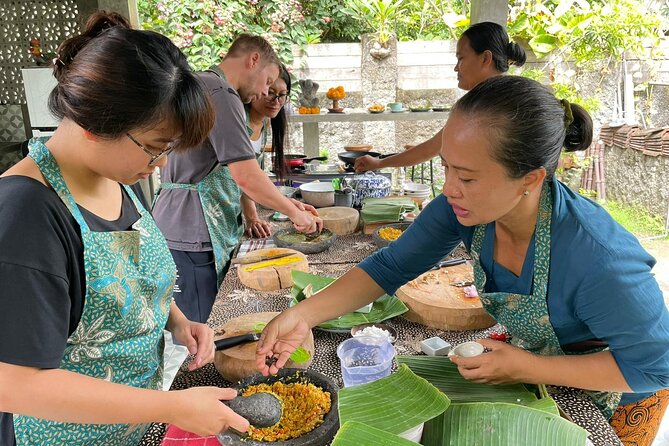
Many Balinese cooking classes focus on spice pastes, market produce, or a long list of familiar dishes. This one takes a narrower and more unusual route. You begin with tempeh, a fermented soybean food from Indonesia, and follow it from basic ingredient to finished meal.
That focus gives the class a clear purpose. You are not just chopping vegetables and copying a recipe. You are learning why tempeh matters, how it is prepared, and why it works so well in different forms. It is high in protein and nutrients, and it has long been an everyday food rather than a luxury ingredient.
Ayu explains the background as you work, including tempeh’s connection to Java and its long place in Indonesian food culture. The historical detail is brief enough to support the cooking, not replace it. If you already eat plant-based food, this is a useful chance to see a local ingredient treated as the main event.
Even if tempeh is new to you, the format is approachable. The class is designed around making food from the beginning, then using it in several preparations. That makes the result easier to understand than a single demonstration where you watch someone else do everything.
More cooking classes in Seminyak:
- Balinese Cooking Class in Seminyak
★ 5.0 · 281 reviews - Nia Bali Seminyak Cooking Class
★ 5.0 · 127 reviews - Cooking class in the comfort of your own personal villa. Yes, I’ll come to you!
★ 5.0 · 80 reviews
The 9:30 a.m. start at Canang Sari Homestay
The class begins at Canang Sari Homestay, at Gg. Kaswari No. 6, Dangin Puri Kaja, in northern Denpasar. The listed location is important: the experience is associated with Seminyak, but the stated meeting point is in Denpasar. Check your route before booking and allow enough time to arrive for the 9:30 a.m. start.
The activity lasts about three hours and ends back at the same meeting point. Since lunch is included within the scheduled time, this is best treated as a morning activity that carries you through to midday, not as a quick lesson followed by a separate restaurant stop.
The setting is an open-air kitchen studio at a local home. That gives the class a more personal feel than a large commercial cooking school. You are cooking in a household setting and later eating in the garden, with Ayu and Ngurah guiding the process.
The maximum group size is 10 people. That is not an ultra-small private lesson, but it is small enough to give the hosts room to explain steps and watch what each person is doing. If you want more direct attention or have a particular food preference, you can ask about a private group.
Starting with tempeh from scratch
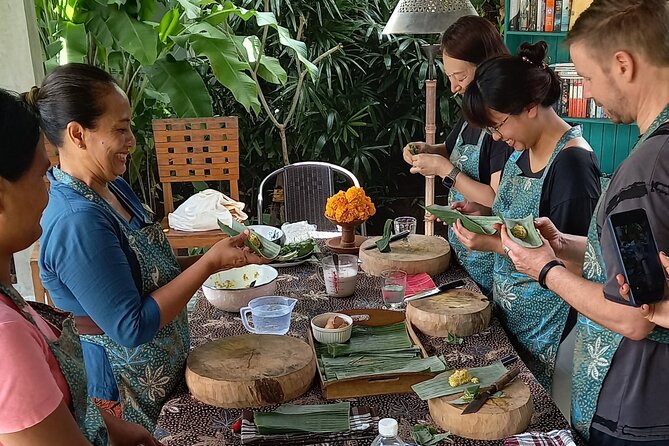
The first major part of the class is the tempeh-making process. You learn how this food is produced rather than simply opening a package and seasoning it. The precise hands-on steps are not specified in the available details, so you should expect an introduction to the process and practical preparation rather than a promise that you will complete a full fermentation cycle during the three-hour session.
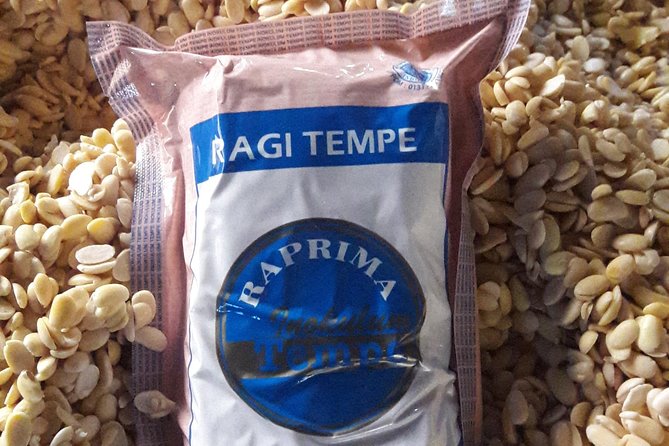
That distinction matters. Tempeh fermentation takes time, while the class itself lasts only until 12:30 p.m. The value is in understanding the method and seeing how the ingredient begins its journey. One especially useful touch is the take-home guide for making tempeh yourself, which gives the lesson a life beyond the morning.
Ayu talks about the food’s origins and place in Indonesian cooking while the group works. Her style has been praised for being clear, careful, and passionate. Ngurah also helps create the welcoming atmosphere, and together they keep the experience rooted in home cooking rather than a polished stage show.
This is likely the most rewarding section for anyone curious about fermentation, Indonesian food, or plant-based cooking. It is also the part that separates the class from a standard Balinese lunch lesson. If your only goal is to learn five famous recipes as quickly as possible, the tempeh focus may feel more specialized than expected.
Spices, vegetables, and the Balinese lunch menu
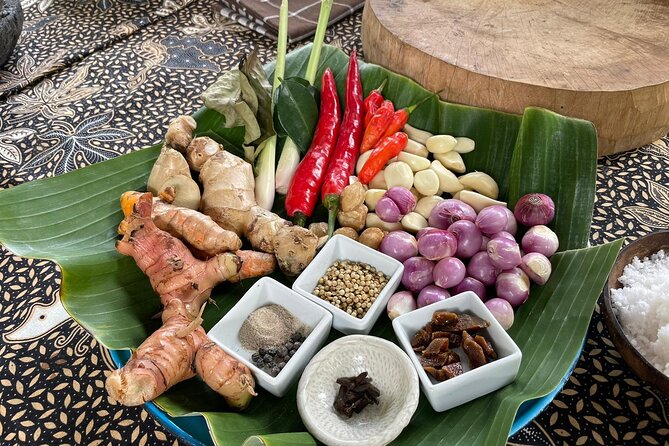
Once the tempeh work is underway, you move into the cooking portion. The class uses fresh plant-based ingredients and introduces the Indonesian spices that give the food its character. You learn by preparing the ingredients and cooking them, rather than receiving a talk about spices without putting them to work.
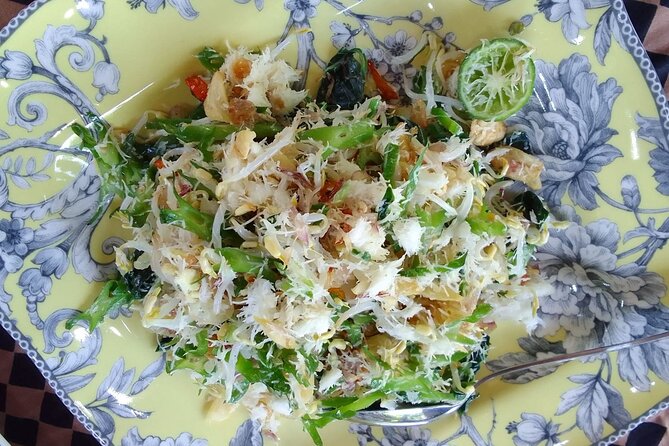
One named dish is sayur urab, a vegetable preparation made with greens and beans mixed with grilled grated coconut. It gives you a good sense of how Balinese food can be fresh, earthy, and textured without relying on meat. The coconut adds body, while the vegetables keep the dish light enough to sit alongside several other plates.
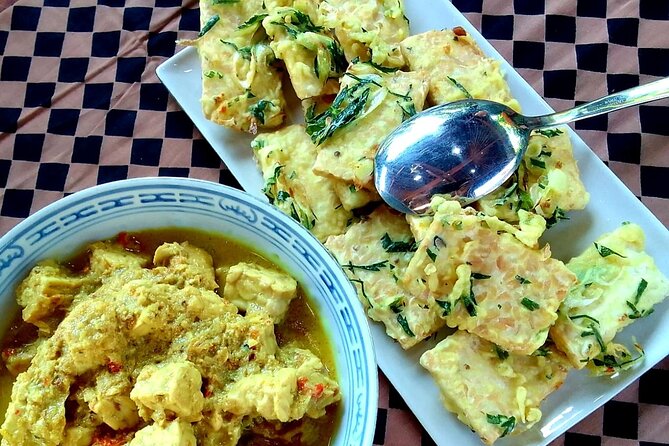
Tempeh appears in multiple preparations. One review specifically praised the tempeh fritter, noting that it would be easy to adapt at home. That is a useful sign for anyone who wants recipes with flexibility. You may not have every Indonesian spice in your own kitchen, but the technique can still give you a starting point for experimenting with tempeh.
The full meal includes seven Balinese Indonesian dishes. The available details do not list every recipe, so you should not book expecting a fixed menu of named dishes beyond those described. What is clear is that the food is built around tempeh, vegetables, coconut, local spices, and optional animal proteins.
The class can include chicken and tuna. If you are vegan, those ingredients can be skipped. This makes the experience workable for a mixed group, though it is wise to state your preference when booking so the hosts can plan the meal properly.
A few more Seminyak half-days to weigh up
- Bali Full-Day Traditional Village Sightseeing Trip All Inclusive
★ 5.0 · 3,069 reviews - Experts Bali Driver : Best Bali Private Driver for Tour in Bali
★ 5.0 · 1,339 reviews - Bali Hai Sunset Dinner Cruise
★ 5.0 · 1,173 reviews - Private Arrival Transfer: Bali Airport to Hotel
★ 4.5 · 739 reviews
Eating in the garden after the work is done
At the end, you sit down to eat what the group has prepared in the garden of the home. This is more than a convenient finish. Sharing the food in a family setting helps connect the recipes to everyday life, and it gives you time to enjoy the dishes without rushing off to the next stop.
Tea, coffee, water, and a light snack are provided during the class. The main meal is included as the final part of the experience. Since the cooking ends at midday, you should arrive ready for a substantial lunch rather than planning to eat beforehand.
The garden setting also changes the pace. A cooking class can become a race through ingredients, especially when a group is trying to finish several dishes. Sitting down together gives the morning a natural close and lets you taste the differences between the tempeh dishes, vegetable preparations, and optional meat or fish.
I especially like this part because the class does not treat lunch as an afterthought. You cook, eat, and spend time with the hosts in the same home. That is a more direct connection to Balinese hospitality than simply being shown a recipe and sent on your way.
What the guides add to the experience
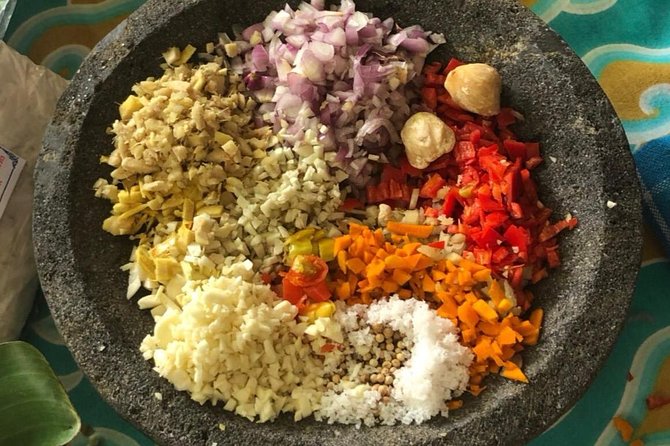
Ayu is the main host named in the experience details, with Ngurah also helping lead the class. Their role is central. The strongest praise focuses on Ayu’s warmth, care, and passion for cooking, while the pair are also described as genuine and hospitable.
That matters in a hands-on class. Cooking instructions need to be clear, but the best lessons also leave room for questions and small corrections. The reported experience suggests that Ayu takes time with the steps instead of treating the group as a production line.
You should expect a practical lesson, not a formal culinary qualification. The class is about local recipes, tempeh, spices, and sharing food. It is a good fit if you want to learn through conversation and doing. It may be less suited to you if you want exact restaurant-style plating, advanced knife work, or a professional kitchen setup.
The personal connection is also reflected in the offer of a guide for making tempeh at home. That extra material turns a pleasant morning into something more useful. You can try to repeat at least part of the experience after returning home, even if local ingredients are not easy to find.
Is the $39 price good value?
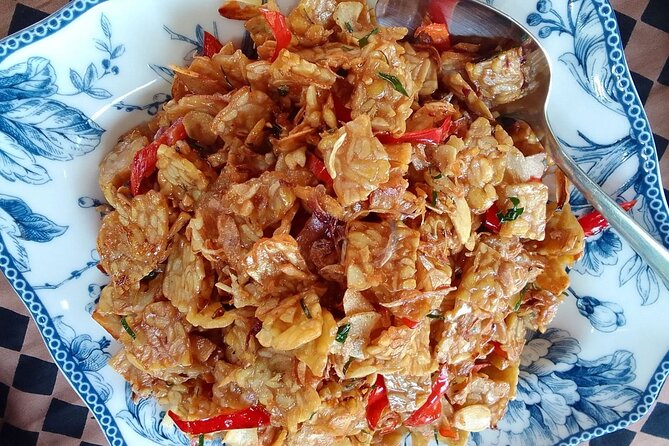
At $39 per person, the price covers about three hours of instruction, tempeh preparation, several traditional dishes, a seven-dish lunch, drinks, a light snack, and the use of the cooking space. It also includes the cultural explanation that comes with learning from Ayu and Ngurah in a local home.
I consider that solid value for someone who wants both a meal and a skill-based activity. You are not paying only for lunch. You receive instruction, ingredients, a full meal, and a distinct focus on an Indonesian food that many visitors know only as a packaged vegetarian option.
The value is strongest for vegans, vegetarians, food enthusiasts, and anyone interested in fermentation. A mixed group can also make good use of it because chicken and tuna are available, while plant-based dishes remain at the center.
The price may feel less attractive if you are mainly looking for a broad survey of Balinese dishes. This class spends real attention on tempeh, so its appeal depends on whether that ingredient interests you. The seven-dish meal helps broaden the experience, but tempeh remains the reason to choose this class over a more general cooking lesson.
Who should book this experience
I would point this class toward several kinds of people:
- You eat vegan or vegetarian food and want more than a token meat-free option.
- You are curious about fermentation and want to understand tempeh at its source.
- You prefer a local home and garden to a large cooking school.
- You like learning recipes you can adapt at home.
- You are traveling with people who eat meat or fish, since chicken and tuna can be added.
- You want a morning activity that ends with lunch.
Families, couples, and small groups may all find the format appealing, though the provided information does not set a minimum age. Ask the provider directly if you are booking with young children or need a particular arrangement.
The class is less ideal if you need hotel pickup, since transportation is not listed. It is also not the right choice if you want an evening food experience, a market visit, or a broad tour of Balinese cuisine with no single ingredient taking center stage.
Timing, group size, and practical details
The activity begins at 9:30 a.m. and finishes at about 12:30 p.m. The end point is the starting point, Canang Sari Homestay. The mobile ticket makes it easy to keep the booking details on your phone.
The group limit is 10 people. A private class is available on request, which is worth considering if you want a slower pace or need the menu arranged around a particular diet.
Free cancellation is available if you cancel at least 24 hours before the local start time. Changes or cancellations inside that window are not accepted for a refund. The class also depends on good weather and a minimum number of participants. If the provider cancels for either reason, you are offered another date or experience, or a full refund.
The experience is booked, on average, about 24 days ahead. That does not guarantee it will sell out, but it is a useful clue if your Bali dates are fixed. I would reserve early if you want a particular morning or a private group.
Should you book the tempeh class?
Book it if you want an authentic, food-focused morning built around tempeh, local spices, and a shared home-cooked lunch. The strongest reasons are the unusual subject, the practical recipes, the seven-dish meal, and the warm teaching style of Ayu and Ngurah.
Think twice if the Denpasar meeting point is inconvenient or if you want a general Balinese class with no emphasis on one ingredient. For everyone else, $39 is a fair price for a small-group lesson that gives you lunch and a skill you can try again at home.
FAQ
Where does the cooking class start?
The class starts at Canang Sari Homestay, Gg. Kaswari No. 6, Dangin Puri Kaja, Kec. Denpasar Utara, Kota Denpasar, Bali 80234, Indonesia.
What time does the activity begin?
The cooking class begins at 9:30 a.m.
How long does the experience last?
The experience lasts approximately three hours, from 9:30 a.m. until 12:30 p.m., including lunch.
Where does the activity end?
The activity ends back at the meeting point, Canang Sari Homestay.
How many people can join the class?
The class has a maximum of 10 participants.
Is a private class available?
Yes. A private group is available upon request.
Is the class suitable for vegans?
Yes. The experience is vegan-friendly. Chicken and tuna may be included for those who want them, or skipped for a vegan meal.
What food will be prepared?
You will make tempeh from scratch and prepare several Indonesian dishes, including sayur urab, a vegetable dish with greens, beans, and grilled grated coconut. The meal includes seven dishes, though the full menu is not specified.
Are drinks and snacks included?
Yes. Tea, coffee, water, and a light snack are provided during the class. Lunch is also included.
Can I cancel for a full refund?
Yes, if you cancel at least 24 hours before the local start time. Cancellations or changes made less than 24 hours in advance are not accepted for a refund.
Just added around Seminyak
- Bali Airport Transfers | Bali Airport Welcome pick up | Bali Airport Taxi★ 4.0 · 27 reviews
- Kuta Seminyak Scooter Lessons★ 5.0 · 40 reviews
- Surf lesson | Energy surfschool krui★ 5.0 · 3 reviews
- Ubud Private Tour★ 5.0 · 36 reviews
- Best of North Bali: Banyumala Waterfall, Handara Gate and Temple★ 5.0 · 4 reviews
- Zero Gravity Flotation Therapy in Canggu Bali by Solace Float★ 5.0 · 36 reviews
- Nusa Penida West trip with snorkeling at 3 spot with Free Meals★ 5.0 · 15 reviews
- West Nusa Penida Island Snorkeling Tour – From Bali Island★ 4.0 · 5 reviews
Seminyak Tours, compared.

Bali Full-Day Traditional Village Sightseeing Trip All Inclusive
Read our review →

Ubud Hot Springs and Waterfall Private Guided Tour
Read our review →
Bali Secret Waterfall Tour – Private and All-Inclusive
Read our review →

Bali Blue Lagoon Snorkeling – Lunch and Transport All Inclusive
Read our review →

Bali Blue Lagoon Snorkeling with Private Transfer & Lunch
Read our review →Browse the lists this tour appears in