Reviewed · KUTA TOURS
Balinese Village Experience
Pacung Sangeh village offers something many Bali tours miss: time inside a real family compound, with a local host explaining how faith, food, and daily work fit together. You make canang sari offerings, share morning tea, and visit a sacred water temple rather than simply stopping for photos.
I like the personal scale, with a maximum of 10 people, and I like that Eric, also identified as Wayan Eric, grew up in the village and guides you through his own home life. The main consideration is the fixed schedule and non-refundable booking, so confirm your hotel pickup and plans before paying.
Key points to know before you book
- Meet a local family: The day begins in a genuine Balinese family compound, not a staged cultural center.
- Make canang sari: You learn about the small daily offerings placed in homes and temples.
- Take part in a blessing: The sacred water temple visit includes a cleansing ceremony with holy water.
- Taste local food: Morning tea comes with Balinese cakes, followed by lunch at a scenic warung.
- Keep the group small: No more than 10 people join the activity.
- Save transfer time: Pickup and drop-off are offered at most hotels in south Bali.
Why Pacung Sangeh makes a better cultural stop
Bali is easy to enjoy at the level of beaches, beach clubs, temples, and famous rice terraces. It is harder to see how ordinary family life works behind the tourist scenes. This experience addresses that gap by taking you to Pacung Sangeh village, where your host has personal roots.
The setting matters. You are not being moved from one landmark to another with a quick explanation and a photo stop. You spend part of the morning in a family compound, where the physical layout of the home becomes part of the lesson. You can ask how daily routines connect with Balinese Hindu practice, and you get a chance to see culture as something lived at home, not only displayed at a monument.
I especially like the chance to meet Eric and his family. A host who grew up in the village can explain customs in a more useful way than a guide who only memorized dates and terms. The experience focuses on how religious practice affects everyday choices, including food, offerings, ceremonies, and visits to holy places.
The day is also a good contrast to a resort stay in Kuta or another south Bali base. You leave the hotel routine for a village setting, then return the same day without arranging several separate taxis. That balance is useful if you want cultural contact but do not want to give up your hotel or spend a night away.
A few more Kuta half-days to weigh up
- Nusa Penida day trip: boat, 4 snorkeling, Manta rays & Land tour
★ 5.0 · 2,033 reviews - Bali Nusa Penida West Private All-Inclusive Tour
★ 5.0 · 1,277 reviews - Mount Batur Sunrise Trekking Private Tour with Breakfast and Hotel Transfer
★ 5.0 · 885 reviews
The 8:30 pickup and the ride north
The scheduled start is 8:30 a.m. Pickup and drop-off are provided for most south Bali hotels, which is a real advantage in an area where traffic can make a simple transfer surprisingly slow. Your driver takes you to the meeting point, where you meet the village guide.
The seven-hour day includes transportation as well as the main village program. The central village activity is described as about four hours, so allow the remaining time for hotel transfers and movement between stops. Exact road time will depend on where you stay and the day’s traffic.
You should have breakfast before pickup or be ready for a later morning meal. The first food included in the experience is Balinese morning tea with cakes at the family home, not necessarily a full hotel-style breakfast.
The group limit is 10 people. That does not guarantee a private tour, but it should make it easier to hear the guide and ask questions than on a large coach outing. A small group also suits the home visit, where a crowd would work against the personal nature of the experience.
Morning tea inside the family compound
The home visit is the heart of the day. You enter a real family compound and meet the people who live there, with Eric explaining local customs and home life. This is where the tour moves beyond general facts about Bali and gives you a setting for understanding them.
Morning tea includes Balinese cakes and coffee. The food is modest, but that is part of its value. You are not being served a polished restaurant tasting menu. You are sharing a familiar part of the morning and getting a chance to slow down before the hands-on activities begin.
Use this time to ask practical questions. You can ask how offerings are made, how religious obligations shape the day, and what parts of village life differ from the routines you see in a hotel district. The strongest part of a cultural visit is often the conversation between activities.
Families with children may find this section especially useful. A six-year-old and an eight-year-old were able to take part when the guide adjusted his explanations and showed patience. That does not mean every child will stay engaged for the full seven hours, but the hands-on format gives younger participants more to do than a lecture at a temple.
Making canang sari, Bali’s daily offerings
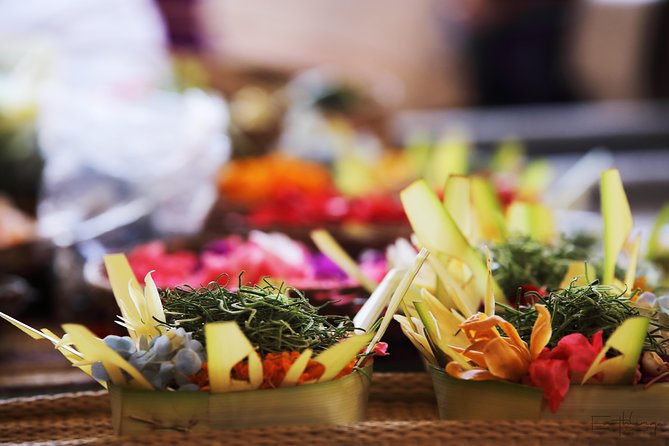
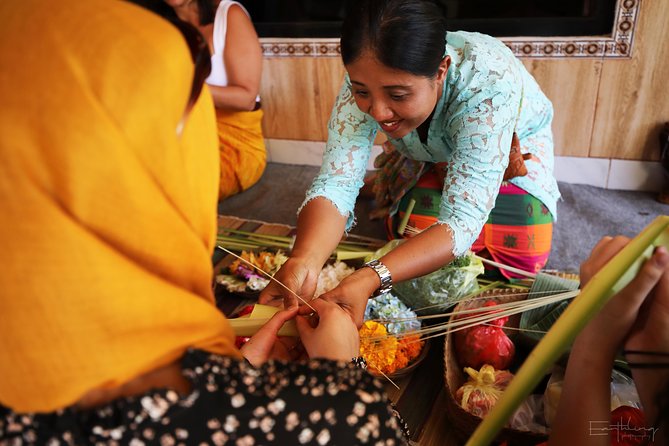
One of the most practical activities is learning to make canang sari. These small offerings are part of daily Balinese Hindu practice, and making one gives you a clearer sense of how religion appears in ordinary life.
The value here is not artistic perfection. You do not need to produce a flawless offering. The point is to understand the care involved and why these offerings matter to the people who prepare them. A local guide can explain the custom while you work with your hands, which makes the information easier to remember.
This activity also helps you read Bali differently after the tour. Once you know what you are seeing, the small offerings placed outside homes, shops, and temples no longer look like random decorations. You begin to notice the quiet daily work behind them.
Expect the pace to be unhurried. This is not a contest or a quick craft demonstration. The day is designed around participation and explanation, so it suits you best if you enjoy asking questions and trying a local activity rather than rushing through a checklist.
Same base, a completely different kind of day:
- Individual Bali Day Trip with Private Driver and Free WiFi
★ 5.0 · 755 reviews - Waterbom Bali Tickets – Single Day Pass
★ 4.5 · 620 reviews - Private Tour Mount Batur Sunrise Trekking and Natural Hot Spring
★ 5.0 · 431 reviews - Private Tour Bali Beaches and Uluwatu Temple with Dinner
★ 5.0 · 363 reviews
Lunch at a scenic warung
Lunch is served at a scenic warung, a local-style eatery. The provided details do not specify the exact menu, so you should think of this as a chance to eat typical Balinese food rather than a guaranteed dish-by-dish tasting.
The setting adds to the appeal. A warung is a more grounded place for lunch than a large hotel restaurant, and the meal gives you another look at everyday food culture. After the morning’s household visit and offering activity, the restaurant stop also provides a natural pause before the temple portion.
The food has been well received, including by a parent who described lunch as delicious. Still, tastes vary, and the tour is not presented as a specialist culinary outing. Book it for the combination of village life, religious practice, and local food, with lunch as one part of the day.
If you have dietary needs, ask the provider before booking. The available information confirms that lunch is included but does not specify vegetarian, vegan, allergy-friendly, or other menu arrangements.
The holy-water temple and cleansing ritual
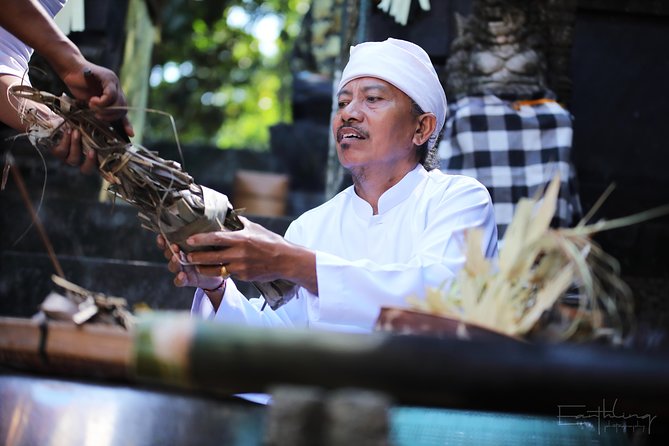
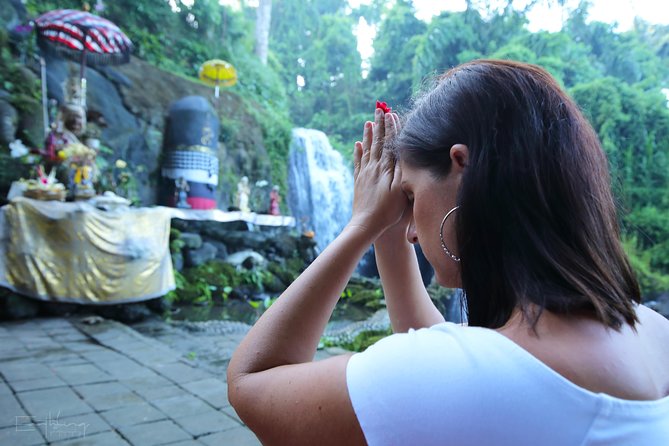
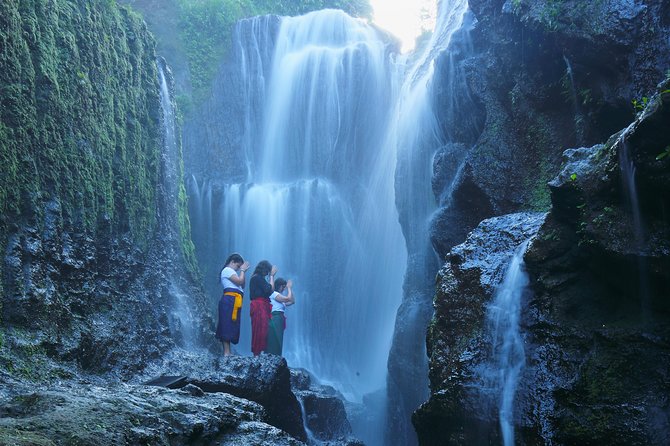
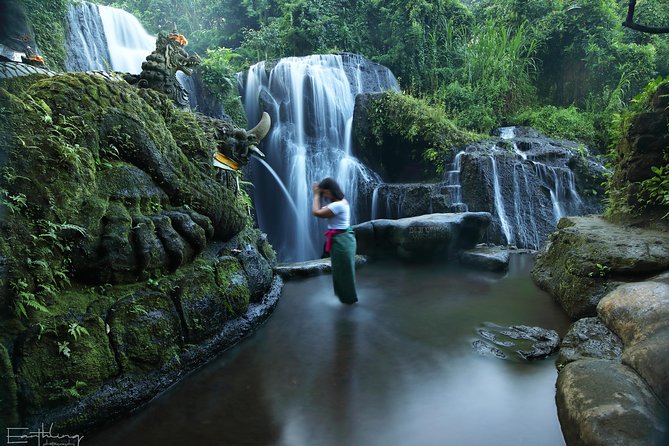
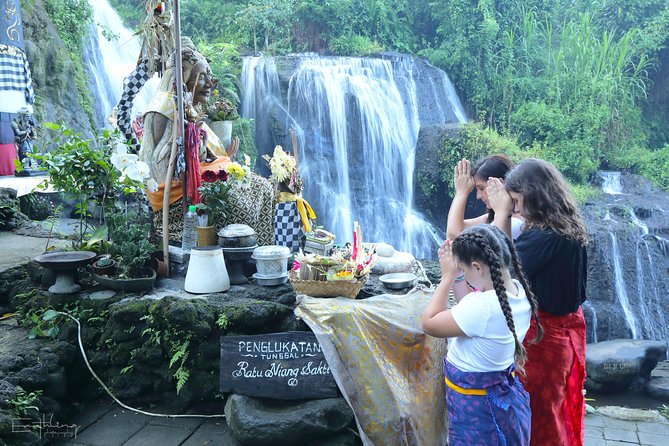
After lunch, you visit a sacred water temple for a blessing ritual. This is the most spiritual part of the experience, and it deserves a respectful approach.
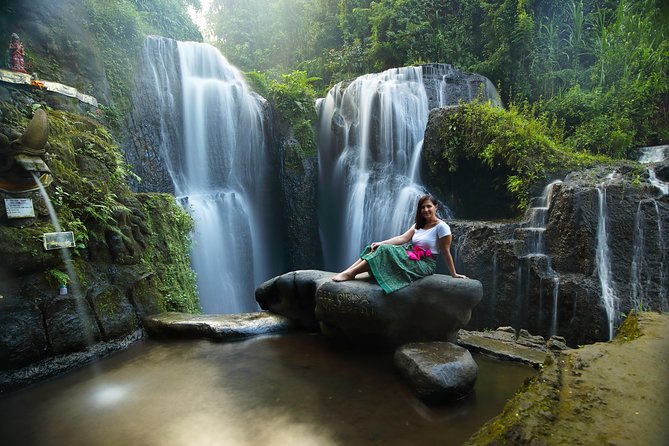
The day may include a beautiful waterfall and caves connected with the holy blessing, according to the described experience. The exact order and conditions are not detailed, so do not treat those features as a guaranteed sightseeing program with a fixed amount of time at each one. The clear promise is a sacred water temple and a blessing ceremony.
Your guide leads you through the cleansing process and explains the religious meaning behind it. One family with children found that the guide made the ritual understandable and approachable. Another parent described the visit as especially meaningful when sharing it with a daughter.
You should follow the guide’s instructions closely. A temple blessing is not a performance for cameras. Dress and behavior should be respectful, and you should be prepared to take part in a religious custom rather than simply watch one. The supplied details do not state a specific dress code, so confirm any clothing requirements with Bali Buddies before departure.
The temple visit gives the earlier parts of the day more context. The offerings you made in the morning are not an isolated craft, and the explanations at the family home are not just abstract information. You see how household practice and temple practice connect.
What the seven-hour format feels like
Seven hours is long enough to make the day feel substantial, but it is not a full multi-day cultural stay. You get a morning pickup, a village visit, food, a religious site, and a return transfer. That makes it a manageable choice for a first visit to Bali or for a spare day between major sightseeing plans.
The schedule may feel full if you prefer an easy hotel day. You are changing settings, meeting people, taking part in activities, eating lunch, and joining a temple ritual. I would not book it on the same day as another major tour, especially if that second plan has a strict evening start.
The central experience lasts about four hours, while the complete outing is approximately seven hours. That distinction matters when planning your day. Traffic between Kuta and the village can affect the overall timing, even though the pickup service removes much of the planning work.
The maximum group size of 10 is another reason the format works. You get a structured day without the feel of a large bus tour. It also means you should be ready to share the family visit and temple experience with other people rather than expecting a completely private exchange.
Is the $70 price fair?
At $70, the value depends on what you want from a Bali day out. If you are only comparing entrance tickets, the price may look high. But the cost includes a village host, family-compound visit, morning tea and Balinese cakes, the offering activity, lunch, temple participation, and two-way hotel transportation.
You are also paying for access that would be difficult to arrange on your own. Finding a local family willing to host you, arranging a guide who can explain Balinese Hindu practice, and organizing transport to Pacung Sangeh would take time and may not produce the same level of personal contact.
The price makes the most sense for you if cultural understanding matters more than collecting famous sights. It is less compelling if your main goal is a waterfall photo, a temple entrance, or a scenic lunch by itself. Those elements are part of the day, but the real product is the connection between home life, offerings, food, and worship.
The included transfers add practical value for anyone staying in south Bali. You avoid negotiating separate rides and can focus on the day instead of finding your way to a rural meeting point. The best value comes when you use the whole program, not just the temple stop.
Who will enjoy this most?
This experience suits families, couples, and solo visitors who prefer conversation and participation to a fast sightseeing circuit. Children can join, and the guide has been described as patient with younger participants, but a seven-hour day still requires a reasonable attention span.
It is also a good match for anyone curious about Balinese Hinduism. You do not merely hear that religion is important in Bali. You see it through offerings at home and a blessing at a sacred water temple.
Choose this day if you want a break from resort life and a closer look at local routines. It is less suitable if you want a beach day, nightlife, shopping, or a long list of major monuments.
People who dislike fixed schedules should think carefully. Pickup is set for 8:30 a.m., and the day follows a planned sequence. The non-refundable policy makes that choice more important: once booked, cancellation or changes for personal reasons do not qualify for a refund.
The activity is suitable for most people, and service animals are allowed. Confirmation is sent within 48 hours, subject to availability. If the minimum number of participants is not reached and the operator cancels, you are offered another date or experience, or a full refund.
Should you book the Balinese Village Experience?
Book it if you want to understand Bali through a family home, a handmade offering, a local meal, and a sacred ritual. The personal connection with Eric and his family is the strongest reason to choose it, while the small group and hotel transfers make the day easy to manage.
Skip it if you only want landmark sightseeing or if a non-refundable booking feels too restrictive. For everyone else, the $70 cost is reasonable for a seven-hour cultural day that links ordinary village life with Balinese Hindu practice. It gives you a better sense of the island than another quick photo stop would.
FAQ
Where does the Balinese Village Experience take place?
The experience takes place in Pacung Sangeh village in Bali, with pickup and drop-off offered at most hotels in south Bali.
What time does the tour start?
Pickup begins at 8:30 a.m.
How long does the experience last?
The complete outing lasts approximately seven hours. The main village activity is listed as about four hours, with the remaining time covering transfers and movement between locations.
What food is included?
You receive Balinese morning tea with cakes and coffee, plus lunch at a scenic warung.
Will I visit a temple?
Yes. The day includes a visit to a sacred water temple and a holy-water blessing ritual.
What is canang sari?
Canang sari are traditional daily offerings used in Balinese Hindu practice. You learn how to make them during the visit.
How many people can join the activity?
The maximum group size is 10 people.
Can I cancel and receive a refund?
No. The experience is non-refundable and cannot be changed for personal cancellation or amendment requests. If the minimum number of participants is not met and the operator cancels, you are offered a different date or experience, or a full refund.
Just added around Kuta
- Ubud Highlights Rice Terraces, Temple, Waterfall & Monkeys forest★ 5.0 · 23 reviews
- Your Fragrance Selection: Bali Perfume Workshop and Creations★ 5.0 · 3 reviews
- Waterbom Bali Tickets with Private Transfers★ 4.5 · 39 reviews
- Experience West Nusa Penida Private Tour★ 4.5 · 14 reviews
- Premium White Water Rafting and Jungle Buggies in Bali★ 4.0 · 15 reviews
- Bali Atv Riding through Cave and Waterfall★ 5.0 · 18 reviews
- Nusa Penida 4 Spot Snorkeling with Manta and Island Tour★ 4.5 · 11 reviews
- West Nusa Penida Day Trip★ 5.0 · 8 reviews
Kuta Tours, compared.

Nusa Penida day trip: boat, 4 snorkeling, Manta rays & Land tour
Read our review →
Bali Nusa Penida West Private All-Inclusive Tour
Read our review →
Mount Batur Sunrise Trekking Private Tour with Breakfast and Hotel Transfer
Read our review →
Individual Bali Day Trip with Private Driver and Free WiFi
Read our review →

Private Tour Mount Batur Sunrise Trekking and Natural Hot Spring
Read our review →
Private Tour Bali Beaches and Uluwatu Temple with Dinner
Read our review →