Reviewed · UBUD TOURS
Bali Traditional Village Experience
Taro village gives you something many Bali outings miss: a look at daily family life, not just a quick stop for photos. You visit a traditional compound, learn to make Canang Sari offerings, and use them during a Hindu blessing at a sacred water temple.
I like the private format, which keeps the visit personal and lets your own group set the pace. I also like the simple, human details: morning tea with the family, Bali cookies, and an explanation of how several families share the compound. The main consideration is that the listed duration is about two hours, even though the outing is described as a half-day experience, and the temple donation is extra.
Key points to know before booking
- Taro village setting: Visit a traditional community about 12 miles, or 18 kilometers, north of Ubud.
- Family compound visit: See where family members live and learn about the household temple.
- Hands-on Hindu tradition: Make Canang Sari offerings and use them during the blessing.
- Sacred water ritual: Change into swimwear or clothes that may get wet if you choose the cleansing ritual.
- Private transport: Two-way transfers are included from an address in the Ubud area.
- Good value at $35: Tea, snacks, a sarong, transport, and a private host-led visit are included, but the temple donation and lunch are not.
Why Taro feels different from central Ubud
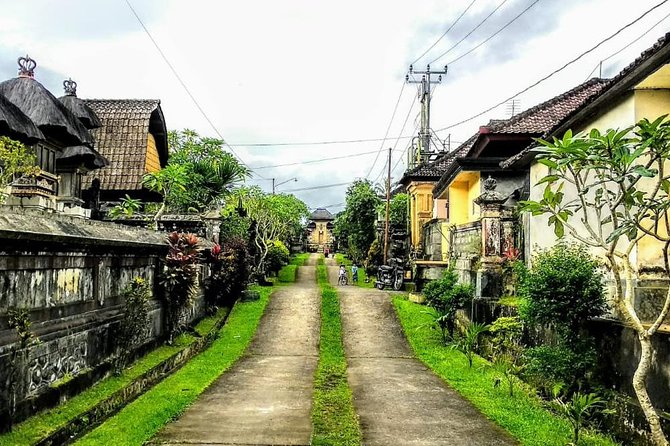
Ubud is a useful base for Bali, but its busiest streets can make local life feel like something arranged for visitors. Taro offers a quieter change of pace. The village is about 12 miles north of Ubud, and the focus here is not on a famous monument or a long list of photo stops. It is on one family compound and the traditions practiced there.
That makes the visit especially useful if you want cultural context without committing to a full day. You are not simply shown a Balinese house and sent on your way. The host explains where family members live and points out the family temple, giving you a better sense of how a compound functions as a shared home and religious space.
The private setup matters. You visit with only your own group, so you can ask questions without competing with a large crowd. You also avoid the fixed rhythm of a big bus tour. The pace should suit couples, families, and small groups who prefer conversation over a formal performance.
Still, set your expectations correctly. This is a short village encounter, not an extensive tour of Taro. The listed duration is approximately two hours, while the description calls it a half-day experience. Allow extra time for transport from Ubud and clarify the exact schedule before setting up another activity.
A few more Ubud half-days to weigh up
- All-Inclusive Ubud Private Tour
★ 5.0 · 14,344 reviews - Best of Ubud Full-Day Tour with Jungle Swing
★ 5.0 · 8,571 reviews - Ubud: Monkey Forest, Jungle Swing, Rice Terrace, and Water Temple
★ 5.0 · 7,160 reviews
Starting with a family compound tour
Your driver collects you from your Ubud-area address and takes you to the village. The listed meeting point is Delodsema Traditional Village on Tegallalang Road in Taro, but the included two-way transfer means you do not need to arrange your own ride if you are staying within the stated Ubud area.
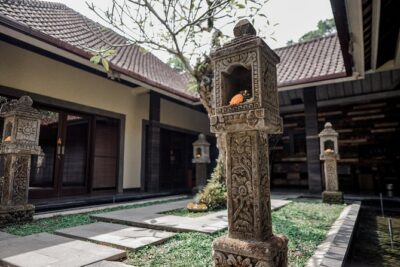
The first part of the visit takes place in the host family’s compound. You walk through the property while the host explains where each family lives and describes the family temple. This is the part I find most valuable for understanding Balinese life, since the setting is a working family home rather than a detached exhibit.
A Balinese family compound can include several household spaces used by different relatives, along with a temple area for daily offerings and ceremonies. The supplied details do not promise a lengthy architectural lesson, so expect a practical tour led by someone connected to the home. You will get an introduction to the spaces and their purpose, rather than a technical lecture.
The tone is meant to be welcoming and direct. The host and his wife receive you with the rest of the village community nearby, and the visit includes time with the family. That personal contact is a major reason to choose this activity instead of a standard sightseeing stop.
Remember that you are entering a home and a religious setting. Dress and behave with care. The sacred area requires a sarong and sash, and the tour includes these items for you.
Morning tea, Bali cookies, and Canang Sari
After the compound tour, you sit down for traditional Balinese morning tea with the family. Coffee or tea is included, along with Bali cookies. It is a small part of the outing, but it gives the visit a useful pause and lets you talk rather than simply move from one explanation to the next.
The food is light. Lunch is not included, so do not treat the tea and cookies as a replacement for a meal. If you are hungry after traveling from Ubud, plan lunch separately or ask about combining this activity with one of the optional add-ons.
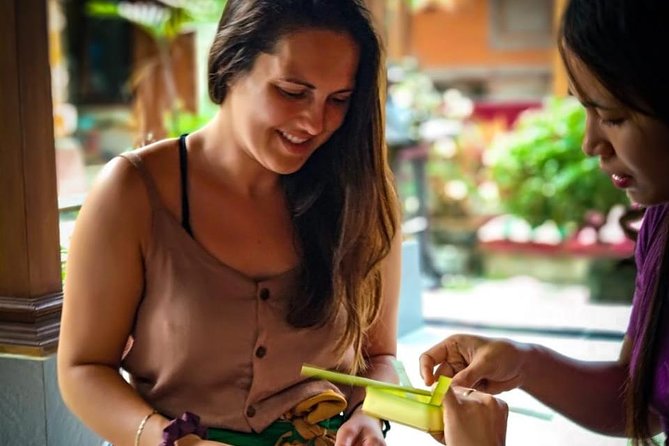
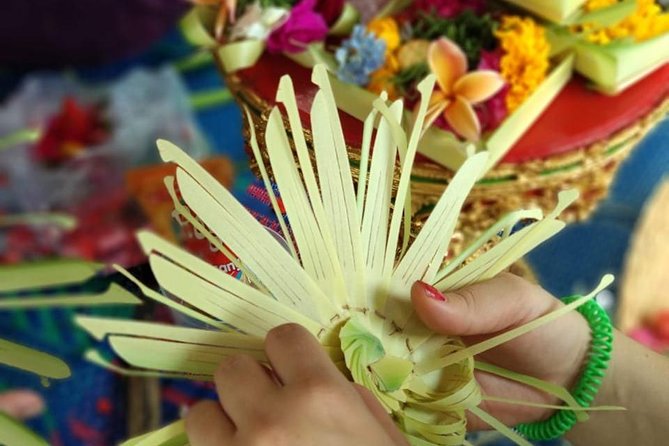
The hands-on portion is learning to make Canang Sari. These small offerings are used in Balinese Hindu practice, and making one gives you a direct way to understand how religious customs appear in ordinary daily life. You are not just hearing that offerings matter. You are handling the materials and preparing one yourself.
The offerings you make are later used in the blessing ceremony. That connection gives the activity a clear shape: you learn the practice at the family compound, then carry it into the sacred water ritual. It also means the craft is not a throwaway demonstration.
You should not expect an advanced craft workshop. The point is to learn the basic process and its role in Balinese Hinduism. If you enjoy activities where you make something with your hands, this will likely be one of the strongest parts of the visit.
Preparing for the Holy Water blessing
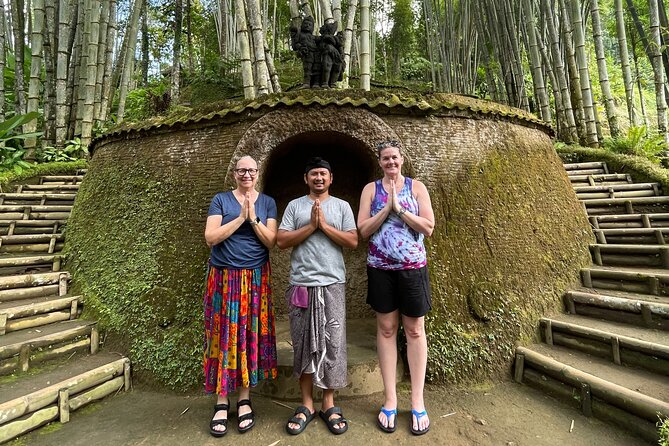
The final major stop is a sacred Holy Water site. Before entering, you change into swimwear or clothing that can get wet if you choose to take part in the cleansing ritual. You are then dressed in a sarong and sash, which are mandatory for entering the site.
This is more than a photo opportunity. The ceremony is a Hindu blessing with Holy Water, and the offerings you made earlier are part of the ritual. You receive the blessing in a religious setting, so approach it with respect and follow the host’s instructions.
The wet clothing point is practical and easy to overlook. If you want to take part fully, wear something suitable underneath your clothes and bring any personal items you need after changing. The provided information does not say that changing rooms, towels, or toiletries are supplied, so do not count on those extras.
There is also a small entrance fee or donation payable in cash at the Holy Water temple. It is not included in the $35 price, and the exact amount is not specified. Carry Indonesian rupiah so this final cost does not become a nuisance.
The blessing may be the most meaningful part of the outing for visitors interested in religion and local customs. It may feel less important to you if you mainly want sightseeing or village scenery. This activity works best when you are willing to take the ceremony seriously, even if you are observing rather than practicing the faith.
Same base, a completely different kind of day:
- Best of Ubud 1-Day Private Tour
★ 5.0 · 4,451 reviews - Bali: Ubud Palace Legong Dance Show Ticket
★ 4.4 · 3,979 reviews - Uluwatu Sunset, Kecak Dance, and Dinner Jimbaran Beach
★ 5.0 · 3,681 reviews - Tanah Lot and North Bali Tour: Scenic Journey
★ 5.0 · 3,620 reviews
What the $35 price really covers
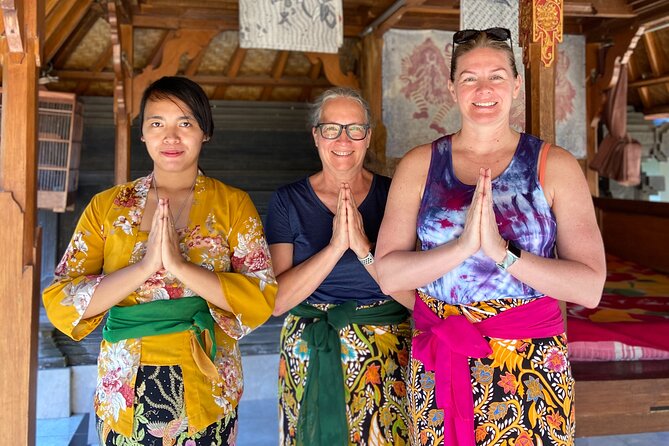
At $35 per person, the price is reasonable for a private experience that includes two-way transport from the Ubud area. Transport alone can add cost and planning time in Bali, especially when your destination is outside central Ubud. You also receive a family compound tour, tea or coffee, Bali cookies, instruction in making offerings, and use of a sarong and sash.
The private format improves the value. A low-cost group tour may be cheaper per person, but it usually gives you less control and less time for questions. Here, the host can focus on your group, and the family setting is the main attraction.
The price does not cover the temple entrance fee or donation. Lunch is also extra. These are modest additions compared with the included transport and personal hosting, but you should budget for them rather than assume the advertised price covers every part of the day.
The activity can also be combined with a cooking class, coconut oil class, silver class, or evening fireflies outing. Those additions may turn the short visit into a fuller day, but they will change both the time commitment and the total cost. Book the village experience on its own if you want a focused cultural stop.
Who will enjoy this private village visit
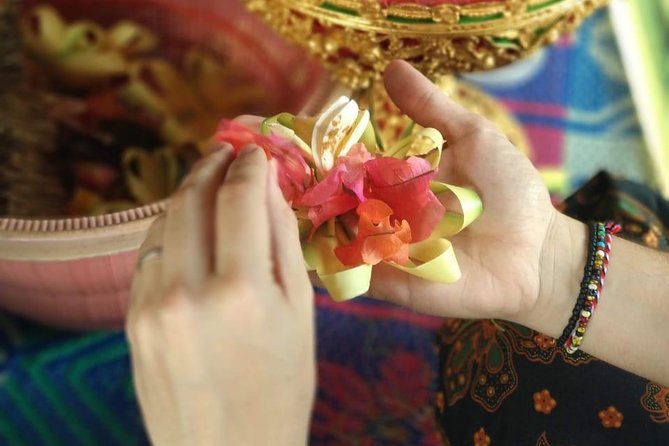
I would recommend this experience to you if you want a close look at Balinese Hindu customs and prefer meeting a family to checking off major attractions. It suits couples, families, and small groups who appreciate a calm, personal setting.
It is also a good choice if you want to understand the meaning behind offerings and temple dress. Making Canang Sari and then using it during the Holy Water blessing gives the visit a clear cultural link.
Families with children may find the offering activity easy to follow, though the religious ritual requires respectful behavior. Most people can participate, according to the supplied details, but the information does not provide specific accessibility details. If you have mobility concerns, contact the provider before booking.
You may want a different outing if you are looking for a long walking tour, a substantial meal, or a broad survey of Taro. The experience centers on one compound, a short craft lesson, and one sacred water site. Its strength is personal contact, not a large number of sights.
Timing, transport, and useful planning advice
The activity is listed as lasting about two hours. Because the route begins north of Ubud, the full time away from your accommodation will be longer once driving is included. Your private transfers make the journey easier, but traffic and your exact pickup location can affect the day.
The meeting point is Delodsema Traditional Village in Taro, Tegallalang, Gianyar Regency. The experience ends back at the meeting point in the formal details, while the tour description says two-way transfers from your Ubud-area address are included. Confirm pickup arrangements clearly when booking, especially if your accommodation sits outside the usual Ubud zone.
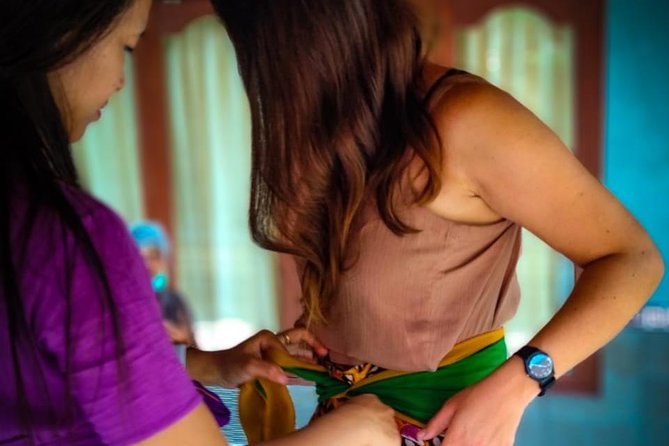
Wear clothing that is comfortable for a village visit and easy to change. You will need to wear the supplied sarong and sash at the Holy Water site. If you plan to take part in the cleansing ritual, bring swimwear or clothes that can get wet.
Carry cash for the temple entrance fee or donation. Tea, coffee, Bali cookies, and the sarong are included. Lunch is not, so plan ahead if you are scheduling this near midday.
The tour offers a mobile ticket and booking confirmation is provided at the time of purchase. Free cancellation is available if you cancel at least 24 hours before the start time. Changes or cancellations inside that window are not accepted for a refund.
How this compares with a standard Ubud sightseeing stop
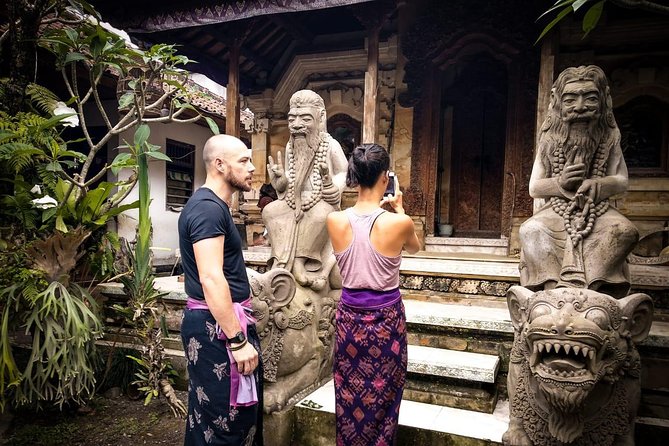
A typical Ubud outing may take you to markets, temples, rice terraces, or other well-known attractions. Those places can be worthwhile, but they often give you a quick view of Bali from the outside. Taro gives you time inside a family setting and lets you take part in two customs.
I like the way the itinerary links ordinary and sacred life. You begin with the home and family compound, stop for tea, make an offering, and then visit the Holy Water site. The sequence helps you see that Balinese Hinduism is not limited to grand temple ceremonies. It is also present in household routines and small daily offerings.
The tradeoff is variety. You will not see a long list of sights, and the village visit may feel too short if you want a full day of exploration. At $35, though, the experience is priced as a focused cultural encounter rather than a complete Ubud tour.
The strongest reason to book is the host-led access to the family compound. The strongest reason to pause is the uncertain timing between the advertised half-day wording and the approximately two-hour duration. Ask for the exact pickup time, return time, and any combined-class schedule before you commit.
Should you book the Taro village experience?
Book it if you want a private, hands-on introduction to Balinese Hindu life. The family compound, morning tea, Canang Sari lesson, and Holy Water blessing create a personal visit with more substance than a quick temple photo stop.
The $35 cost is fair because private transfers and hosting are included, and the experience gives you a direct role in the customs you are learning. Just bring cash for the temple donation, remember that lunch is extra, and allow more than two hours once driving is counted.
Skip it if you want a long sightseeing day, extensive village walking, or a full meal. For a short cultural visit near Ubud that connects family life with religious practice, this is a strong pick.
FAQ
Where does the Bali Traditional Village Experience take place?
It takes place in Taro village, about 12 miles or 18 kilometers north of Ubud. The listed meeting point is Delodsema Traditional Village on Tegallalang Road in Taro, Tegallalang, Gianyar Regency.
Is transportation from Ubud included?
Yes. Two-way private transfers from an address in the Ubud area are included. Confirm that your accommodation falls within the stated Ubud pickup area.
How long does the experience last?
The activity is listed as approximately two hours. The description also calls it a half-day experience, so confirm the exact schedule and allow extra time for transportation.
What will I do at the family compound?
You will tour the traditional family compound, learn where family members live, hear about the family temple, enjoy morning tea with the family, and learn how to make Canang Sari offerings.
Is food included?
Coffee or tea and Bali cookies are included. Lunch is not included.
Do I need to bring a sarong?
A Balinese sarong and sash are provided. Wearing them is mandatory when entering the Holy Water site.
Is the Holy Water temple fee included?
No. An entrance fee or donation is payable in cash at the Holy Water temple. The exact amount is not specified.
Can I cancel for a full refund?
Yes, if you cancel at least 24 hours before the experience start time. Cancellations or changes made less than 24 hours in advance are not accepted for a refund.
Just added around Ubud
- Overnight Mount Ijen Blue Fire Trekking Tour From Bali★ 4.0 · 14 reviews
- Keliki Village Tour And Rice Field Walk Including Lunch Or Dinner★ 5.0 · 3 reviews
- Ubud Tour with all includes★ 5.0 · 3 reviews
- Jungle Buggy Adventure and Ubud Tour★ 5.0 · 6 reviews
- Jungle Swing – Volcano – Water Temple – Monkey Forest and Waterfall Tour★ 5.0 · 11 reviews
- Exclusive Ubud Jewelry Making: Craft with a Pro Silversmith!★ 5.0 · 37 reviews
- Mount Batur Jeep Tour★ 5.0 · 30 reviews
- Jatiluwih in detail (1 h. e-bike tour in the rice terraces)★ 4.0 · 5 reviews
Ubud Tours, compared.


Monkey Forest, Jungle Swing, Rice Terrace, and Water Temple
Read our review →


Uluwatu Sunset, Kecak Dance, and Dinner Jimbaran Beach
Read our review →
Tanah Lot and North Bali Tour: Scenic Journey
Read our review →