Reviewed · UBUD TOURS
Bedugul Cultural Private Tour
The best part of the Bedugul Cultural Private Tour is the way it links Bali’s sacred places with the food and farming that support everyday life. You begin at Mambal’s morning market, then head toward the Jatiluwih rice terraces and the lake temple of Ulun Danu Bratan, all with a private guide and door-to-door transport.
I like the private format, which gives you room to ask about Balinese Hinduism, local food, farming, and village life without keeping pace with a large group. I also like the mix of scenery and ordinary life: the morning market and vegetable farms make the famous temple and rice fields feel more connected to Bali today.
The main drawback is the long road time. This is an 8 to 10-hour day, and the ride to the rice terraces can feel lengthy, especially if you want a relaxed morning. Entrance fees and lunch are also extra, so the advertised price is not the full cost.
Key points to know before booking
- Mambal Market comes first: You have about 45 minutes to see where local residents shop for daily needs and try Balinese food.
- Jatiluwih is the big scenery stop: Allow 1.5 hours for Bali’s broadest rice terrace area and its UNESCO World Heritage setting.
- Ulun Danu Bratan is the signature photograph: The lakeside Hindu temple sits amid the cool highland scenery of Bedugul.
- Your guide shapes the day: Mawa, Awan, Ketut, and Wira are among the guides who have led this experience, with strong praise for clear English and cultural explanations.
- The price is good for a private car: At $40 per person, the value improves when two or more people share the vehicle, though meals and entrance fees are separate.
- A sarong is supplied: You do not need to bring one for the Hindu holy sites, but respectful clothing still matters.
Why this Bedugul day trip works
Bali is easy to reduce to beaches, sunset bars, and temple gates. This trip gives you a fuller picture. It heads inland from Ubud toward the highlands, where rice, vegetables, coffee, fruit, water, and religion meet.
The day is not built around one attraction alone. You get a market, a passing view of one of Bali’s monkey forests, a major rice-growing area, a lakeside temple, and a vegetable-farming stop. That variety matters because the stops explain one another. The temple is not just a photogenic building, and the terraces are not just green steps for your camera. Both belong to a system of water, farming, ritual, and village life.
Your private guide is central to the experience. Guides named in booking feedback include Mawa, Awan, Ketut, and Wira. The strongest praise has focused on their English, humor, care, and ability to explain Balinese culture in a useful way. Guide assignment is not guaranteed, but the structure of the tour gives you time for questions and conversation.
The tour operates in an air-conditioned vehicle and includes bottled water, fuel, hotel pickup, and drop-off. That is a practical advantage in Bali, where a long day on winding roads can be tiring if you are driving yourself or arranging separate transport.
A few more Ubud half-days to weigh up
- All-Inclusive Ubud Private Tour
★ 5.0 · 14,344 reviews - Best of Ubud Full-Day Tour with Jungle Swing
★ 5.0 · 8,571 reviews - Ubud: Monkey Forest, Jungle Swing, Rice Terrace, and Water Temple
★ 5.0 · 7,160 reviews
Mambal Market: Bali before the postcard stops
Mambal is the most everyday part of the tour. You spend about 45 minutes at the traditional morning market, where local people shop for daily needs. This is your chance to see the food side of Bali before reaching the grander sights.
Your guide can help you understand what you are seeing and point out local foods to try. The experience is less polished than a visitor-focused food demonstration, which is exactly the point. You are seeing a working market rather than a display made only for sightseeing.
I would use this stop to ask direct questions. Ask what people buy for a household offering, which foods are common at breakfast, or how market shopping fits into village life. The available tour details specifically emphasize Balinese food, and the guides have also been praised for showing local cuisine.
Keep your expectations sensible. Forty-five minutes is enough for a look and a few tastes, not a full cooking class or long food tour. If you are eager to try something, tell your guide early. A private tour gives you more flexibility than a bus group, but the schedule still has several major stops ahead.
The monkey forest pass and the road north
The route passes by one of Bali’s monkey forests. This is not described as a dedicated visit, so treat it as a roadside part of the journey rather than a separate wildlife attraction.
That distinction is useful. You are not buying a monkey encounter, and no time is listed for entering the forest. The value here is seeing another familiar part of Bali’s inland route while your guide adds context if you have questions.
The road itself is part of the day’s trade-off. Jatiluwih is a substantial distance from Ubud, and one booking comment specifically notes that the trip to the rice fields is long but enjoyable. The private, air-conditioned vehicle takes the stress out of navigation, though it cannot make the road shorter.
Bring patience and use the ride well. Ask about the places you are passing, Balinese farming, or the religious meaning of the sites ahead. If you prefer short transfers and many quick attractions, this tour may feel slow. If you want a full inland day without driving, the time makes more sense.
Jatiluwih rice terraces: the day’s largest view
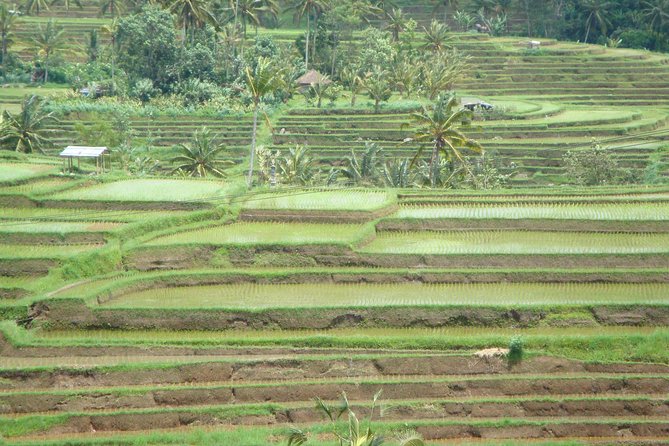
Jatiluwih is the major scenery stop, with about 1 hour and 30 minutes set aside for the rice terraces. It is described as Bali’s widest rice terrace area and has UNESCO World Heritage status, making it one of the most important stops on the route.
The appeal is scale. Instead of viewing one small rice field beside a road, you get a broader sense of how farming shapes the hills. The terraces show Bali as a working agricultural place, not just a holiday backdrop.
You should have time for photographs and a walk around the viewing area, but the exact walking route is not specified. Wear comfortable shoes and expect outdoor conditions. The tour is suitable for most people, but anyone who needs a very specific walking arrangement should confirm details before booking.
The rice fields are also where a good guide earns the fare. Ask how water reaches the paddies, how the fields fit into village life, and why agriculture and religious practice are closely linked in Bali. The tour’s aim is cultural understanding, and this is one of the best places to connect the scenery with that subject.
Jatiluwih has an entrance fee of IDR 75,000 per person according to the supplied pricing details. It is not included, so carry a way to pay for the additional charge. Lunch is also not included, and one booking comment mentions enjoying a good lunch near the rice terraces, so you should discuss meal timing with your guide rather than assume lunch is covered.
Same base, a completely different kind of day:
- Best of Ubud 1-Day Private Tour
★ 5.0 · 4,451 reviews - Bali: Ubud Palace Legong Dance Show Ticket
★ 4.4 · 3,979 reviews - Uluwatu Sunset, Kecak Dance, and Dinner Jimbaran Beach
★ 5.0 · 3,681 reviews - Tanah Lot and North Bali Tour: Scenic Journey
★ 5.0 · 3,620 reviews
Ulun Danu Bratan and the highland temple setting
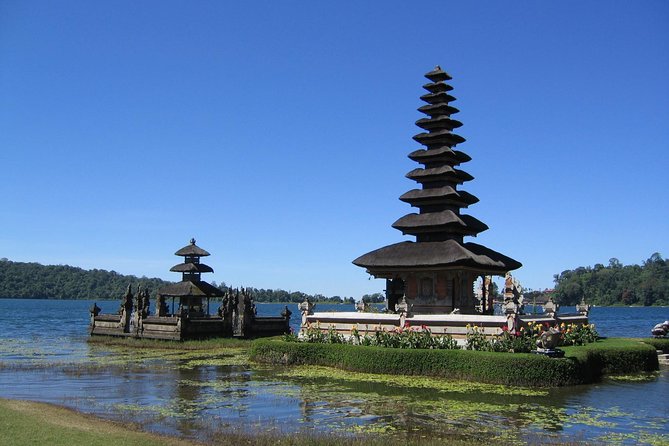
Ulun Danu Bratan is the most recognizable stop. The temple sits on Lake Bratan, with pagodas and religious buildings framed by the surrounding highland scenery. The planned visit lasts about one hour.
This is a place where timing and weather affect the experience. The temple’s appeal comes from its position by the lake as much as from the buildings themselves. Give yourself time to look beyond the classic photograph. Notice how water, worship, and the surrounding countryside come together.
Your guide can explain the site’s place in Balinese Hindu life and help you understand what you are seeing. The strongest guide feedback has centered on explanations of spirituality, religion, nature, and daily life, which is exactly the kind of context that makes a temple visit more meaningful.
An entrance fee of IDR 75,000 per person is listed for Bedugul Bratan Temple. It is separate from the tour price. Sarongs are provided for entry to Hindu holy sites, a helpful detail if you are packing light, but you should still dress respectfully.
One hour is enough for a focused visit and photographs. It is not enough for a slow, unhurried exploration of every corner, especially if the grounds are busy or you want a long photo session. The temple is a highlight, but the tour is designed as a full cultural circuit rather than a single-site visit.
Baturiti: a quiet final stop among vegetable farms
The final listed stop is Baturiti, where you take an afternoon break and enjoy views of vegetable farms. About one hour is planned here, with no entrance fee.
This stop gives the day a useful change of pace. After the market, terraces, and temple, you get another look at agriculture, this time through the vegetables grown in the highland area. It reinforces the idea that Bedugul is not simply a scenic district. It is also a productive farming region.
The description does not promise a farm tour or hands-on activity, so expect a viewpoint and a break rather than a formal demonstration. You might find this stop especially appealing if you like seeing how food is grown, though people focused only on major attractions may consider it less essential.
It is a sensible place to pause before the return drive. Ask your guide about the crops and the farming region, then use the time to rest and take photographs.
What the $40 price really covers
At $40 per person, this is a strong value for a private full-day outing, particularly if you are sharing the vehicle with another person or a small group. You are paying for private transport, an air-conditioned car, an English-speaking local guide, bottled water, fuel, and hotel pickup and drop-off.
That package saves you from arranging a driver, negotiating several separate rides, and working out the route between Ubud, Jatiluwih, and Bedugul. The guide also adds value by explaining culture rather than simply delivering you to a gate.
The price does not cover everything. You need to budget separately for:
- Jatiluwih entrance: IDR 75,000 per person
- Ulun Danu Bratan entrance: IDR 75,000 per person
- Lunch
- Any food or drinks bought at the market
The listed entrance price for Jatiluwih appears as IDR75.00 in one part of the details and IDR75,000 elsewhere. I would confirm the current amount and payment method before departure, since the latter figure is the clearly stated full amount.
Group discounts are available, but this remains a private activity. Only your own group participates, so you do not share the vehicle with strangers. That makes the price more attractive for couples, families, or friends who want their own pace.
Timing, comfort, and the long return ride
Plan on 8 to 10 hours from pickup to drop-off. The exact length will depend on traffic, time spent at stops, and the pace of your group.
The private vehicle is the biggest comfort feature. You can settle into the air conditioning between stops, carry water, and avoid the work of driving through unfamiliar roads. Hotel pickup and drop-off also make the day easier at both ends.
Still, this is not a quick half-day from Ubud. Jatiluwih takes time to reach, and the return journey follows a day that already includes several stops. I would avoid scheduling an evening activity that requires a strict arrival time.
The tour is designed for most people to participate, and service animals are allowed. No special fitness requirement is stated. Since the tour includes rice terraces, temple grounds, market walking, and outdoor viewpoints, comfortable shoes and sun protection are sensible choices, but those are practical suggestions rather than listed requirements.
The guide can make or break the cultural side
The attractions are good, but the guide is what turns this from a private driver service into a cultural tour. Mawa has been singled out for thoughtful explanations, humor, and broad knowledge of Balinese life. Awan has been praised for explaining local cuisine, while Ketut and Wira have been noted for cheerful service, consideration, and strong English.
Those details suggest what you should expect from the best version of the day: not a lecture, but an ongoing conversation. You can ask why a temple is built where it is, how market foods are used, or what makes Bali’s farming traditions different from what you know at home.
Guide assignment can change, so do not book based on one individual alone. Instead, tell the operator what interests you. If food, Hindu practice, farming, photography, or daily village life matters most, say so when arranging the tour.
The experience has a 4.9 rating from 32 reviews, with 100 percent recommending it. That is a strong record, and the praise is unusually consistent around the guides and the smooth running of the day. The practical caution is simple: good guiding cannot remove traffic or turn an 8 to 10-hour route into a short outing.
Who should book this private tour
I would choose this tour if you want to see inland Bali without driving and prefer explanations over a checklist of photo stops. It fits couples, families, and small groups that value their own vehicle and the ability to ask questions.
It is also a good match if you want more than temples. The market and farming stops give you a look at food production and ordinary routines, while Jatiluwih and Ulun Danu provide the visual highlights.
I would think twice if your priority is a slow temple visit, a dedicated food class, or a short route close to Ubud. You should also allow extra money for the two entrance fees and lunch.
Should you book the Bedugul Cultural Private Tour?
Book it if you want a full inland day that connects market food, farming, rice terraces, and Balinese Hindu sites. The private transport and local guide make the $40 starting price appealing, especially for a small group, and the guide quality appears to be the tour’s strongest asset.
Skip it if you dislike long drives or want every stop to be a major attraction. For the right pace, though, this is a well-rounded way to see the Bedugul area without handling Bali’s roads yourself.
FAQ
How long does the Bedugul Cultural Private Tour last?
The tour lasts approximately 8 to 10 hours, including the inland route and hotel pickup and drop-off.
Is hotel pickup included?
Yes. Hotel pickup and drop-off are included, and pickup is offered as part of the private tour service.
Is this a private activity?
Yes. Only your group participates, and transport is provided in a private air-conditioned vehicle.
Are entrance fees included in the $40 price?
No. Jatiluwih and Ulun Danu Bratan entrance fees are paid separately. The listed amounts are IDR 75,000 per person for each site.
Is lunch included?
No. Lunch is not included in the tour price.
Are sarongs supplied for temple visits?
Yes. Sarongs are provided for entering Hindu holy sites.
Can I cancel for a full refund?
Yes, if you cancel at least 24 hours before the experience start time. Cancellations or changes made less than 24 hours before the start time are not accepted for a refund.
Just added around Ubud
- Overnight Mount Ijen Blue Fire Trekking Tour From Bali★ 4.0 · 14 reviews
- Keliki Village Tour And Rice Field Walk Including Lunch Or Dinner★ 5.0 · 3 reviews
- Ubud Tour with all includes★ 5.0 · 3 reviews
- Jungle Buggy Adventure and Ubud Tour★ 5.0 · 6 reviews
- Exclusive Ubud Jewelry Making: Craft with a Pro Silversmith!★ 5.0 · 37 reviews
- Mount Batur Jeep Tour★ 5.0 · 30 reviews
- Jungle Swing – Volcano – Water Temple – Monkey Forest and Waterfall Tour★ 5.0 · 11 reviews
- Jatiluwih in detail (1 h. e-bike tour in the rice terraces)★ 4.0 · 5 reviews
Ubud Tours, compared.
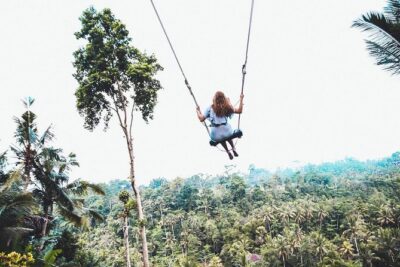
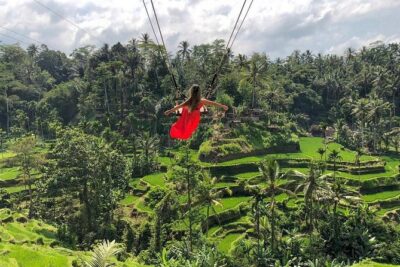
Monkey Forest, Jungle Swing, Rice Terrace, and Water Temple
Read our review →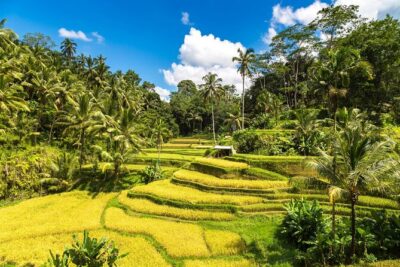
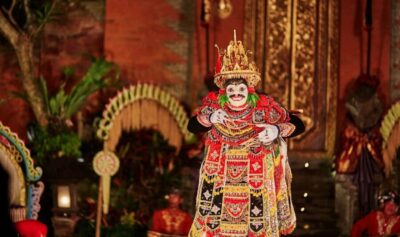
Uluwatu Sunset, Kecak Dance, and Dinner Jimbaran Beach
Read our review →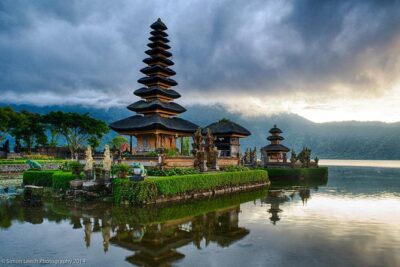
Tanah Lot and North Bali Tour: Scenic Journey
Read our review →