
Reviewed · UBUD TOURS
Bali Half Day Photography Tour
Ubud’s best photography often happens before breakfast. This four-hour outing gets you moving at 5:30 am, when the light is soft, the rice fields are calm, and Mount Agung may appear above the morning haze. You will also photograph local market life and visit Tirta Empul Temple, where purification rituals take place when the temple schedule allows.
I like the small maximum group of four, which gives the guide time to help with framing and camera settings. I also like the included hotel pickup, since reaching a sunrise viewpoint before dawn can be awkward in an unfamiliar place. The drawback is the early start, and sunrise views and ceremonies cannot be guaranteed because weather and temple schedules control the show.
Key points to know before booking
- Sunrise comes first: The day begins with views of Mount Agung and nearby rice fields in the best early light.
- Small groups matter: A maximum of four people allows for direct photography advice from David Metcalf or Nyoman.
- Local life is central: The traditional market offers opportunities for food, coffee, street scenes, and portraits.
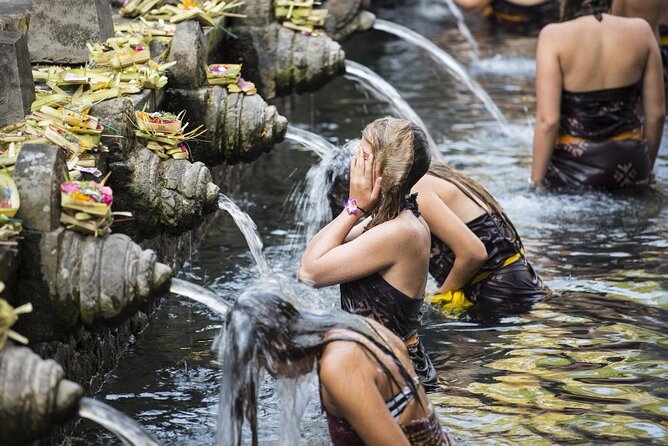
- Tirta Empul adds cultural depth: You may see a ceremony and local purification practices, depending on the day.
- Transport is simple: Air-conditioned round-trip transfers from Ubud-area hotels and parking are included.
- Bring breakfast: Food is not included, but you can take a breakfast box and buy small snacks or coffee at the market.
Why this early Ubud photo tour works
This is not simply a drive to a viewpoint followed by a few quick snapshots. The experience is built around how you photograph Bali. Your guide helps you find subjects, respond to changing light, and use the settings on a camera or smartphone.
That distinction matters. Ubud is full of attractive scenes, but attractive does not always mean easy to photograph. A rice field can look flat in harsh midday sun. A market can feel chaotic if you do not know where to stand. A temple can produce confusing compositions when there are people, offerings, stone carvings, and movement in the same frame.
An early start solves part of that problem. At 5:30 am, you are in position for softer light and quieter surroundings. You also have a better chance of seeing the day take shape rather than photographing Bali after the heat and crowds have arrived.
The tour lasts about four hours. That is long enough to cover several types of subject without turning the morning into an exhausting full-day production. It is also short enough to leave time for lunch, a nap, or another Ubud activity.
More photo shoots in Ubud:
- UBUD Instagram Spot Tour with Photographer
★ 5.0 · 105 reviews - Bali Private Photographer & Drone
★ 4.5 · 29 reviews - Batur Jeep Explore with Photographer
★ 4.5 · 11 reviews
Sunrise over Mount Agung and the rice fields
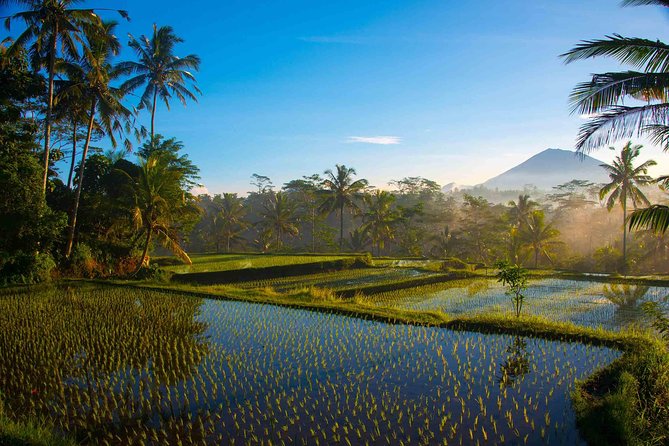
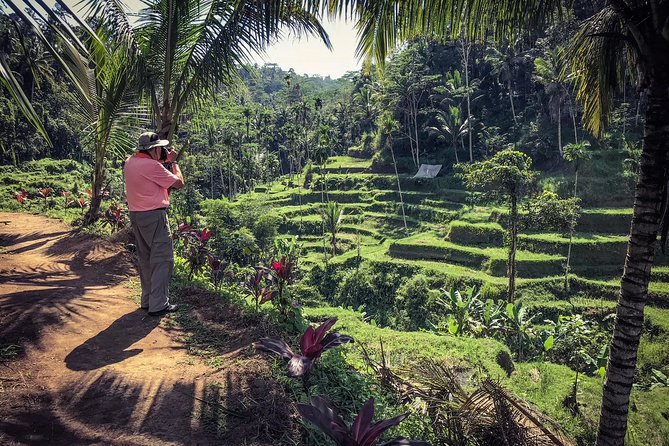
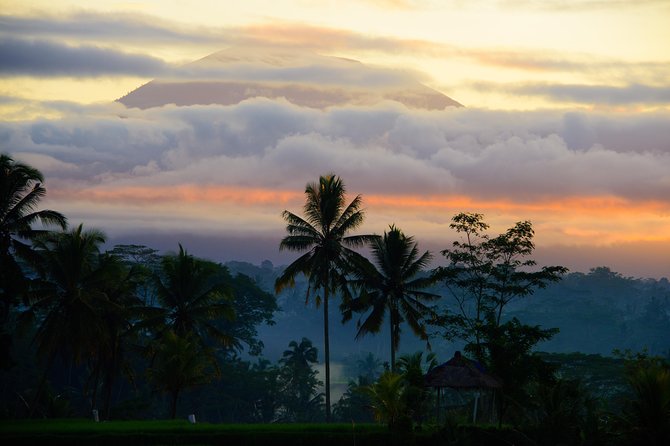
The first photographic subject is sunrise over Mount Agung, with rice fields around Ubud. The mountain is an important visual anchor, and the fields provide lines, texture, and foreground detail.
The key word here is possibility. Mountain views depend on weather, haze, and the season. You should book this for the chance to photograph Mount Agung in early light, not as a promise of a clear mountain silhouette every morning.
Your guide’s local timing can be useful. The best position may change with the time of year and the conditions on the day. You may be shown where to place the horizon, how to use the rows of the fields to lead the eye, or how to avoid letting a bright sky overpower the rest of the frame.
If you use a phone, you will still have plenty to work with. Try a wide view for the mountain and fields, then switch to a tighter frame for details in the paddies. If you carry a dedicated camera, this is the time to check exposure before the light becomes stronger.
You should also expect some waiting and adjusting. Sunrise photography is not a constant stream of action. The colors change quickly, and the most useful instruction may come in short bursts as the light shifts.
The traditional market and people photography
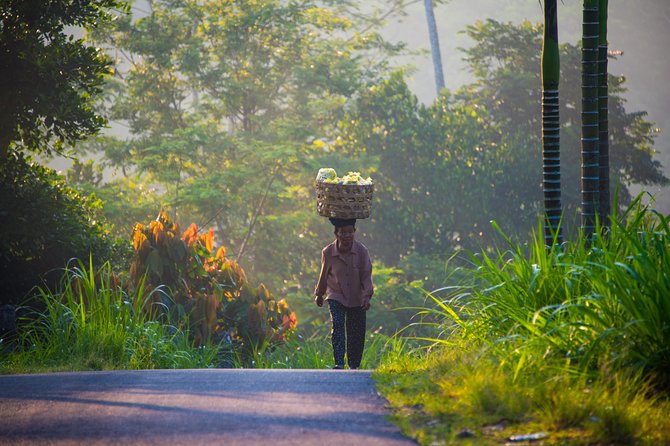
After the sunrise work, the tour moves toward a traditional market. This changes the pace completely. Instead of wide views and quiet fields, you will work with faces, hands, produce, stalls, movement, and small moments of daily life.
This is one of the most useful parts of the morning if you want to improve your people photography. Your guide can help you think about distance, background, light, and timing. You may also have a chance to buy small snacks or coffee, which gives you a simple break between photo stops.
Portrait photography needs care. A camera can make people self-conscious, especially when you are close. A local guide can help you approach the setting with better judgment and may help you understand when a portrait feels welcome rather than intrusive.
The market is also a good place to practice without chasing a single perfect image. You can work on composition, then try again with a different angle or focal length. One photo might focus on a person. Another might show the person in context, surrounded by the market.
Do not expect a formal photography classroom. This is a practical, moving session. The strongest benefit comes from asking direct questions and showing your guide what you are trying to achieve. Nyoman is described as patient, friendly, and skilled at advice on framing and light. David Metcalf is also involved as a photography guide and instructor.
Tirta Empul Temple and purification rituals
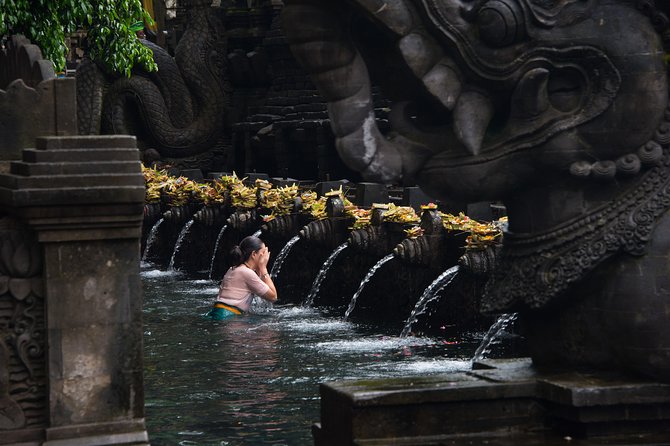
The final named stop is Tirta Empul Temple, a water temple where local people come for purification. The visit is subject to the temple schedule, so the exact experience can vary.
That uncertainty is worth understanding before you book. You may see a ceremony or people carrying out purification practices, but neither should be treated as a guaranteed performance for photographers. The temple is a living religious place, not a staged set.
Your guide can help you work out how to photograph the scene respectfully. That might mean paying attention to the wider setting instead of taking only close portraits. It may mean waiting for a clean composition, keeping a suitable distance, or focusing on details such as water, offerings, clothing, and architecture.
This stop gives the morning a stronger cultural focus. You are not only collecting attractive images. You are seeing how a sacred place functions for local people. For many visitors, that makes the temple more meaningful than a quick stop for an exterior photograph.
The supplied schedule gives Tirta Empul about one hour, including admission. Since the tour is only around four hours, that is a useful amount of time. You will not have an entire day to explore every corner, but you should have enough time to photograph without racing through the visit.
A few more Ubud half-days to weigh up
- All-Inclusive Ubud Private Tour
★ 5.0 · 14,344 reviews - Best of Ubud Full-Day Tour with Jungle Swing
★ 5.0 · 8,571 reviews - Ubud: Monkey Forest, Jungle Swing, Rice Terrace, and Water Temple
★ 5.0 · 7,160 reviews - Best of Ubud 1-Day Private Tour
★ 5.0 · 4,451 reviews
A small group with real room for instruction
The maximum group size is four people. That is a major selling point for anyone who wants photography help rather than a standard sightseeing ride.
In a large group, a guide has to keep everyone moving. Here, you have a better chance to ask about shutter speed, focus, exposure, framing, or phone settings while the subject is still in front of you. You can also show the guide a photo and discuss what worked and what did not.
The experience seems especially suited to mixed skill levels. A beginner can get help using a camera or smartphone, while a more experienced photographer can ask about finding better light and stronger compositions. The guides are described as patient, professional, and good-humored, which matters when you are learning before sunrise and working in unfamiliar places.
You should not expect formal post-processing instruction unless it is arranged separately. The information provided focuses on photographing subjects in the field and making better use of your equipment during the tour.
Bring the device you actually plan to use in Bali. The tour does not include camera equipment. That means you need to supply your camera, phone, lenses, batteries, memory cards, and any other items you rely on.
The value of the $164.11 price
At $164.11 per person, this is not the cheapest way to see Ubud. The price makes more sense when you look at what is bundled together: roughly four hours, an air-conditioned vehicle, parking, pickup and return from Ubud-area hotels, entry to Tirta Empul, and photography guidance in a group capped at four.
The strongest value is the local planning. You could visit a market and Tirta Empul independently, but you would need to arrange transport, choose your timing, locate good sunrise positions, and work out how to photograph the scenes as they change.
For a photographer with limited time, that can justify the cost. The tour is designed to connect several subjects in one morning: a mountain and fields, market life, portraits, and a water temple. You are paying for transport and access, but also for someone who knows how to use the morning well.
The value drops if you mainly want sightseeing and do not care about improving your photos. In that case, a regular Ubud tour may be a better fit. This experience is most worthwhile when you will use the instruction, ask questions, and make photography one of the main reasons for going.
The price is also easier to justify for a solo participant or a small private party. With only four places available, the guide can give more attention than on a standard group excursion. Still, you should compare the price with your own camera goals before booking.
Food, transport, and the practical details
Pickup is offered, and the tour uses an air-conditioned vehicle. Parking fees are included. These details are modest but useful, especially for a pre-dawn start when arranging your own ride may be inconvenient.
The stated start time is 5:30 am. Confirm the pickup details when you book, and be ready early at your Ubud-area hotel. The tour is mobile-ticketed, and booking confirmation is provided at the time of booking.
Breakfast is not included. You can bring a breakfast box from your hotel, which is probably the simplest option. The traditional market also offers small snacks and coffee, but you should not rely on that as a full meal.
Wear clothing suitable for an early morning and a temple visit. The available information does not list a dress code, so ask the operator if you need specific temple clothing guidance. Bring only the camera gear you can manage while walking and changing locations.
The activity is listed as suitable for most people and near public transportation. No special access details are provided, so you should contact the operator directly if you have mobility needs or require a particular vehicle setup.
Free cancellation is available if you cancel at least 24 hours before the start time. Changes or cancellations made inside that window are not accepted for a refund.
What to bring for better photographs
You do not need an expensive camera to benefit from this tour. A smartphone can handle sunrise, market scenes, and temple details if you pay attention to light and composition.
I would bring:
- A fully charged camera or phone
- Spare batteries or a power bank
- Extra memory space
- A small cloth for wiping the lens
- Comfortable shoes
- A breakfast box and water
- A light layer for the early start
A tripod is not listed as part of the equipment, so bring one only if you already use it and can manage it easily. The tour moves between several locations, and bulky equipment may become a nuisance.
Most important, arrive ready to participate. Do not simply hand the camera to the guide and wait for perfect scenes. Ask why a position works. Try the suggested setting. Then take a second photograph after making one change.
Who should book this experience
I would choose this tour if photography is a major part of your Bali trip and you want local guidance without committing to a full day. It is a particularly good match for solo photographers, couples, and small groups who prefer direct help.
It also suits visitors who want more than postcard views. The market and Tirta Empul bring you closer to ordinary daily activity and religious practice, while the sunrise stop gives you the classic mountain and rice-field setting.
You may want to skip it if 5:30 am sounds miserable, if you need a guaranteed clear view of Mount Agung, or if you prefer a slow morning with a long breakfast. The tour packs several subjects into four hours, so its pace is purposeful rather than leisurely.
You should also keep your expectations realistic about conditions. A mountain can disappear in haze, a ceremony may not take place during your visit, and market scenes cannot be controlled. Those limits are part of photographing real places.
Should you book the Bali Half Day Photography Tour?
Book it if you want practical guidance, a small group, and a carefully timed morning around Ubud. The combination of Mount Agung at sunrise, rice fields, market portraits, and Tirta Empul gives you a broad sample of Bali photography in about four hours.
The guides, including David Metcalf and Nyoman, are the main reason to choose this over arranging the same stops alone. You get help with framing, light, and settings, plus transport that removes much of the early-morning hassle.
Skip it if you are not interested in photography or cannot manage the early start. For everyone else, the $164.11 price is reasonable when you value instruction, local timing, and a group of no more than four people. Bring your own equipment, pack breakfast, and treat the sunrise and temple ceremony as opportunities rather than guarantees.
FAQ
What time does the tour start?
The tour starts at 5:30 am.
How long does the photography tour last?
The experience lasts approximately four hours.
What locations are included?
The tour includes sunrise photography of Mount Agung and the surrounding rice fields, a traditional market for local portraits and daily-life scenes, and Tirta Empul Temple.
Is admission to Tirta Empul included?
Yes. Admission to Tirta Empul Temple is included.
Can I use a smartphone instead of a camera?
Yes. The tour provides tips for making the most of the settings on your camera or smartphone. Camera equipment itself is not included.
Is breakfast included?
No. You can bring a breakfast box from your hotel. Small snacks and coffee may be available at the traditional market.
What is the cancellation policy?
You can cancel for a full refund if you cancel at least 24 hours before the experience start time. Cancellations or changes made less than 24 hours before the start time are not accepted for a refund.
Just added around Ubud
- Overnight Mount Ijen Blue Fire Trekking Tour From Bali★ 4.0 · 14 reviews
- Keliki Village Tour And Rice Field Walk Including Lunch Or Dinner★ 5.0 · 3 reviews
- Ubud Tour with all includes★ 5.0 · 3 reviews
- Jungle Buggy Adventure and Ubud Tour★ 5.0 · 6 reviews
- Exclusive Ubud Jewelry Making: Craft with a Pro Silversmith!★ 5.0 · 37 reviews
- Mount Batur Jeep Tour★ 5.0 · 30 reviews
- Jungle Swing – Volcano – Water Temple – Monkey Forest and Waterfall Tour★ 5.0 · 11 reviews
- Jatiluwih in detail (1 h. e-bike tour in the rice terraces)★ 4.0 · 5 reviews
Ubud Tours, compared.
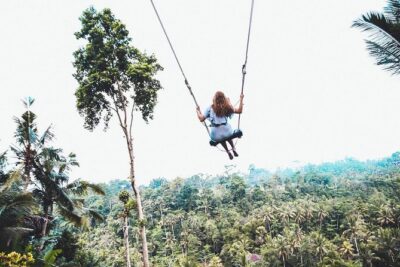
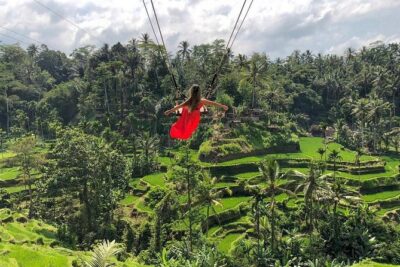
Monkey Forest, Jungle Swing, Rice Terrace, and Water Temple
Read our review →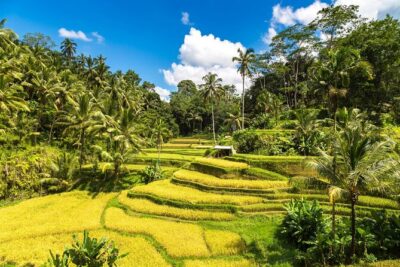
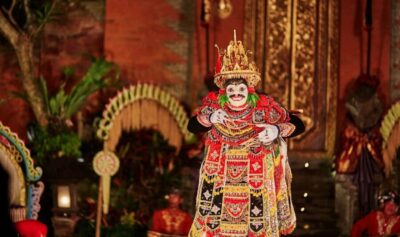
Uluwatu Sunset, Kecak Dance, and Dinner Jimbaran Beach
Read our review →
Tanah Lot and North Bali Tour: Scenic Journey
Read our review →
Body Massage Experience in Ubud Traditional Spa
Read our review →Browse the lists this tour appears in