
Reviewed · UBUD TOURS
Ubud Guided Walking Tour
Ubud’s story makes more sense when you walk it in the company of someone who can connect temples, art, royalty, and colonial history. I like the small group of up to eight and the way the route moves from Gunung Lebah Temple to the art museum and royal compounds. I also like that the guides, including Windari, Win, Ira, and Ilia, are praised for clear explanations, warm conversation, and a good sense of humor.
The main tradeoff is simple: this is a real three-hour walk, not a gentle sightseeing loop. Uneven temple steps, steep sections, patchy sidewalks, and Bali’s weather are part of the deal, and there is no hotel pickup or drop-off.
Key points at a glance
- Five useful stops in three hours: See Gunung Lebah Temple, Campuhan Ridge, Museum Puri Lukisan, Ubud Palace, and Puri Kantor.
- A strong first-day activity: The route gives you context for Ubud’s temples, art, royal families, and modern cultural identity.
- Museum entry is included: The Rp 95,000 ticket to Museum Puri Lukisan is covered in the price.
- Small groups keep it personal: The maximum group size is eight, making it easier to ask questions and hear the guide.
- Special palace access adds character: The visit to a Balinese compound at Puri Kantor goes beyond the usual street view.
- Plan for a warm, uneven walk: Bring a reusable bottle, wear sensible shoes, and allow for rain delays in severe weather.
Why this walk works as an introduction to Ubud
At $28.36 per person, this tour sits in the affordable range for a guided cultural walk. The price includes an English-speaking local guide, Museum Puri Lukisan admission, access to a Balinese compound, and local discounts. You are paying less for transport and more for interpretation, which is the right balance in central Ubud, where the sights are close enough to reach on foot.
I see this as a get your bearings fast experience. Ubud can feel like a jumble of temples, galleries, traffic, cafés, ceremonies, and palace walls at first. A guide gives those pieces an order. You learn why temples look the way they do, how foreign artists shaped Ubud’s reputation, and why royal families still matter to the town’s identity.
The maximum of eight people is important. A large walking group can lose the thread on a busy street or leave you standing at the back of a temple courtyard. With a small group, you have a better chance to hear the guide, ask about a detail, and keep the conversation moving. The exact guide may vary, but Windari, Win, Ira, and Ilia are among the guides praised for making the walk interactive and easy to follow.
The tour begins at Cantina Rooftop Restaurant in Ubud Sayan and ends at Puri Kantor on Jalan Suweta. Since you arrange your own way to the start and from the finish, check both points before setting out. The end point is not the same as the starting point, so this matters if you have a lunch reservation, a driver waiting, or a hotel far from central Ubud.
More walking tours in Ubud:
- Sidemen Trekking: A Walk from a Different Perspective
★ 5.0 · 94 reviews - Ubud Countryside Tour: Campuhan Ridge Walk and Rice Terrace
★ 5.0 · 72 reviews - Hikaria: Bali’s First Immersive Night Walk
★ 5.0 · 16 reviews
Gunung Lebah Temple and the foundations of Balinese worship
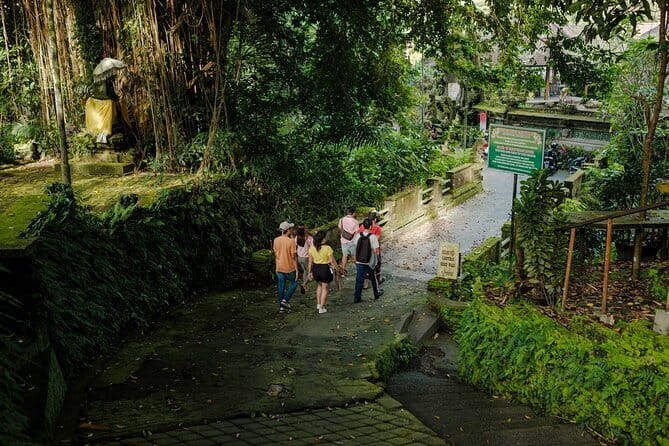
The first stop is Gunung Lebah Temple, where you spend about 20 minutes outside Ubud’s oldest temple. This is a good place to begin because the guide can explain the arrival of Hinduism in Bali before you start looking at architectural details.
You can expect the discussion to cover the role of Balinese temples in community life, not only their appearance. That distinction matters. A temple in Bali is not simply an old building for visitors to photograph. It is tied to local religious practice and community responsibilities, and the guide helps you read the gates, courtyards, and decorative features with more care.
The short stop also keeps the opening section from becoming too heavy. You get a useful foundation, then continue on foot rather than spending half the tour in one place. Remember that temple areas may include steps and uneven surfaces. Dress in a way that allows comfortable movement and follow any local rules your guide explains.
Campuhan Ridge and the colonial-era bridge
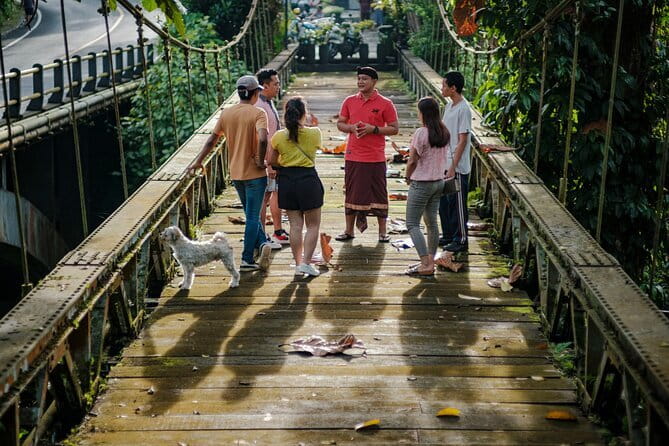
The walk continues to Campuhan Ridge, with about 20 minutes devoted to a modest bridge dating from the Dutch colonial period. This stop adds a political layer to the tour. Instead of treating Ubud as a timeless cultural setting, the guide connects the bridge to Indonesia’s colonial past and the role of the Dutch East India Company.
The route does not present Bali as an isolated island untouched by outside forces. You hear about colonization and the ways the Dutch encouraged particular ideas about Bali. That background helps explain why outside artists, writers, and visitors later played such a role in Ubud’s public image.
The ridge section also gives the tour a change of pace. You move away from temple architecture and toward a walk with historical context. The word ridge may sound grander than the experience itself, since the stop is described as modest, but the value lies in the story rather than a dramatic physical challenge.
Weather can affect this part of the route. The tour operates in rain, but an intense downpour may lead to a call before the start or a change in timing. Bali’s weather is part of the experience, but you should still carry practical rain protection and avoid packing the day too tightly.
Museum Puri Lukisan and Ubud’s artistic identity

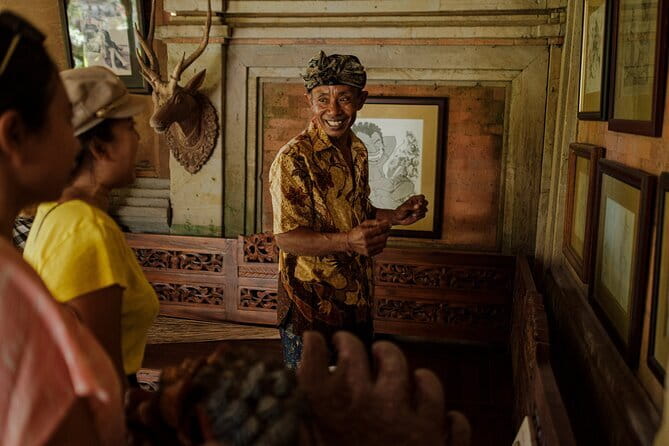
The longest stop is Museum Puri Lukisan, with about 45 minutes inside Ubud’s oldest art museum. This is the heart of the tour for anyone interested in painting, cultural exchange, or the forces that turned Ubud into an art center.
The guide explains the collaboration between Balinese and Western artists during the 20th century. That exchange helped shape Ubud’s reputation, and the museum provides a place to see the artistic results rather than treating the subject as an abstract lecture.
I particularly like the placement of this stop in the middle of the walk. You first learn about religion and colonial history, then see how those influences meet in art. The sequence gives the visit more meaning. You are not simply looking at paintings and trying to guess what makes them important.
Your admission ticket is included, with the listed value of Rp 95,000. That makes the price easier to justify, especially if you would visit the museum on your own. Still, 45 minutes is a set amount of time. If you are a serious art fan, you may want more time than the group schedule allows. If you are new to Balinese art, the guided explanation helps you use the visit well without having to work out the museum’s importance alone.
The guides are a major part of this section. Ira is described as thoughtful and clear in answering questions, while Windari and Win are praised for making the material lively. Ilia is also described as considerate and informative. Since guide assignments can change, treat those names as examples of the team rather than a promise that one particular person will lead your walk.
A few more Ubud half-days to weigh up
- All-Inclusive Ubud Private Tour
★ 5.0 · 14,344 reviews - Best of Ubud Full-Day Tour with Jungle Swing
★ 5.0 · 8,571 reviews - Ubud: Monkey Forest, Jungle Swing, Rice Terrace, and Water Temple
★ 5.0 · 7,160 reviews - Best of Ubud 1-Day Private Tour
★ 5.0 · 4,451 reviews
Ubud Palace and the role of Balinese royalty

Ubud Palace receives about 15 minutes, so this is a focused stop rather than a full palace tour. You visit the outer courtyards and learn about Balinese royalty, palace architecture, and traditional cremation rituals.
The short timing is both a strength and a limit. You get a clear explanation of why the palace matters without spending too much of the three-hour route in one complex. At the same time, anyone hoping to explore every corner or linger over architectural details may find the visit brief.
The palace is useful because it links Ubud’s past to its present. Royal families are not treated only as figures from an old story. The guide explains their historical and modern roles, giving you a better sense of how court traditions remain part of public life.
The mention of cremation rituals adds an important cultural note. These ceremonies are significant in Bali, but a short walking tour cannot explain every religious detail. Use this time to listen, ask respectful questions, and let the guide set the tone for what can and cannot be photographed.
Puri Kantor and a more personal palace visit
The final stop is Puri Kantor, where the tour includes special access to a Balinese compound. You spend about 20 minutes at the palace of Tjokorde Gede Raka Sukawati, identified as the Prince of Ubud and a co-founder of the Pitamaha Foundation.
This is one of the more distinctive parts of the route. You are not only looking at a royal building from a public street. You get access to a compound connected with a major figure in Ubud’s cultural development, and the guide explains his role in shaping the town.
Puri Kantor is also where the walk ends, at Jalan Suweta No. 1. The finishing point gives the tour a strong sense of arrival: you have moved from an old temple, through colonial history and modern art, into royal spaces that help explain Ubud today.
The phrase special access should not lead you to expect a lengthy private palace tour. The scheduled time is about 20 minutes, and the experience remains a guided introduction. Its value comes from the setting and the context, not from a long list of rooms or formal exhibits.
What the $28.36 price really covers
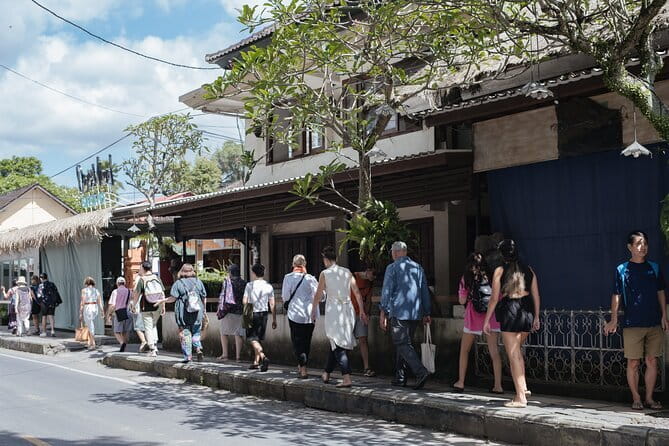
The price is fair if you want cultural explanation and do not need transport. The museum ticket alone carries a listed value of Rp 95,000, and you also receive a guide, a small group setting, palace-compound access, and local discounts.
You are not paying for a car, driver, meal, or bottled drink. Personal food and drinks are extra, and accommodation pickup and drop-off are not provided. That keeps the cost down, but it means you must plan the start and finish yourself.
The tour also supports a lower-plastic approach. Bring a reusable bottle so you can refill water rather than buying more single-use plastic. This is a small practical step, but useful in a hot walking city.
The most important value is time. In three hours, you receive a guided outline of Ubud’s religious life, colonial past, art scene, and royal connections. You will not become an expert in Bali, but you will have a much better framework for the rest of your stay.
Who will enjoy this walk most

I would choose this tour for a first visit to Ubud, especially if you prefer history and culture to a checklist of photo stops. It suits solo visitors, couples, and small groups who like asking questions and walking at a steady city pace.
It is also a good choice for visitors who want an English-speaking guide but prefer a small group to a coach excursion. An Indonesian guide is available as well, according to the tour information.
You should think twice if you have difficulty with steps, steep gradients, or uneven pavement. The walk lasts about three hours in an urban setting, and the route cannot be fully adapted around historic structures. Service animals are allowed, and the tour is near public transportation, but the physical demands remain.
This is not the best pick if you want hotel convenience, a meal, or a slow museum visit. It is a better fit if you want a compact cultural introduction and are willing to handle your own transport.
Small details that make the day easier
Wear shoes with a firm sole. Temple stairs and patchy sidewalks are more important here than dressing for a polished city stroll. Light clothing, sun protection, and a reusable water bottle are sensible choices.
Allow extra time to reach Cantina Rooftop Restaurant at the start. At the end, you will be at Puri Kantor, not back where you began. That makes the route useful for continuing into central Ubud, but you should not assume your transport provider will automatically know the change of location.
The tour operates in rain unless conditions become severe. A downpour may affect the start time, and the operator may call before the walk. Keep your phone available and avoid scheduling a nonrefundable activity immediately afterward.
Free cancellation is available if you cancel at least 24 hours before the local start time. Changes or cancellations within 24 hours are not refunded, so check your plans before that deadline.
Should you book the Ubud Guided Walking Tour?
Book it if you want Ubud explained rather than simply photographed. The combination of Gunung Lebah Temple, Campuhan Ridge, Museum Puri Lukisan, Ubud Palace, and Puri Kantor gives you a well-shaped introduction to the town, while the small group and strong guide style make the three hours feel personal.
Skip it if uneven ground is a serious problem, if you need hotel pickup, or if you want to spend most of the day at the art museum. For most visitors who can manage a warm three-hour walk, $28.36 is a sensible price for the context, entry ticket, and access you receive.
FAQ
How long does the Ubud Guided Walking Tour last?
The tour lasts approximately three hours.
How much does the tour cost?
The listed price is $28.36 per person.
Where does the tour begin?
The meeting point is Cantina Rooftop Restaurant in Ubud Sayan, Ubud, Gianyar Regency, Bali.
Where does the tour end?
The tour ends at Puri Kantor, Jalan Suweta No. 1, Ubud, Bali 80571.
Is hotel pickup or drop-off included?
No. Pickup and drop-off from your accommodation are not provided.
What places does the tour visit?
The route includes Gunung Lebah Temple, Campuhan Ridge Walk, Museum Puri Lukisan, Ubud Palace, and Puri Kantor.
Is museum admission included?
Yes. The Museum Puri Lukisan entrance ticket is included. Its listed value is Rp 95,000.
How large is the group?
The tour has a maximum of eight travelers.
What happens if it rains?
The tour operates in rain, but severe conditions such as an intense downpour may affect the start time. The operator will call before the start if conditions are severe.
Just added around Ubud
- Overnight Mount Ijen Blue Fire Trekking Tour From Bali★ 4.0 · 14 reviews
- Keliki Village Tour And Rice Field Walk Including Lunch Or Dinner★ 5.0 · 3 reviews
- Ubud Tour with all includes★ 5.0 · 3 reviews
- Jungle Buggy Adventure and Ubud Tour★ 5.0 · 6 reviews
- Jungle Swing – Volcano – Water Temple – Monkey Forest and Waterfall Tour★ 5.0 · 11 reviews
- Exclusive Ubud Jewelry Making: Craft with a Pro Silversmith!★ 5.0 · 37 reviews
- Mount Batur Jeep Tour★ 5.0 · 30 reviews
- Jatiluwih in detail (1 h. e-bike tour in the rice terraces)★ 4.0 · 5 reviews
Ubud Tours, compared.


Monkey Forest, Jungle Swing, Rice Terrace, and Water Temple
Read our review →


Uluwatu Sunset, Kecak Dance, and Dinner Jimbaran Beach
Read our review →
Tanah Lot and North Bali Tour: Scenic Journey
Read our review →
Body Massage Experience in Ubud Traditional Spa
Read our review →Browse the lists this tour appears in