Reviewed · UBUD TOURS
Matasidhi Sacred Love Blessing
The most unusual part of this Ubud experience is its blend of Homa Yajna fire ritual, Balinese cleansing, relationship guidance, and animal release. You renew your promise as a couple while taking part in a ceremony built around letting go of unwanted energy and setting new intentions.
I like the private format, since only your group takes part, and I like the care given to presentation. Previous participants describe traditional clothing, hair styling, a welcoming setting, and clear explanations of the rites. The main consideration is time: the ceremony can feel long if you want a quick photo opportunity rather than a serious spiritual experience.
Key points to know before booking
- A five-hour private ceremony: You and your partner take part without a larger group around you.
- Two possible cleansing rites: The couple blessing uses Homa Yajna or Bebayuh, depending on the ceremony arranged for you.
- A Balinese shaman reading: You receive guidance about your relationship path, obstacles, luck, and future direction.
- Animal release included: The closing act is meant to show compassion to living beings and create good karma.
- Starts at 2:00 pm: The meeting point is Puri Ubud, with the activity ending back there.
- Best for couples seeking meaning: This is more suitable for a spiritual milestone than a casual sightseeing stop.
A relationship ceremony with real cultural weight
The Matasidhi Sacred Love Blessing is not a standard spa treatment or a quick temple visit. It is a private ceremony for couples who want to connect their relationship with Balinese Hindu and Buddhist traditions.
The central idea is simple. You come together to release what no longer serves you, renew your shared promise, and set an intention for the life ahead. That makes this experience especially fitting for an anniversary, engagement, honeymoon, wedding-related visit, or a personal turning point.
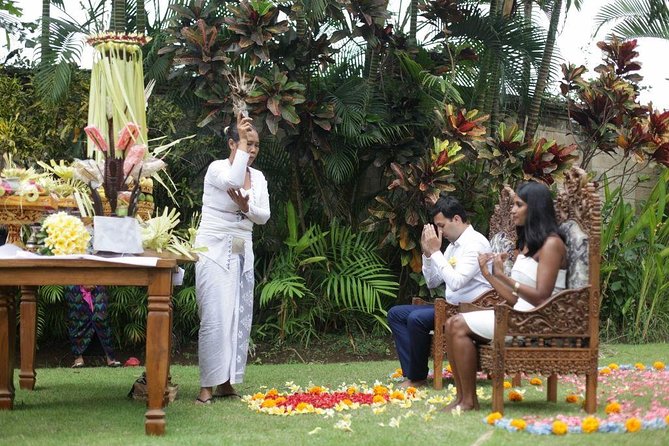
You should approach it with respect rather than treating it as a staged performance. The ceremony includes prayers, offerings, ritual actions, and explanations of their meaning. You may find the experience emotional, especially if you are comfortable with symbolic acts and quiet reflection.
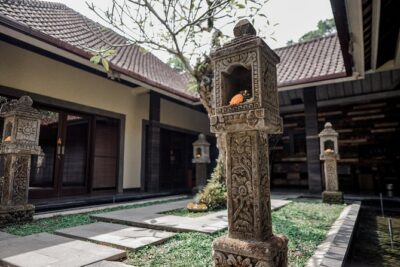
The setting is in Ubud, at Puri Ubud, and the activity is private. That matters. You do not have to perform an intimate ritual in front of a busload of strangers, and you can focus on your partner and the ceremony itself.
A few more Ubud half-days to weigh up
- All-Inclusive Ubud Private Tour
★ 5.0 · 14,344 reviews - Best of Ubud Full-Day Tour with Jungle Swing
★ 5.0 · 8,571 reviews - Ubud: Monkey Forest, Jungle Swing, Rice Terrace, and Water Temple
★ 5.0 · 7,160 reviews
Arriving at Puri Ubud at 2:00 pm
The experience begins at 2:00 pm at Puri Ubud in Gianyar Regency. Pickup is offered, but the listed starting point is Puri Ubud, so check the exact pickup arrangement when you book. The activity ends back at the meeting point.
Allow roughly five hours from start to finish. That is a useful detail when planning dinner, a massage, or another evening activity. You should not squeeze this into a tight schedule. The ceremony includes several stages, explanations, and preparation, and previous participants describe it as lengthy.
The private format also gives the experience a calmer rhythm. You are not being rushed through a fixed group timetable, although the total duration remains approximately five hours. Confirmation is provided at booking, and the activity accepts a mobile ticket.
Homa Yajna, the sacred fire ceremony
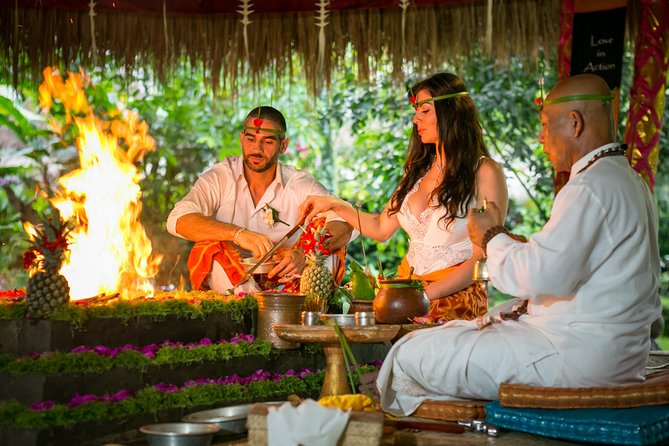
One possible couple blessing is Homa Yajna, a Balinese sacred healing fire ceremony with roots in ancient Vedic texts. Fire is used as the focus for releasing unwanted aspects of life and calling in new intentions.
The value here is symbolic rather than medical. This is not a clinical treatment, and you should not book it expecting physical healing in the usual sense. Instead, the fire gives you a clear center for reflection. You and your partner can think about habits, fears, conflicts, or past experiences you want to leave behind.
The ritual also looks forward. You are invited to consider what you want to build together and what kind of relationship you hope to strengthen. That can make the ceremony meaningful even if you are not deeply familiar with Hindu or Balinese religious practice.
The presentation appears to matter. Past participants describe the ceremony as emotional and carefully organized, with explanations of the rites. That is important because unfamiliar rituals can otherwise feel confusing or merely decorative.
If you are curious about Balinese culture, Homa Yajna gives you a closer look at the role of fire, intention, and ceremony. If you prefer a purely sightseeing-focused activity, the religious nature may feel more serious than expected.
Bebayuh and the act of cleansing
The other possible couple blessing is Bebayuh, based on the Balinese word Bayuh, meaning to cleanse and purify. The ritual is intended to release negative energy and invite a more positive, conscious way of living.
Bebayuh fits naturally with the relationship theme. Rather than focusing only on romance, it asks you to consider the emotional patterns that affect a couple. The ceremony gives you a formal moment to renew your promise and to recognize the work involved in building a lasting partnership.
You may not know in advance which form of blessing will be used. The activity describes Homa Yajna or Bebayuh as the couple ceremony, so ask for clarification if the distinction matters to you. Both are presented as cleansing and renewal rituals, but the symbolic focus may differ.
The experience is also described as blending Balinese, Hindu, and Buddhist elements. That combination may be one of its most interesting features, but it also means you should avoid expecting a single, narrowly defined religious service. Listen to the explanations and treat the ceremony as a cultural and spiritual experience rather than trying to force it into a familiar category.
Same base, a completely different kind of day:
- Best of Ubud 1-Day Private Tour
★ 5.0 · 4,451 reviews - Bali: Ubud Palace Legong Dance Show Ticket
★ 4.4 · 3,979 reviews - Uluwatu Sunset, Kecak Dance, and Dinner Jimbaran Beach
★ 5.0 · 3,681 reviews - Tanah Lot and North Bali Tour: Scenic Journey
★ 5.0 · 3,620 reviews
Traditional preparation adds to the occasion
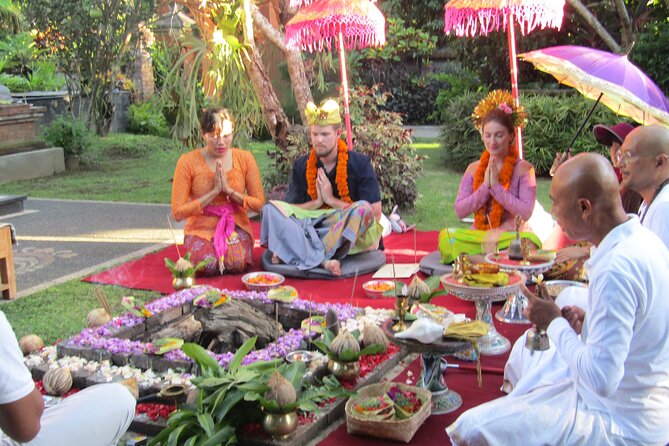
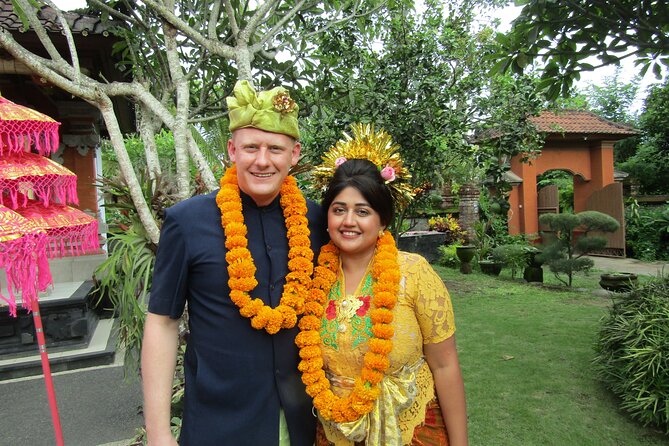
The ceremony is not just a sequence of prayers. Previous participants specifically appreciated the clothing, hair styling, and setting. These details help mark the blessing as a special event rather than an ordinary afternoon appointment.
Traditional dress can also help you feel part of the ceremony. At the same time, you should remember that the supplied information does not specify exactly what clothing is provided, how hair is styled, or how much preparation time is included. Ask Matasidhi if you have particular needs or want to know what to bring.
I like this element because it gives couples a visual and emotional transition into the ritual. You arrive as visitors in Ubud and then take on a ceremonial role. The change can make the blessing feel more personal and memorable.
The setting is described as welcoming, with gentle hospitality and smiles. That atmosphere matters during a ceremony involving personal promises and spiritual questions. You want enough warmth to feel comfortable, but also enough respect for the ritual to keep it from becoming a simple photo session.
The karmic reading for your relationship path
After Homa Yajna or Bebayuh, a Balinese shaman conducts a karmic reading session. The reading focuses on your relationship path and offers advice about obstacles and luck as a couple.
This part adds a more personal layer to the ceremony. The fire ritual and cleansing offering use shared symbols, while the reading turns attention toward your specific relationship. You may hear reflections about challenges, direction, and the forces that shape your life together.
Keep your expectations grounded. A karmic reading is spiritual guidance, not a guaranteed prediction of the future. The useful part may be the chance to talk about the advice afterward and decide what, if anything, speaks to you.
You can make this session more worthwhile by arriving with a few quiet questions in mind. The supplied information does not promise a written report or a fixed format, so do not assume you will receive documentation to take home. Treat the advice as part of the ceremony itself.
For couples who enjoy symbolic or spiritual traditions, this may be the most revealing stage. For couples who are skeptical of readings, it may be better approached as a cultural conversation and a moment for reflection.
Animal release as the closing act
The final listed element is animal release, described as a compassionate act toward all sentient beings. It is intended to bring good karma and fortune.
This gives the experience a practical expression of compassion. The ceremony is not only about your own relationship and personal intentions. It ends by directing care outward, toward other living beings.
The information does not specify which animals are involved, how the release is carried out, or where it takes place. You should ask Matasidhi if those details are important to you, especially if you have concerns about animal welfare or want to understand the practice before participating.
Still, the idea fits the larger structure well. First, you release unwanted aspects of your life. Then you renew your commitment, receive guidance, and take part in an act meant to create positive consequences beyond yourselves.
What the $172 price means
At $172 per person, this is not a low-cost cultural stop. For a couple, the total is $344 before any extras that may apply. The price makes more sense when you consider that this is a private, roughly five-hour experience with several connected elements rather than a short blessing.
You are paying for a personal ceremony, ritual preparation, a shaman-led reading, and the animal release. Traditional dress, hair styling, and the private setting also appear to be part of the experience, though you should confirm exactly what is included before booking.
The value depends on what you want from Bali. If you are seeking a meaningful couple activity and care about ceremony, privacy, and personal attention, the cost may feel reasonable. If you mainly want a quick introduction to local culture, the length and price may be harder to justify.
I would compare this with the cost of other private cultural experiences in Ubud, but price alone does not tell the whole story. The key question is whether you want a spiritual ritual with your partner. If yes, the private format and several stages make this more than a basic blessing.
Who will appreciate this experience most
I would recommend it to couples who are comfortable with religion, ritual, and personal reflection. It suits people celebrating a relationship milestone, but you do not need to be newly married or engaged. The description welcomes couples in love or in a romantic relationship, and the focus is on strengthening spiritual connection and understanding your shared path.
It may also work for couples who want something quieter and more personal than a group tour. You receive space to focus on one another, ask questions, and process the experience without strangers joining your ceremony.
You should think twice if you want an activity with lots of movement, sightseeing, or entertainment. The itinerary is centered on spiritual practice, explanations, and reflection. It can be emotional, and the ceremony may last longer than you expect.
Most people can participate, according to the practical information provided. Still, contact the provider ahead of time if you have specific mobility, health, religious, or dietary concerns. The general participation note is helpful, but it does not answer every personal question.
Timing, pickup, and cancellation
The activity begins at 2:00 pm and ends back at the meeting point at Puri Ubud. Pickup is offered, but you should confirm the exact pickup area and timing rather than assuming door-to-door service from any Ubud address.
A mobile ticket is accepted, and booking confirmation arrives at the time of booking. Since the experience averages 42 days of advance booking, reserve early if you need a particular date, especially for a special occasion.
Cancellation is flexible up to a point. You receive a full refund if you cancel at least 24 hours before the local start time. Cancellations or changes made within 24 hours are not accepted for a refund. That cut-off matters if weather, illness, or a change in dinner plans could affect your afternoon.
What the strongest praise tells you
The most consistent positive themes are emotion, organization, cultural explanation, and kindness. The ceremony is described as spiritually moving, carefully arranged, and easy to follow because the rites are explained.
The traditional clothing, hair styling, and setting also receive special appreciation. Those touches give the blessing a sense of occasion and help couples feel properly prepared.
The warm welcome is another important detail. A ceremony about love and personal promises can feel awkward if the hosts are distant or hurried. Here, the experience is presented as friendly and reassuring, helping you settle into an unfamiliar cultural setting.
The rating is 4.8 from six reviews. That is a strong result, but the sample is small, so I would not treat it as a guarantee that every couple will feel the same way. Your reaction will depend heavily on your comfort with spiritual practice and the amount of time you want to give it.
Should you book the Matasidhi Sacred Love Blessing?
Book it if you want a private, emotional couple ceremony that combines Balinese tradition, Hindu and Buddhist elements, cleansing, relationship guidance, and an act of compassion. The five-hour format gives the experience room to feel personal, and the traditional preparation helps mark it as a real occasion.
Skip it if you want a quick activity, a standard Ubud sightseeing tour, or a clearly secular celebration. You should also confirm the details of pickup, clothing, hair styling, the exact ceremony used, and animal release before paying.
For the right couple, this is a memorable way to pause during a Bali trip and think about what you are building together. Its value lies less in checking off attractions and more in giving your relationship a formal moment of attention.
FAQ
Where does the Matasidhi Sacred Love Blessing begin?
The activity begins at Puri Ubud in Ubud, Gianyar Regency, Bali, Indonesia.
What time does the experience start?
The scheduled start time is 2:00 pm.
How long does the ceremony last?
The experience lasts approximately five hours.
Where does the activity end?
The activity ends back at the meeting point at Puri Ubud.
Is this a private activity?
Yes. Only your group participates in the experience.
Is pickup available?
Pickup is offered. The listed meeting point is Puri Ubud, so confirm the pickup details when booking.
What ceremonies are included?
The couple blessing uses Homa Yajna or Bebayuh. It is followed by a karmic reading with a Balinese shaman and an animal release ritual.
What is the cancellation policy?
You can cancel at least 24 hours before the local start time for a full refund. Cancellations or changes made less than 24 hours before the start time are not refunded or accepted.
Just added around Ubud
- Monkey Forest, Holy Water Temple & Hot Springs Tours★ 5.0 · 17 reviews
- Discover The Best North of Bali with Private Guide Tour★ 5.0 · 3 reviews
- Monkey Forest Ubud Half day Tour★ 4.0 · 7 reviews
- Ubud All-Inclusive Tour with Swing and Lunch★ 5.0 · 25 reviews
- Melukat Ceremony and Temple Tour at Gunung Kawi Sebatu Temple★ 5.0 · 9 reviews
- Melukat Purification Ceremony at Mengening Temple★ 5.0 · 22 reviews
- Matasidhi Holy Trip for the Soul★ 4.5 · 10 reviews
- Melangit White Water River Rafting★ 5.0 · 4 reviews
Ubud Tours, compared.



Monkey Forest, Jungle Swing, Rice Terrace, and Water Temple
Read our review →

Uluwatu Sunset, Kecak Dance, and Dinner Jimbaran Beach
Read our review →
Tanah Lot and North Bali Tour: Scenic Journey
Read our review →