Reviewed · UBUD TOURS
Ubud Trip, The Best of Ubud in a day – All Inclusive
The most useful feature of this Ubud day tour is its mix of working art villages and major sights. You move from batik, wood carving, painting, and jewelry making to rice terraces, a holy-water temple, and a waterfall, all in a private air-conditioned car.
I like the personal guide service, especially if you are paired with Ketut, Katut, or Putu, and I like that entry fees, bottled water, and sarongs are already covered. The main consideration is pace: six stops in about 10 hours, plus Bali traffic, makes this a full day with little spare time.
Key points to know before booking
- Six very different stops: You see batik, Balinese compounds, paintings, wood carving, silver and gold work, rice fields, a temple, and a waterfall in one outing.
- Private transport and guide: Only your group takes part, with hotel pickup, an air-conditioned vehicle, and a local driver-guide.
- Guide quality matters: Past feedback repeatedly highlights Ketut, while Katut and Putu are also named as helpful guides. You can ask if a particular guide is available, but assignment is not guaranteed.
- Temple access is practical: Sarongs are supplied, and Tirta Empul entry is included. The tour explains purification customs without requiring you to enter the water.
- Lunch is not included: Bring money for a meal and personal purchases, especially since several stops involve workshops and local goods.
- Good value at $48.73: For a private 10-hour outing with transport, a guide, water, sarongs, and admissions, the price is strong, provided you want a busy day.
Why this Ubud route works
Ubud is not one single sight. It is a patchwork of craft villages, temple compounds, farms, forested river valleys, and busy roads linking them together. This tour gives you a broad look at that mix rather than keeping you in the town center.
That variety is the best reason to book. In one day, you can watch an artisan work with cloth, see Balinese painting and carving, learn about jewelry production, walk beside rice terraces, observe temple purification, and finish near a waterfall. You get a useful first picture of central Bali.
The private format also changes the feel of the day. You are not tied to a large bus group, and the guide can explain details as you go. The guide can also adjust the order or respond to a personal request, as long as time and traffic allow. That flexibility was an important part of the strongest experiences with the tour.
Still, do not expect a slow village walk with long quiet pauses. The schedule gives roughly one to two hours at each stop, but road conditions can eat into that time. This is best seen as a well-packed introduction to Ubud, not a leisurely retreat.
A few more Ubud half-days to weigh up
- All-Inclusive Ubud Private Tour
★ 5.0 · 14,344 reviews - Best of Ubud Full-Day Tour with Jungle Swing
★ 5.0 · 8,571 reviews - Ubud: Monkey Forest, Jungle Swing, Rice Terrace, and Water Temple
★ 5.0 · 7,160 reviews
Batubulan and the craft of Balinese cloth
The first stop is Batubulan, a village known for local art makers and traditional batik cloth. You can see how fabric is produced using established Balinese methods, and the guide can explain the work as you look.
This stop gives the tour a useful start because it puts the finished souvenir in context. Instead of seeing only a rack of cloth, you get a sense of the making process and the hands behind it. If you are interested in design, textiles, or gifts with a clear local connection, Batubulan is more meaningful than a generic shop.
The listed visit lasts about an hour. That is enough for an introduction, though not enough for a long workshop or a detailed study of every technique. You should also remember that shopping and personal expenses are not included. Enjoy the craft first, then decide if anything deserves space in your luggage.
Batuan, Balinese homes, temples, and art
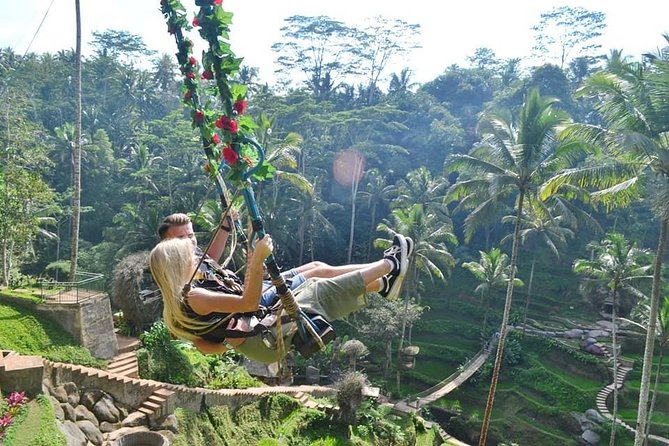
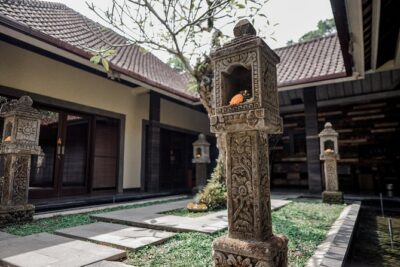
Batuan receives about two hours and adds more cultural context. Here you can see a traditional Balinese house compound and temple setting, along with wood carving and painting made in local styles.
A Balinese compound is not simply a large house. It is an arrangement of spaces used by a family, with religious and daily functions woven into the design. Your guide can help explain what you are seeing, which is valuable because the layout may not make much sense at first glance.
The art element makes Batuan a strong stop for anyone who wants more than scenery. You can watch traditional painting and wood carving methods, and ask questions about the materials and process. The guide’s role matters here. A good explanation turns a quick look at a carving into a lesson about how local artists work.
Two hours is generous compared with the first stop, but it also adds to the day’s busy rhythm. If you are focused mainly on temples and nature, this may feel like too much time around workshops. If you enjoy crafts and want to understand Balinese art beyond the finished product, it is one of the most useful parts of the route.
Tirta Empul and the meaning of holy water
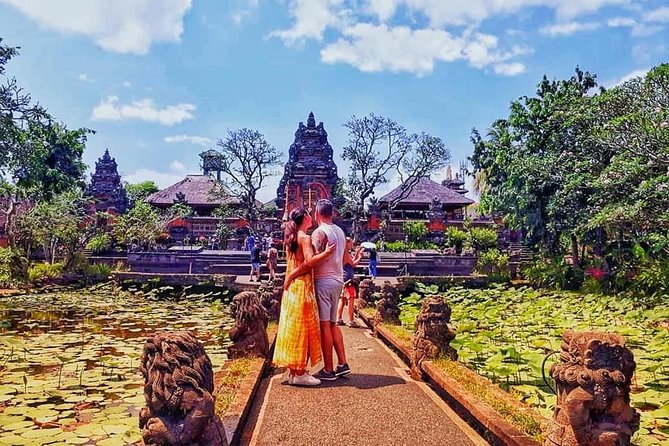
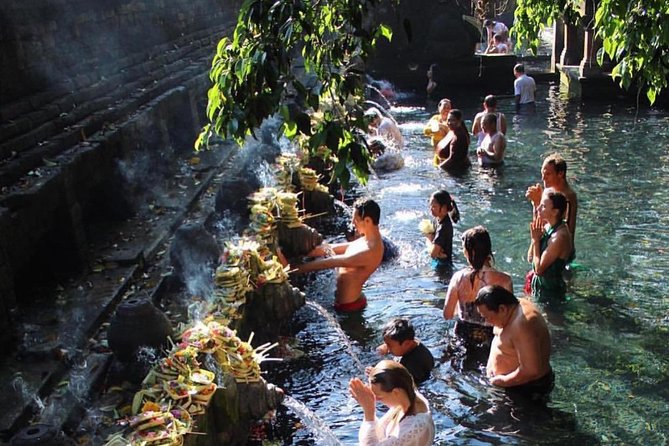
Tirta Empul is the spiritual center of the day. This is a holy-water temple where people come for purification, particularly on important dates such as the full moon. The clear spring water and bathing pools give the visit a strong visual focus, but the religious purpose is the part worth paying attention to.
The temple admission is included, and sarongs are provided. Dress and conduct still matter, so follow your guide’s instructions and local signs. The tour allows you to see the cleansing tradition, but the supplied information does not promise that you will take part in the ritual yourself. Treat it as a sacred place first and a photo stop second.
Plan on about two hours here. That gives you time to look around without rushing through the temple grounds. It also allows your guide to explain the ritual and the role of the water in Balinese practice.
Tirta Empul can be one of the most memorable stops because it connects architecture, belief, and daily life. The drawback is that it may be busier on special religious days. The tour description specifically notes full-moon visits, so expect the atmosphere and timing to vary with the calendar.
Same base, a completely different kind of day:
- Best of Ubud 1-Day Private Tour
★ 5.0 · 4,451 reviews - Bali: Ubud Palace Legong Dance Show Ticket
★ 4.4 · 3,979 reviews - Uluwatu Sunset, Kecak Dance, and Dinner Jimbaran Beach
★ 5.0 · 3,681 reviews - Tanah Lot and North Bali Tour: Scenic Journey
★ 5.0 · 3,620 reviews
Tegalalang Rice Terrace and the farming tradition
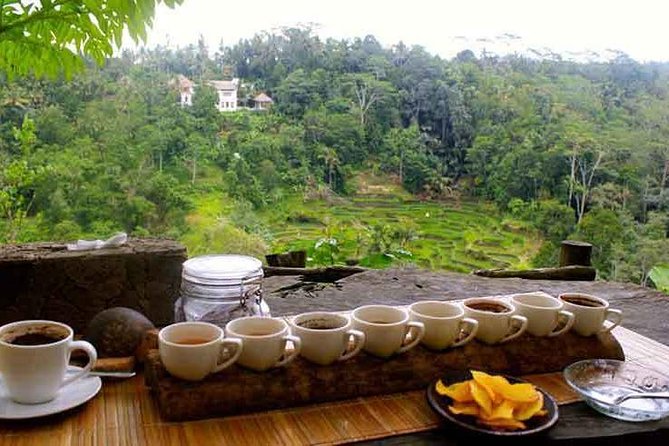
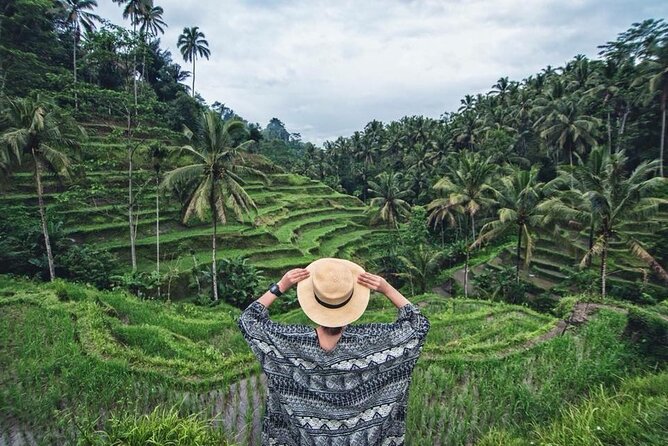
Tegalalang is among Bali’s best-known rice terrace areas. The stepped fields show how farming follows the shape of the hills, while Bali’s traditional irrigation system supports the planting and flow of water.
This is the photo stop many people expect from an Ubud tour, but it is more than a pretty view. The terraces represent a working agricultural tradition and a shared irrigation system. Your guide can give that setting some meaning, rather than leaving you with only a quick picture.
The visit is scheduled for about two hours, which should give you time to take in the terraces at a reasonable pace. The exact amount of walking is not specified, so wear practical shoes and be ready for uneven ground. You should also allow for the possibility that the weather will affect how long you want to remain outside.
Tegalalang is popular, so it may feel less quiet than a remote farming area. That is the trade-off for reaching one of Bali’s most recognized rice-growing views. If you want a famous Ubud scene and an explanation of traditional irrigation, this stop earns its place.
Tegenungan Waterfall to finish the nature portion
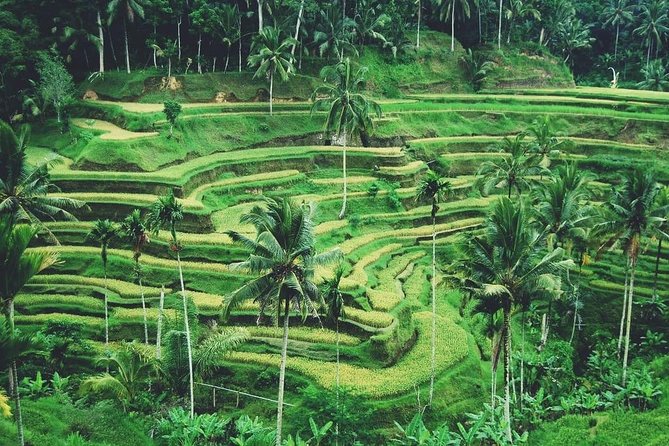
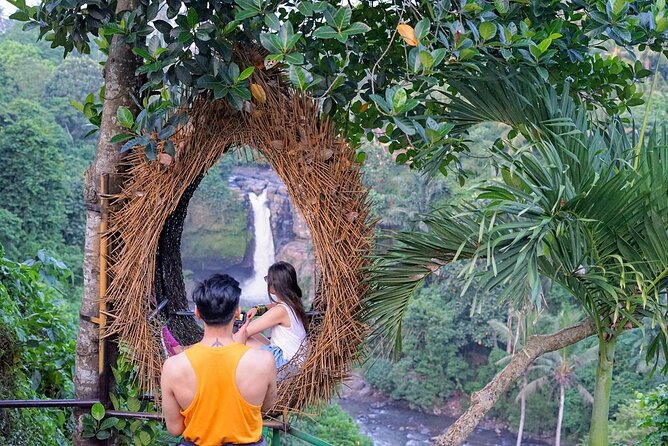
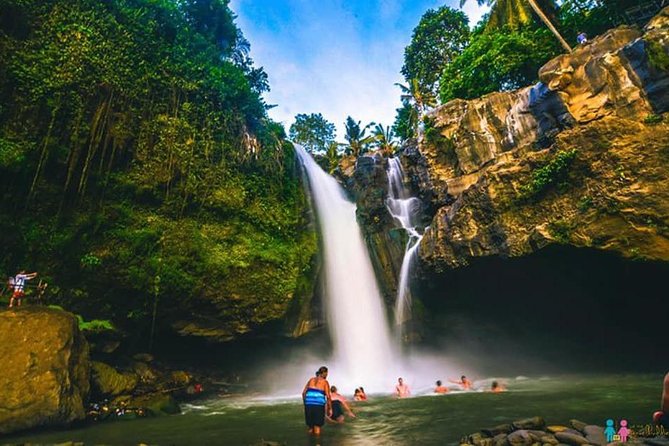
Tegenungan Waterfall brings water, rock, and a change of pace after the villages and temple. The falls are a popular Ubud-area sight, and the schedule allows about two hours for the visit.
Swimming is permitted depending on water conditions. That wording matters. Do not plan your entire day around getting in the water, since safety and local conditions decide whether swimming is possible. Bring suitable clothing if you hope to swim, but be prepared to enjoy the waterfall from the viewing area instead.
The waterfall can be a refreshing end to the sightseeing route, though it may require walking and dealing with steps or uneven surfaces. The supplied details do not give a precise walking distance or accessibility level, so ask the operator if mobility is a concern.
Because the stop is popular, the experience may feel lively rather than secluded. Even so, it gives the day a clear natural finish before your driver returns you to your accommodation.
Celuk and traditional silver and gold work
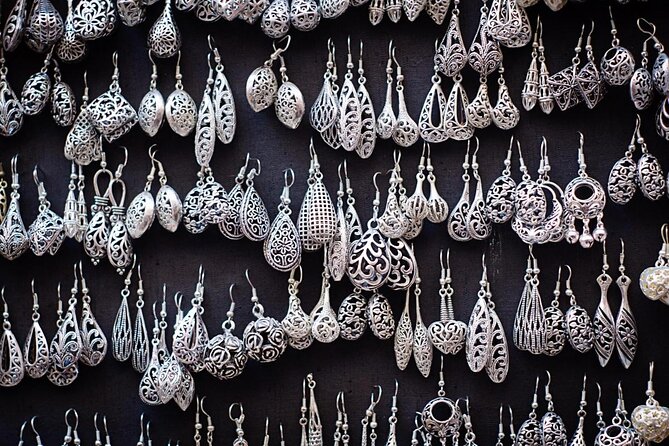
Celuk is the final named stop, with about an hour devoted to jewelry making. Local artisans work with silver and gold using traditional methods, giving you another chance to see how a finished item begins.
This stop complements Batubulan and Batuan. The first two focus on cloth, painting, carving, and house compounds. Celuk shows a different skill set, with fine metalwork and small decorative pieces. If you are choosing a meaningful souvenir, seeing the production process can help you judge the work more carefully.
As with the other art villages, personal shopping is not included. You are not required to buy anything, and you should treat the stop as a cultural visit even if you leave empty-handed. If you dislike shopping-oriented stops, this is one part of the tour to consider before booking.
The stated order places Celuk after the waterfall, although traffic or the guide may affect the final sequence. Your return to the hotel is included, so you do not have to arrange a separate ride after the last visit.
What the private car and guide add
The private car is not just a comfort detail. Bali roads can be slow, and moving between scattered sights takes time. An air-conditioned vehicle gives you a cooler place to reset between stops, while the driver handles the route and local traffic.
The tour includes a private driver-guide rather than transport alone. This is important at Tirta Empul, Batuan, and the craft villages, where the meaning of what you see is not always obvious. Strong guides on this experience have been praised for explaining culture, ceremonies, rituals, street life, carving, jewelry, temples, waterfalls, and current local interests.
Names associated with especially strong guide service include Ketut, Katut, and Putu. The spelling varies in the supplied material, and guide assignment can change, so request Ketut when booking if that matters to you. You can ask for a guide who enjoys explaining culture and who is open to small changes in the plan.
The private format suits couples, families, and small groups who prefer not to wait for strangers. It also helps if someone in your group wants more time at the rice terraces while another person is keen on the craft work. Flexibility is possible, but the day still has a fixed limit and six planned stops.
Price, inclusions, and the real value
At $48.73 per person, this is a strong price for a private 10-hour tour if your group values convenience. The package includes hotel pickup, private transportation, an air-conditioned vehicle, a driver-guide, mineral water, sarongs, and all listed entrance fees.
The value improves as your group grows, since the activity is private and group discounts are offered. A solo visitor pays the full per-person rate, while a couple or family can share the practical benefit of one vehicle and one guide.
Lunch is the main daily cost left outside the package. You should also budget for drinks beyond the supplied water, souvenirs, and any purchases at the craft villages or Celuk. Since several stops involve local products, decide in advance how much shopping time and spending you want.
Confirmation arrives when you book, and pickup is offered in the stated area. The experience is marked as suitable for most people, but the waterfall and rice terrace visits may involve walking. Ask about your exact pickup point and mobility needs before paying if either could affect your day.
Free cancellation is available until 24 hours before the start time. Changes or cancellations inside that window are not refunded, and poor weather can lead to a different date or a full refund. That is a sensible point to remember during Bali’s wet conditions.
Who should book this Ubud day tour?
I would choose this tour if you have one open day and want a wide sample of Ubud without arranging separate drivers, tickets, and temple clothing. It works well for a first visit, for families who want a private vehicle, and for anyone who prefers cultural stops mixed with outdoor sights.
It is also a good match for visitors who like to ask questions. The guides are a major part of the experience, and the best version of this day comes from conversation about Balinese homes, ceremonies, purification, farming, carving, and jewelry.
I would hesitate if your ideal day means staying in one place, avoiding shopping stops, or spending hours quietly in the rice fields. Six stops in 10 hours is an ambitious plan. You will see a lot, but you will not study each place at great length.
My booking verdict
Book this Ubud tour if you want breadth, private transport, and a guide-led introduction to Balinese culture at a reasonable price. The strongest reasons are the varied route, included admissions, practical extras, and the chance to receive a guide such as Ketut who brings the temples and crafts to life.
Before booking, accept that lunch is extra, craft stops may invite purchases, traffic can alter the schedule, and the waterfall swim depends on conditions. Ask about guide availability and pickup details. If those points suit your plans, this is an efficient and well-priced way to see the best-known Ubud sights in one long day.
FAQ
How long does the Ubud tour last?
The tour lasts approximately 10 hours, including the visits and transportation between stops.
Is hotel pickup included?
Yes. Pickup is offered in the stated service area, and the tour includes transfer back to your accommodation.
Is this a private tour?
Yes. Only your group participates in the private activity.
What type of vehicle is used?
Transportation is provided in a private, air-conditioned vehicle.
Are entrance fees included?
Yes. All listed tickets and entrance fees are included. Batubulan and Batuan are listed as free admission stops, while admission to Tirta Empul, Tegalalang, Tegenungan Waterfall, and Celuk is included.
Are sarongs provided for the temple visit?
Yes. Sarongs are included, which is useful for the visit to Tirta Empul.
Is lunch included?
No. Lunch is not included, so you need to pay for your own meal.
Is drinking water provided?
Yes. Mineral water is provided in the car.
Can I swim at Tegenungan Waterfall?
Swimming is allowed depending on the water conditions. The tour does not guarantee that swimming will be possible on the day.
Can I cancel for a full refund?
Yes, if you cancel at least 24 hours before the experience start time. Cancellations or changes made less than 24 hours in advance are not refunded. If poor weather cancels the tour, you will be offered another date or a full refund.
Just added around Ubud
- Overnight Mount Ijen Blue Fire Trekking Tour From Bali★ 4.0 · 14 reviews
- Keliki Village Tour And Rice Field Walk Including Lunch Or Dinner★ 5.0 · 3 reviews
- Ubud Tour with all includes★ 5.0 · 3 reviews
- Jungle Buggy Adventure and Ubud Tour★ 5.0 · 6 reviews
- Exclusive Ubud Jewelry Making: Craft with a Pro Silversmith!★ 5.0 · 37 reviews
- Mount Batur Jeep Tour★ 5.0 · 30 reviews
- Jungle Swing – Volcano – Water Temple – Monkey Forest and Waterfall Tour★ 5.0 · 11 reviews
- Jatiluwih in detail (1 h. e-bike tour in the rice terraces)★ 4.0 · 5 reviews
Ubud Tours, compared.
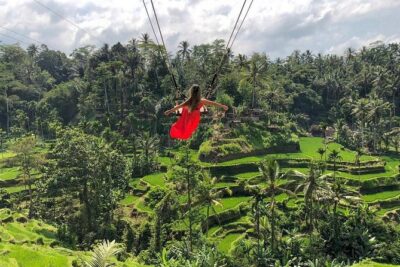
Monkey Forest, Jungle Swing, Rice Terrace, and Water Temple
Read our review →

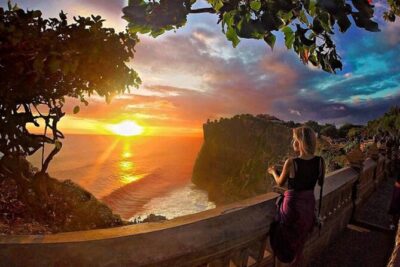
Uluwatu Sunset, Kecak Dance, and Dinner Jimbaran Beach
Read our review →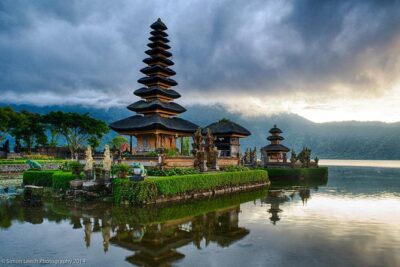
Tanah Lot and North Bali Tour: Scenic Journey
Read our review →