
Reviewed · COOKING CLASSES
Pure Bali Village Experience, Cooking & Jamu Class+VIP Transfer
Bali’s best food lesson may begin before you reach the kitchen. This day takes you into a mountain village near Batukaru, where you can pick herbs, make two types of jamu, cook lunch over a bamboo grill, and help plant rice. It is a hands-on day, not a bus tour with a few quick photo stops.
I like the small maximum of 12 people, which gives you room to work beside the chef instead of simply watching. I also like the mix of food, farming, village architecture, and a hot spring. The main consideration is the pace: with an early start, a 30-minute downhill walk, cooking, rice planting, and several cultural stops, this is an active eight-hour outing rather than a lazy lunch trip.
Key points at a glance
- Two homemade jamu drinks: Pick herbs from a garden with more than 40 plant varieties, then prepare and taste Indonesia’s traditional herbal tonic.
- A real Balinese cooking session: Make a full nasi campur lunch, sate lilit at a live bamboo grill, and lak lak dessert in a traditional clay pot.
- A small group of up to 12: You get direct help from the chef and guide, with plenty of chances to take part.
- Rural Batukaru scenery: Walk through a mountain village, rice fields, and local farm areas away from Bali’s main resort districts.
- More than a food class: Learn rindik, meet farmers, help plant rice, visit animals and stingless bee hives, and see an authentic Balinese compound.
- Belulang Hot Spring finish: End the day with an optional bath before the drive back to your hotel.
Leaving the resorts for Batukaru country
The day begins with pickup at about 7:30 a.m. An air-conditioned vehicle takes you toward Bali’s mountain country, with scenic driving and photo stops along the way. The transfer is a major part of the value here. You do not have to arrange a separate driver for a remote village, negotiate directions, or find your way back after a full day of activities.
The exact hotel pickup area is not specified, so confirm that your accommodation is covered when booking. The advertised service includes pickup and drop-off, making this a good choice if you want a door-to-door outing rather than a self-drive trip.
The mountain setting changes the mood quickly. Instead of spending the day among beach clubs, souvenir shops, and traffic, you move through tropical scenery toward rice fields and village paths. The drive also gives you time to see how quickly Bali changes once you leave its busiest visitor areas.
This is not a private tour. The maximum group size is 12, which is small enough for personal instruction but not so small that you should expect a completely private schedule. If you enjoy meeting a few other people and working together, the arrangement makes sense. If you want to stop wherever you like or set your own pace, a private driver and separate cooking class would give you more control.
More cooking classes in Bali:
- Ubud Cooking Class Bali with Balinese Chef
★ 5.0 · 1,609 reviews - PRIVATE Authentic Balinese Cooking Class in Ubud at Putu’s Home
★ 5.0 · 644 reviews - Balinese Ubud cooking school (9 Dish Cooking and Market Tour)
★ 5.0 · 540 reviews
Starting with rindik and the herb garden
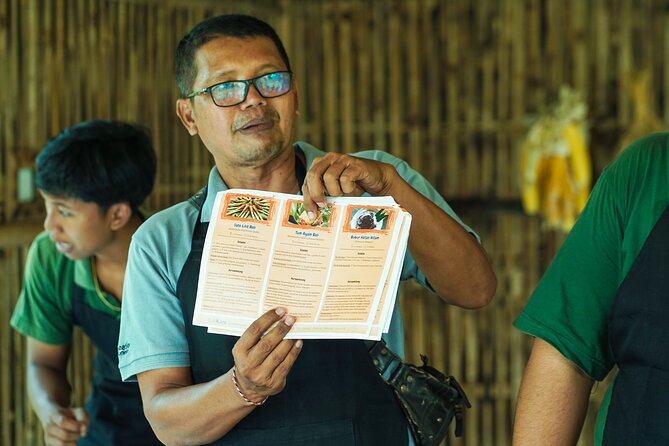
On arrival, the program introduces you to the rindik, a traditional Balinese instrument. You get a chance to learn how it is played before moving into the herb and spice garden.
That opening works well because it eases you into the setting. You are not rushed straight into a cooking station. Instead, you begin with a small piece of Balinese culture, then connect it to the ingredients you will use later.
The garden contains more than 40 varieties of herbs and plants. The important point is not simply the number. You get to see where flavors and remedies begin, and you can pick herbs yourself before using them in jamu. That makes the drink-making lesson more meaningful than tasting a prepared sample from a bottle.
Expect the garden visit to involve walking on natural paths. The day includes a soft trek of about 30 minutes downhill, so comfortable shoes are a smart choice. The supplied details do not give a difficulty grade, but the downhill walk and rice-planting activity suggest that this is better suited to people who are comfortable being on their feet.
Making jamu from plants you have picked
Jamu is one of the most distinctive parts of this experience. Many Bali food classes focus on dishes, but jamu connects cooking with Indonesia’s long tradition of herbal drinks.
At the Jamu Pavilion, you make and taste two types of jamu. You also receive fruit tasting as part of the session. Since the ingredients come from the garden, you can follow the process from plant to drink and understand why certain herbs and spices are used.
The class is especially useful if you want a practical souvenir from Bali. You may forget the name of a temple or the details of a photo stop, but a simple jamu method is something you can remember and recreate. The guide provides instruction, and the small group allows you to ask questions while you work.
The listing describes jamu as an ancient health drink, but you should treat it as a cultural food and wellness tradition, not as medical treatment. If you have allergies or a strict diet, state your needs when booking. Vegetarian requirements can be accommodated, and the operator asks you to provide dietary information in advance.
Cooking a Balinese lunch at Paon Bali
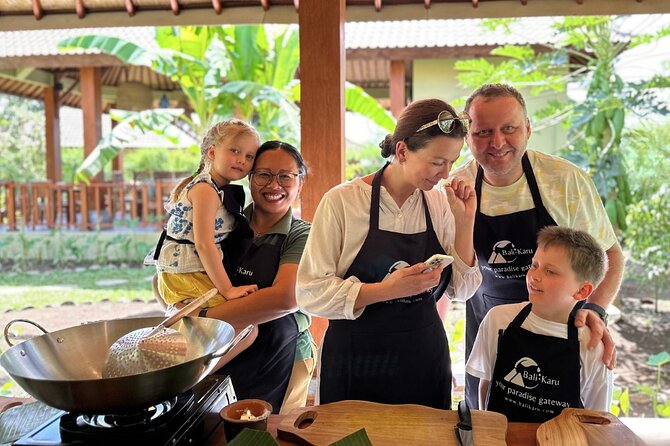
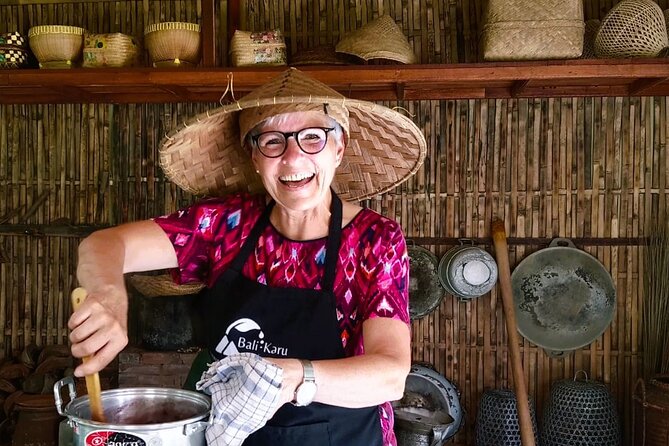
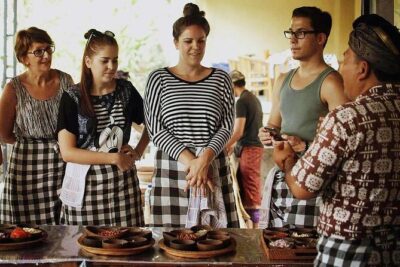
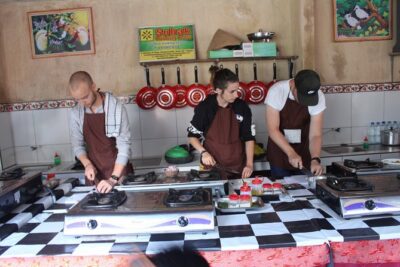
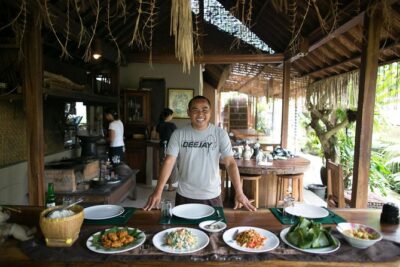
The open-air Paon Bali kitchen is the heart of the day. A chef guides you through an authentic Balinese meal, and you prepare the food yourself rather than watching a demonstration from the side.
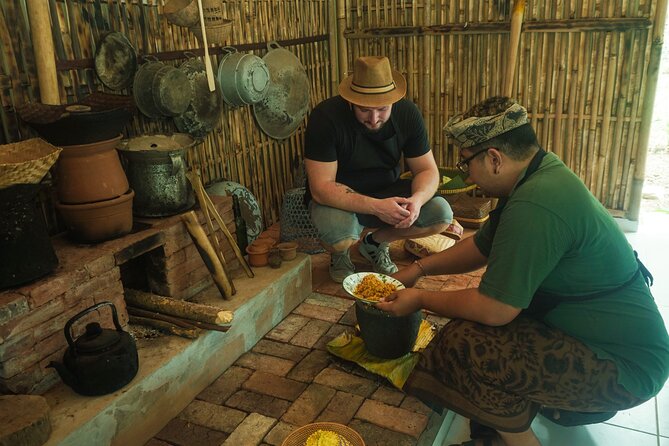
Lunch is listed as nasi campur tumping with dessert. Nasi campur is a mixed rice meal served with several accompaniments, so the format gives you a taste of more than one dish. The cooking class also includes sate lilit and lak lak, which add two especially memorable elements.
Sate lilit is prepared at a live bamboo grill station. This is likely to be one of the most social parts of the day, as everyone works together around the cooking area. Lak lak, described as a popular dessert, is made using a traditional clay pot. The clay pot is more than a decorative touch. It shows you how cooking methods and equipment remain tied to local household traditions.
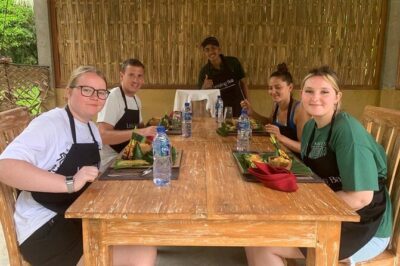
The meal is yours to enjoy after you have prepared it. That connection between work and lunch is one of the day’s strongest features. You are not being served a generic buffet labeled Balinese. You learn how the dishes come together, then sit down to eat in a quiet village setting.
The open-air kitchen may be less comfortable than an enclosed restaurant if the weather turns wet or hot. The tour requires good weather, and poor conditions can lead to a new date or a full refund. Bring a light layer for the mountain air and clothing you do not mind wearing during food preparation.
More private driver days in Bali:
- Bali Private Car Hire with Driver
★ 5.0 · 2,061 reviews - Electric Cycling Tour of Ubud with Free Hotel Transfer and Lunch
★ 5.0 · 1,397 reviews - Experts Bali Driver : Best Bali Private Driver for Tour in Bali
★ 5.0 · 1,339 reviews - Mount Batur Sunrise Trekking Private Tour with Breakfast and Hotel Transfer
★ 5.0 · 885 reviews
Helping with rice planting after lunch
After lunch, you walk down toward the farming areas and help with rice planting. This gives the day a useful change of scale. You have just prepared food in a kitchen, and now you see part of the work that supports the meal.
Rice planting is not a staged photo stop in the same way as posing beside a rice terrace. You are asked to give the farmer a helping hand, so expect a practical activity rather than a polished demonstration. The details do not specify how long you plant or what footwear is provided, so ask the guide before entering muddy areas and be prepared for your shoes and clothes to get dirty.
The walk is described as soft trekking and about 30 minutes downhill. That downhill route can be scenic, but remember that every downhill walk eventually requires an uphill return or a vehicle transfer. The full route is not explained, so anyone with mobility concerns should ask for more detail before booking.
Farm animals, stingless bees, and village life
The day also includes a visit to Balikaru farm, where you can see animals and stingless Trigona beehives. You may have the chance to feed a cow or look closely at the bees. These details help turn the village visit into something more personal and less like a quick drive-by.
Stingless bees are particularly interesting because they are different from the large honey bees many people know. The tour provides the chance to see their hives, but it does not promise a formal beekeeping lesson. Think of this as a farm visit folded into the larger day.
The itinerary also allows time to chat with local people and walk through the village with mountain views. The strongest appeal here is the ordinary setting: paths, compounds, fields, working farms, and daily life. You are not only being taken to a famous viewpoint. You are given context for how the area functions.
The program includes a visit to a traditional Balinese compound and an explanation of Asta Kosala architecture. This is linked to Balinese Feng Shui and offers a look at how buildings, courtyards, and household spaces are arranged. It is a valuable counterpoint to the food portion because it shows that Balinese culture is expressed through homes and layout as well as ceremonies and cuisine.
Ending at Belulang Hot Spring
Belulang Hot Spring is the final stop before the return drive. Bathing is optional, so you can decide based on your comfort, energy, and the day’s conditions.
A hot spring makes sense as a closing stop after walking, cooking, and rice planting. You get a chance to slow down before returning to your hotel. Bring a swimsuit, towel, and a change of clothing if you plan to bathe. The supplied details do not state whether towels or changing facilities are provided, so do not assume they are included.
Some accounts of this experience also describe a spiritual purification ceremony, but the formal inclusions specifically list an optional bath at Belulang Hot Spring. Treat purification as something that may be available only under certain arrangements, not as a guaranteed part of the standard booking. If that ritual is important to you, ask the operator directly before paying.
What the $89 price really covers
At $89 per person, the price is reasonable if you use the full program. You are getting an approximately eight-hour day, an air-conditioned vehicle, hotel pickup and drop-off, a guide, a garden visit, two jamu preparations, a cooking class, lunch, dessert, rice planting, the farm visit, village walking, the compound visit, and the hot spring stop.
The transfer alone matters because the village is about an hour from Ubud according to one account of the outing. Hiring a separate driver for a full day could make the apparent price difference smaller than it first looks. The inclusion of lunch and instruction adds further value.
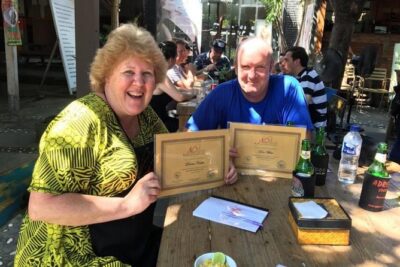
There are extra costs to remember. Tips, drinks, and personal expenses are not included. Other languages besides English or German require a surcharge. A farewell gift and a personal cooking certificate sent by email after the tour are included, but those are pleasant extras rather than reasons to book.
The tour is often booked well in advance, with an average lead time of about 54 days. That suggests you should reserve early if your Bali dates are fixed, especially if you want a particular morning. Free cancellation is available up to 24 hours before the start time. Cancellations or changes within 24 hours are not refunded, and poor weather may lead to another date or a full refund.
Who will enjoy this village day most
I would recommend this experience to you if you want an active cultural day with food at its center. It suits couples, families, and small groups who like to participate rather than sit and watch.
It is also a strong choice if you have already seen Bali’s main temples and beach districts and want a different side of the island. The mountain village, farm, rice work, architecture, and jamu lesson give the day a wider focus than a standard cooking class.
Families should find plenty to keep children involved, especially rindik, jamu, cooking, animals, stingless bees, and rice planting. The operator can accommodate vegetarian diets, but provide requirements at booking rather than waiting until the kitchen session.
I would hesitate to recommend it if you dislike early starts, walking on uneven paths, getting dirty, or following a full schedule. It also may not suit anyone who needs a clearly defined accessibility plan, since the route includes a downhill trek and farm work and no accessibility details are provided beyond service animals being allowed.
Should you book Pure Bali Village Experience?
Book it if you want your Bali food class to lead somewhere. You will not only cook a meal. You will connect the meal with garden plants, jamu, rice farming, village homes, local instruments, and a mountain environment.
The best reasons to choose it are the hands-on format, the small group limit, the included transport, and the unusual mix of activities. The main tradeoff is that you give up some free time and flexibility for a carefully arranged full-day schedule.
If you want an easy, polished outing with little walking, choose a shorter cooking class near your hotel. If you want to work with local ingredients, meet village residents, help in a rice field, and finish at a hot spring, this $89 day offers a lot for the money.
FAQ
How long does the experience last?
The experience lasts approximately eight hours.
What time does the tour start?
The stated start time is 7:30 a.m.
Is hotel pickup included?
Yes. Hotel pickup and drop-off are offered, with transportation in an air-conditioned vehicle.
What is the maximum group size?
The group can include a maximum of 12 people.
Is lunch included?
Yes. You prepare and eat a Balinese lunch listed as nasi campur tumping with dessert.
What will I make during the cooking class?
You will prepare Balinese dishes with a chef, including sate lilit at a live bamboo grill station and lak lak dessert in a traditional clay pot.
What is included in the jamu activity?
You receive a guided herb and spice garden tour, pick or use garden herbs, and make and taste two types of jamu. Fruit tasting is also included.
Can vegetarian dietary needs be accommodated?
Yes. Vegetarian needs can be accommodated, and you should provide dietary requirements in the special requests section when booking.
Do I have to swim at Belulang Hot Spring?
No. The bath at Belulang Hot Spring is optional.
What happens if the weather is poor?
The experience requires good weather. If the operator cancels because of poor weather, you will be offered another date or a full refund.
More Workshops in Bali
- Ubud Silver Class Jewelry making in bali
★ 5.0 · 978 reviews - Balinese Farm Cooking Class by Pemulan Bali
★ 5.0 · 410 reviews - Balinese Cooking Class in Seminyak
★ 5.0 · 281 reviews - Balinese Authentic Cooking Class in Ubud
★ 5.0 · 239 reviews
Just added around Bali
- Overnight Mount Ijen Blue Fire Trekking Tour From Bali★ 4.0 · 14 reviews
- Keliki Village Tour And Rice Field Walk Including Lunch Or Dinner★ 5.0 · 3 reviews
- Ubud Tour with all includes★ 5.0 · 3 reviews
- Jungle Buggy Adventure and Ubud Tour★ 5.0 · 6 reviews
- Exclusive Ubud Jewelry Making: Craft with a Pro Silversmith!★ 5.0 · 37 reviews
- Mount Batur Jeep Tour★ 5.0 · 30 reviews
- Jungle Swing – Volcano – Water Temple – Monkey Forest and Waterfall Tour★ 5.0 · 11 reviews
- Jatiluwih in detail (1 h. e-bike tour in the rice terraces)★ 4.0 · 5 reviews
Cooking Classes, compared.
Balinese Ubud cooking school (9 Dish Cooking and Market Tour)
Read our review →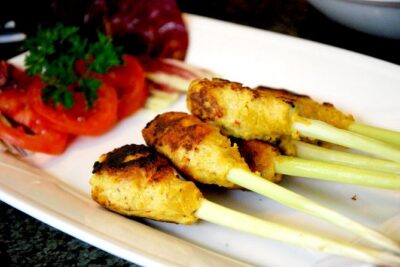
PRIVATE Balinese Cooking Class in Ubud with Dewa with Transfers
Read our review →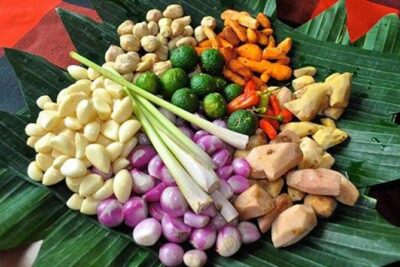
Balinese Cooking class with traditional morning market visit
Read our review →
Browse the lists this tour appears in