
Reviewed · UBUD TOURS
Ubud Cooking Class Bali with Balinese Chef
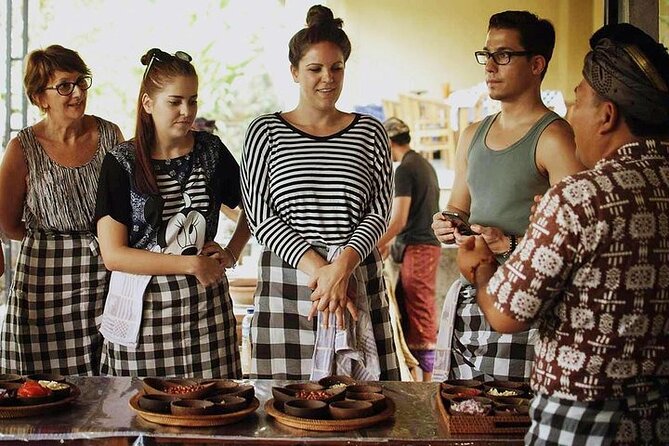
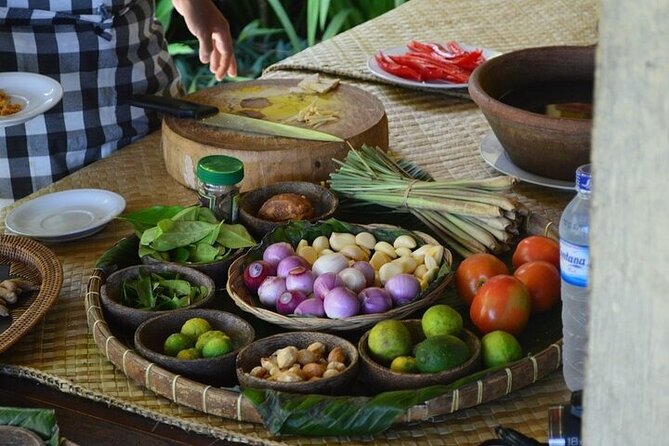
Ubud’s best cooking lessons put you to work, and this one gives you your own station, utensils, ingredients, and seven dishes to prepare. You’ll make Balinese spice paste, peanut sauce, noodles, a main course, and dessert, then sit down to eat the meal you cooked.
I like the market visit on the morning class, which gives you a quick look at local ingredients before the cooking begins. I also like the clear, step-by-step teaching, with chef Made and his team keeping the class light while helping at each station.
The main drawback is timing. The traditional market is included only in the morning session, and the class can include up to 24 people. Hotel pickup is also limited to central Ubud for the morning class, with extra charges for other areas.
Key points to know before booking
- Seven dishes from your own cooking station: You prepare and cook the menu yourself instead of simply watching a demonstration.
- Two menu choices: Select a vegetarian menu with tempe, tofu, mushrooms, and vegetable curry, or a non-vegetarian menu with chicken and fish.
- Morning market visit included: The 30-minute Ubud Traditional Art Market stop is available only with the morning class.
- A full meal is part of the lesson: You eat the dishes you have prepared for lunch or dinner.
- Central Ubud pickup only for the morning class: Afternoon participants meet at 2:30 p.m. at Lapangan Desa Ubud.
- Good value at $35.79: The fee covers instruction, ingredients, cooking equipment, market admission for the morning visit, and the meal.
Seven dishes, one working station
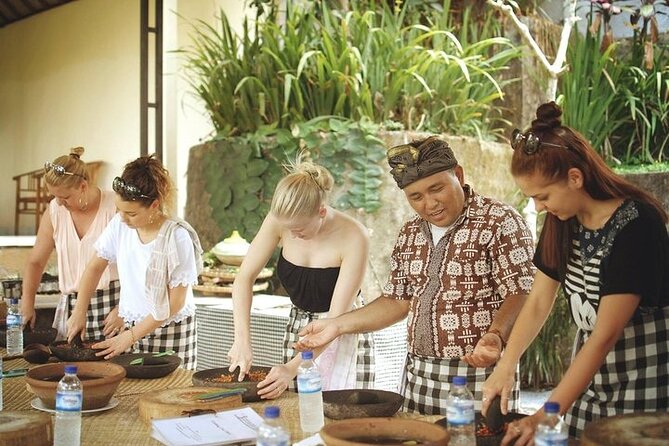
This is not a cooking demonstration where you stand at the edge of a kitchen and watch someone else do all the work. You receive your own cooking station and utensils, then prepare the dishes by hand with guidance from an English-speaking Balinese chef.
That hands-on format matters. You can see how the ingredients change as you chop, grind, fry, grill, and season them. You also leave with methods you can try at home, rather than only a pleasant memory and a few food photos.
The class lasts about four hours, including the market visit for morning participants. The cooking portion takes about three and a half hours, giving the chef time to explain the ingredients and move through the menu in stages.
The teaching style is practical. Chef Made and his team are described as helpful, funny, and good at giving clear instructions. Several class comments also point to plenty of assistants, which is useful when a group is working with several dishes at once.
More cooking classes in Ubud:
- PRIVATE Authentic Balinese Cooking Class in Ubud at Putu’s Home
★ 5.0 · 644 reviews - Balinese Ubud cooking school (9 Dish Cooking and Market Tour)
★ 5.0 · 540 reviews - Balinese Farm Cooking Class by Pemulan Bali
★ 5.0 · 410 reviews
The morning begins at Ubud Traditional Art Market
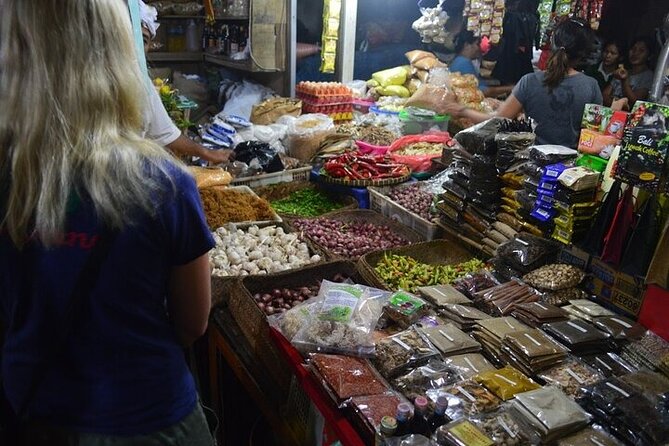
The morning option starts with a 30-minute visit to Ubud Traditional Art Market. Admission is included, but anything you buy there is your own expense.
A short market stop will not turn you into an expert on Balinese food, but it gives the class a useful opening. You get to see ingredients in their local setting before handling them in the kitchen. For someone trying to understand Balinese cooking, that connection is worthwhile.
The market visit is also the clearest difference between the two class times. The afternoon option does not include it. If local food culture is a main reason you are booking, choose the morning departure.
The stop is brief, so keep your expectations sensible. This is an introduction, not a long shopping tour. It works best as a quick orientation before the main lesson.
The vegetarian menu goes well beyond plain vegetables
The vegetarian menu has enough variety to make the meal feel like a proper Balinese spread. You prepare peanut sauce, Balinese spice paste, vegetable curry, tempe, tofu and vegetable sate with peanut sauce, mushrooms grilled in banana leaf, fried noodles, and braised saba banana in palm sugar gravy.
The menu gives you several useful building blocks. Peanut sauce shows you how one sauce can bring together sate and other vegetables. Bumbu Bali, the Balinese spice paste, is an important base for local cooking and is one of the most valuable recipes to take home.
The banana-leaf mushroom dish adds a different cooking method and presentation. The banana leaf helps hold the parcel together while the mushrooms cook, giving you a simple technique that feels distinctly tied to the region.
Kolak pisang, made with saba banana and palm sugar gravy, finishes the meal with something sweet and familiar. It is a good reminder that Balinese food is not only about chilies and savory spice.
This menu should suit vegetarians who want a meal with substance. It also works for mixed groups, since the class offers a separate non-vegetarian menu rather than treating meat-free food as an afterthought.
The non-vegetarian menu covers chicken and fish
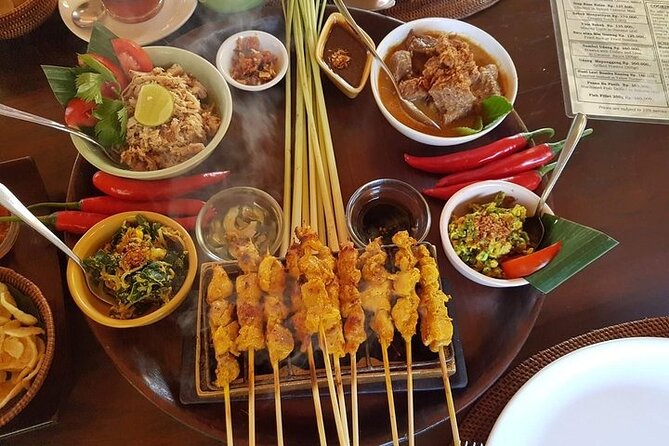
The non-vegetarian menu includes peanut sauce, Balinese spice paste, Balinese fried chicken, chicken sate with peanut sauce, fish grilled in banana leaf, fried noodles, and the same braised banana dessert.
Here, you get to work with two different proteins and two different cooking styles. The fried chicken brings the spice paste into a main dish, while the chicken sate shows how the peanut sauce is used at the table. The fish cooked in banana leaf adds another method and another texture.
The menu is useful for cooks who want to understand how Balinese seasoning works across different foods. You are not learning one isolated recipe. You are seeing the same flavor ideas used in sauces, chicken, fish, noodles, and dessert.
If you are booking for a group with different diets, confirm the desired menu when making the reservation. The experience is built around either a vegetarian or non-vegetarian set of dishes.
More hands-on workshops in Ubud:
- Ubud Silver Class Jewelry making in bali
★ 5.0 · 978 reviews - Balinese Authentic Cooking Class in Ubud
★ 5.0 · 239 reviews - PRIVATE Balinese Cooking Class in Ubud with Dewa with Transfers
★ 5.0 · 213 reviews - Canggu Scooter Lessons
★ 5.0 · 195 reviews
Eating together is part of the lesson
After the cooking, you sit down in a dining room and taste the food you prepared. That final meal is more than a standard tour inclusion. It lets you judge the balance of the dishes while the instructions are still fresh in your mind.
I particularly like this format because it turns the class into a complete meal rather than a series of samples. You can compare the sauces, the curry or meat dishes, the noodles, the banana-leaf preparation, and dessert in one sitting.
It also gives the group a natural ending. Cooking classes can feel rushed if the last step is simply packing up and leaving. Here, the meal provides time to enjoy the result and share the experience with the rest of the group.
The food and cooking equipment are included, as are a welcome drink and mineral water. Other beverages are not included, so budget separately if you want something beyond the provided drinks.
Why the price works at $35.79
At $35.79 per person, this class offers solid value for a four-hour activity. The fee includes the chef, ingredients, cooking ware, a seven-dish menu, the meal, and the morning market admission. Morning participants in central Ubud also receive shared return hotel transport.
That package is stronger than the price alone suggests. You are paying for instruction and food, but also for an organized cultural activity that fills a good part of the day. If you would otherwise pay separately for lunch and a short market visit, the class becomes even better value.
The price does not cover personal shopping at the market, extra beverages, insurance, or transport from areas outside the included pickup zone. Pickup from other areas for the cooking class can cost up to IDR 600,000 per car, so check the transfer cost before booking if your hotel is outside central Ubud.
Group discounts are available. Since the class may have as many as 24 participants, ask yourself what kind of setting you prefer. A larger group can feel lively and offers more chances to meet people, but it may not provide the same quiet pace as a very small private lesson.
Morning or afternoon: choose carefully
The morning class is the better choice if you want the complete experience. It includes the market visit and return hotel transfer for central Ubud, making the day easier to organize.
The afternoon class starts at 2:30 p.m. at the front of Lapangan Desa Ubud, which is the stated meeting and return point. It does not include the traditional market stop. This option may suit you if you already have morning plans or prefer to cook later in the day.
The timing also affects transport. The included shared pickup applies to the morning class for hotels in central Ubud only. The afternoon arrangement is based around meeting at Lapangan Desa Ubud, so do not assume the same hotel pickup service applies.
When booking, look at the class time first, then consider the transport. The market visit is not a small extra. It is one of the experience’s more useful cultural parts.
A group class with a friendly teaching style
The maximum group size is 24 people. That is not an intimate private kitchen, but the individual stations and team of helpers keep the format active rather than passive.
Chef Made is named in the class comments as a lively instructor, and the teaching team is described as well prepared and ready to help. Clear, step-by-step directions are especially important here because you are handling several sauces, spice mixtures, proteins, and cooking methods.
The class should work for beginners. Most people can participate, and the format is built around guided preparation rather than advanced culinary skill. You do not need to arrive as an experienced cook to get something from it.
Still, large groups have tradeoffs. You may spend some time waiting for the next instruction or sharing the chef’s attention with other stations. If you want a highly personal lesson, check whether a smaller group or private arrangement is available before reserving.
What makes the recipes worth taking home
The most useful part of the class may be the recipes you can repeat after Bali. Peanut sauce and Balinese spice paste are versatile foundations, and learning them by preparing the ingredients yourself is more helpful than simply tasting the finished dish.
The noodle dish offers an approachable home-cooking option. Sate gives you a way to use the peanut sauce, while the banana-leaf preparations introduce a traditional cooking package that you can adapt to your own kitchen.
The dessert is also practical. Bananas, palm sugar, and a simple gravy do not require a specialist pantry, so Kolak Pisang may be one of the easiest dishes to recreate.
You should take notes if the instructor allows it, especially for quantities and substitutions. The experience provides cooking and eating, but the supplied details do not promise a printed recipe book. Your own notes may be valuable once you are back home.
Who will enjoy this Ubud class most
I would recommend this experience to you if food is a major part of your trip and you want more than a restaurant meal. It suits first-time cooks, couples, families, solo participants, and groups who enjoy doing something together.
Vegetarians have a proper dedicated menu, not just a plate of rice and side dishes. Meat eaters get chicken and fish, with several chances to work with spice paste and peanut sauce.
The class also suits people with limited time in Ubud. Four hours is long enough to learn, cook, and eat without taking up an entire day. The morning market stop adds cultural context without requiring a separate market tour.
It may be less suitable if you dislike group activities, have strict dietary needs not covered by the two listed menus, or want a quiet private lesson. The experience allows up to 24 participants, and the non-refundable policy means you should be sure of your date before paying.
The activity requires good weather. If poor weather causes cancellation, you are offered another date or a full refund. If the minimum number of participants is not reached, you are offered another date or experience, or a full refund. For any other cancellation or change, the payment is not refunded.
Should you book the Ubud cooking class?
Book it if you want a practical introduction to Balinese food, especially if you choose the morning session and can use the central Ubud pickup. The market stop, seven-dish menu, local chef, and included meal make $35.79 a fair price.
I would choose the morning class for the full package. Choose vegetarian or non-vegetarian based on your meal preference, and check transport carefully if you are staying outside central Ubud.
Skip it only if a group of up to 24 feels too large or if you need a flexible cancellation policy. For everyone else, this is a useful, social way to understand Balinese cooking by actually preparing the food yourself.
FAQ
How long does the Ubud cooking class last?
The experience lasts approximately four hours. The cooking class portion takes about three hours and 30 minutes, with the morning market visit included in the overall schedule.
Is the traditional market visit included?
Yes, the 30-minute visit to Ubud Traditional Art Market is included with the morning class. The market visit is not included in the afternoon class.
What time does the afternoon class begin?
The afternoon class begins at 2:30 p.m. Participants meet at the front of Lapangan Desa Ubud, which is also the stated return point.
Is hotel pickup included?
Return hotel transfer is included for the morning class when you stay in central Ubud, using a shared car. Pickup from other areas can cost up to IDR 600,000 per car.
Is the cooking class taught in English?
Yes, an English-speaking local Balinese chef leads the cooking class.
Can I choose a vegetarian menu?
Yes. The vegetarian menu includes peanut sauce, Balinese spice paste, vegetable curry, tempe, tofu and vegetable sate, mushrooms grilled in banana leaf, fried noodles, and braised banana dessert.
What is included in the non-vegetarian menu?
The non-vegetarian menu includes peanut sauce, Balinese spice paste, Balinese fried chicken, chicken sate with peanut sauce, fish grilled in banana leaf, fried noodles, and braised banana dessert.
Are the ingredients and cooking equipment included?
Yes. Cooking ingredients, cooking ware, and the preparation of seven dishes are included. A welcome drink and mineral water are also provided.
Can I cancel for a refund?
The experience is non-refundable and cannot normally be changed. If the operator cancels because of poor weather or because the minimum number of participants is not reached, you are offered another date, an alternative experience, or a full refund.
Just added around Ubud
- Overnight Mount Ijen Blue Fire Trekking Tour From Bali★ 4.0 · 14 reviews
- Keliki Village Tour And Rice Field Walk Including Lunch Or Dinner★ 5.0 · 3 reviews
- Ubud Tour with all includes★ 5.0 · 3 reviews
- Jungle Buggy Adventure and Ubud Tour★ 5.0 · 6 reviews
- Exclusive Ubud Jewelry Making: Craft with a Pro Silversmith!★ 5.0 · 37 reviews
- Mount Batur Jeep Tour★ 5.0 · 30 reviews
- Jungle Swing – Volcano – Water Temple – Monkey Forest and Waterfall Tour★ 5.0 · 11 reviews
- Jatiluwih in detail (1 h. e-bike tour in the rice terraces)★ 4.0 · 5 reviews
Ubud Tours, compared.



Monkey Forest, Jungle Swing, Rice Terrace, and Water Temple
Read our review →


Uluwatu Sunset, Kecak Dance, and Dinner Jimbaran Beach
Read our review →
Tanah Lot and North Bali Tour: Scenic Journey
Read our review →
Body Massage Experience in Ubud Traditional Spa
Read our review →Browse the lists this tour appears in