
Reviewed · UBUD TOURS
Private Traditional Bali Silver Jewelry Making Class
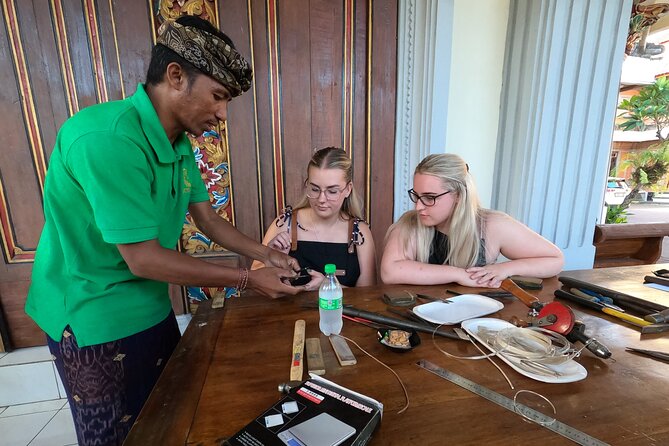
Making a silver ring or pendant with your own hands is the real draw here. In Celuk, Bali’s main silverworking village, you get a three-hour private lesson rather than a quick demonstration, and your finished piece becomes a souvenir with a story attached.
I like the one-on-one instruction, especially for first-time jewelry makers who need calm help with tools and small design decisions. I also like the family-run setting, where the class includes drinks and snacks and gives you a closer look at a local craft tradition.
The main consideration is the silver allowance. The tour description refers to both 10 grams and 5 grams, while the included section specifies 5 grams, with extra silver charged at IDR 50,000 per gram. Confirm the allowance before you start designing.
Key points to know before you book
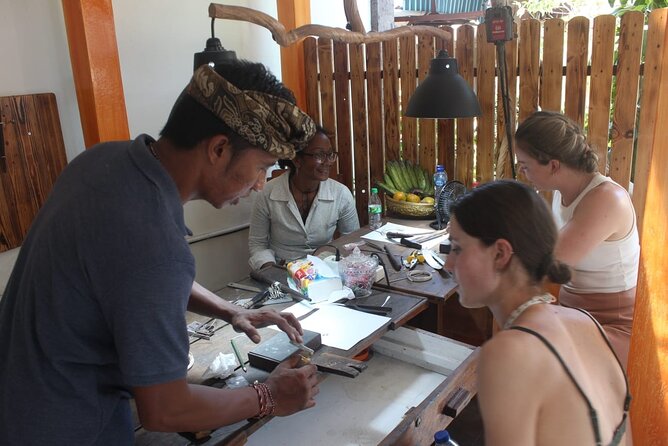
- Make a piece from start to finish: You practice sawing, stamping, hammering, soldering, sanding, and polishing rather than simply watching a craftsperson work.
- Private instruction matters: Only your group takes part, so the tutor can help with your design and correct your technique as you go.
- Celuk is the right setting: This village near Ubud is the center of Bali’s silver craft, making the class feel connected to a working local tradition.
- Arik and Ari are names to know: The instructors identified in the supplied details are praised for patient, clear guidance and careful help with rings and other designs.
- Bring a simple idea: You can use a workshop sample or arrive with your own design, but complex shapes may need to be simplified.
- Check the silver amount: The included terms say 5 grams, and additional silver costs IDR 50,000 per gram.
Why making silver in Celuk feels different
Many Bali souvenirs are easy to buy and just as easy to forget. A ring or pendant you cut, texture, join, smooth, and polish yourself has a different weight, both literally and emotionally.
Celuk, in Sukawati, Gianyar Regency, is the natural place for this lesson. The village is known as Bali’s center for silver craftsmen, so the class connects your activity to a real local trade rather than placing you in a generic hotel workshop.
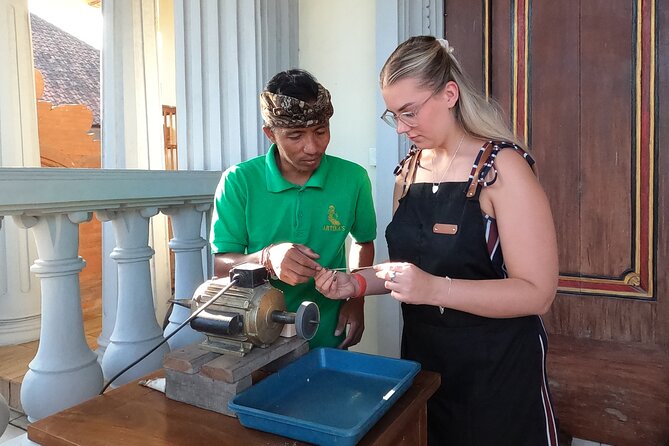
You are not expected to arrive as a jewelry maker. The class begins with the tools, their use, and basic safety. That matters because silverwork involves heat, sharp edges, pressure, and fine hand movements. Your tutor shows you how to work safely, then lets you take on the task yourself.
The class is private, which makes a clear difference. You do not have to wait for a large group to catch up, and you can ask for help the moment a cut goes crooked or a design proves too ambitious. For a hands-on craft, that personal attention is worth more than a polished demonstration.
More hands-on workshops in Ubud:
- Ubud Cooking Class Bali with Balinese Chef
★ 5.0 · 1,609 reviews - Ubud Silver Class Jewelry making in bali
★ 5.0 · 978 reviews - PRIVATE Authentic Balinese Cooking Class in Ubud at Putu’s Home
★ 5.0 · 644 reviews
Arriving at Rajata Silver Class
The meeting point is Rajata Silver Class in Celuk, Sukawati, in Gianyar Regency. The activity begins and ends there.
Hotel transfer is not included, but a private return transfer can be arranged for an extra charge. The listed round-trip car prices are 450,000 rupiah from Sanur or central Ubud, 550,000 from Canggu, 500,000 from Seminyak, Kuta, or Legian, 550,000 from Nusa Dua or Jimbaran, and 600,000 from Uluwatu.
That transfer option is useful if you do not have your own driver, but it changes the overall value of the outing. At $48 per person, the class is reasonably priced for a private three-hour activity, especially for two or more people sharing a car. A solo participant should compare the extra vehicle cost with the price of arranging a separate driver for the day.
The class is mobile-ticketed, and confirmation is provided at booking. Bring your booking details, a design idea if you have one, and enough time to reach Celuk without rushing. The activity itself lasts about three hours, but the road time from your hotel is separate.
A friendly family welcome before the tools come out
The class takes place in a private silver workshop setting connected with a local family. You can expect a welcome with a soft drink or bottled water, plus snacks before or during the lesson.
That small start helps set the tone. You are not being pushed straight toward a finished product. You have a moment to look at sample designs, talk through what you want to make, and get a sense of what can be completed within the available silver and time.
The personal side of the experience is one of its strongest features. Several supplied accounts describe meeting the family, and one even mentions the family kitten. Those details are not the main reason to book, but they help explain why this feels more like a visit to a working home workshop than a factory tour.
The setting may not have the formal polish of a luxury design school. That is part of the trade-off. You gain a more direct connection with a local craft family, while the experience may feel informal and practical.
Choosing a design that can actually be finished
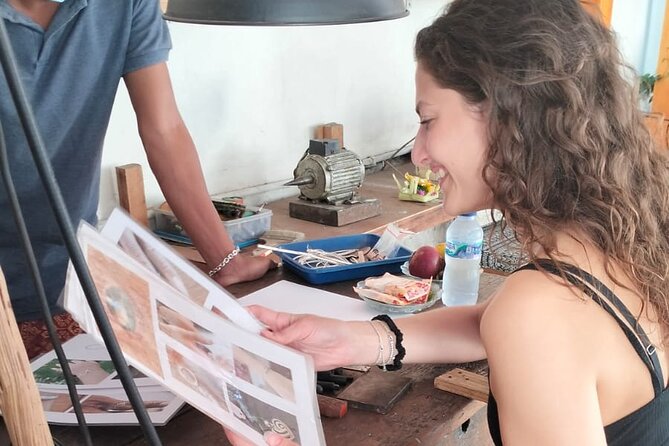
You can create your own design or work from samples around the workshop. That freedom is appealing, but it needs a little discipline.
A simple ring, pendant, charm, or textured band is a sensible choice for a three-hour beginner class. You might bring initials, a small symbol, or a basic outline on your phone. One particularly useful detail from the class experience is that the tutor helps you decide what will work and what is too complicated.
Listen to that advice. A design that looks simple on paper can require several joins, precise curves, or more silver than you have available. Since the standard allowance is listed as 5 grams, broad rings and large pendants may require an extra charge.
The best approach is to bring two or three ideas at different levels of complexity. If your favorite design is too difficult, you still have a backup. You can also ask the tutor to simplify it without losing its main character.
A few more Ubud half-days to weigh up
- All-Inclusive Ubud Private Tour
★ 5.0 · 14,344 reviews - Best of Ubud Full-Day Tour with Jungle Swing
★ 5.0 · 8,571 reviews - Ubud: Monkey Forest, Jungle Swing, Rice Terrace, and Water Temple
★ 5.0 · 7,160 reviews - Best of Ubud 1-Day Private Tour
★ 5.0 · 4,451 reviews
Sawing, stamping, and hammering the silver
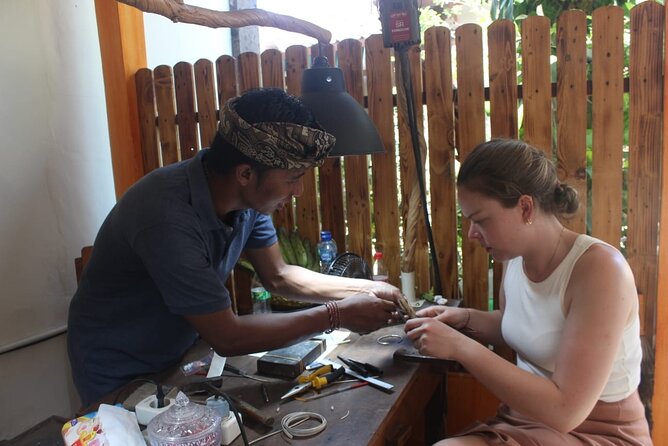
Once the design is settled, you begin working with the metal. The class covers the basic tools and their use, followed by sawing, stamping, and hammering.
Sawing is likely to be the first point where patience matters. You need to follow the shape without forcing the blade, and small errors show in the final outline. Your tutor can guide your hand and explain how to approach corners and curves.
Stamping adds marks or patterns, while hammering can shape the silver or create texture. These steps are simple in theory but surprisingly personal in the result. The force and rhythm you use affect the surface, so your finished piece will not look exactly like a sample.
This is where the private format earns its keep. You can stop to ask why a mark is too deep or how to keep a band even. A group class might give you the same basic lesson, but personal correction makes the process less frustrating.
The goal is not perfect production-line work. The goal is to learn enough technique to make something sound, attractive, and recognizably yours.
Soldering, sanding, and polishing
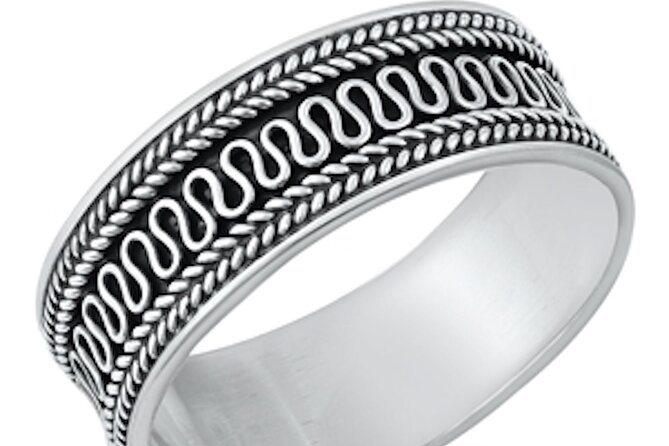
The later stages turn separate pieces or rough edges into finished jewelry. You learn soldering, then move on to sanding and polishing.
Soldering is one of the parts that requires the most careful supervision. The tutor handles the safety guidance and helps you understand how pieces are joined. You are working with a real material and real tools, so the lesson is more than a craft activity designed only for photographs.
Sanding removes roughness and helps shape the edges. This stage can feel slow, especially if you are eager to see the final piece, but it is what makes the jewelry comfortable to wear. Rushing here can leave sharp edges or an uneven surface.
Polishing gives the silver its final brightness. The change from a dull, worked piece to a finished object is satisfying because you have taken part in every stage. Some of the final refinement may need the tutor’s hand, particularly if the design needs extra care, but you still leave with a piece made from your own work and choices.
What you take home for $48
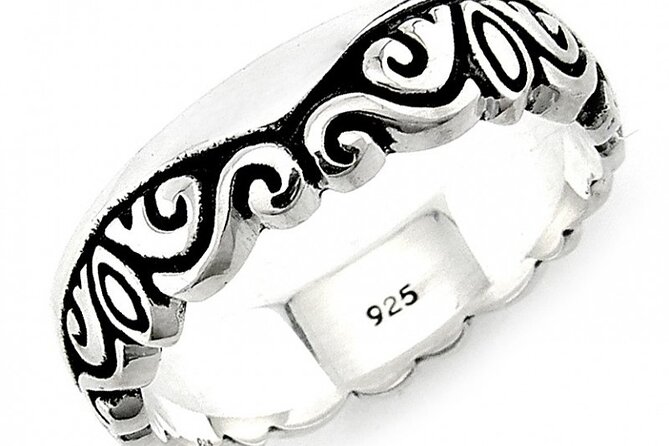
The listed price is $48 per person. It includes the private silver class, equipment, a guide, drinks or bottled water, snacks, and 5 grams of silver according to the included terms.
For a private three-hour lesson with a finished piece, that is a solid value. You are paying for instruction and use of the workshop as well as the metal itself. The souvenir is not something selected from a shop shelf. You spend the time making it, which gives the price more meaning than a standard shopping stop.
Still, keep the silver allowance in mind. The overview mentions 10 grams, but the included section says 5 grams. Since extra silver costs IDR 50,000 per gram, ask the provider to confirm the current allowance and any likely supplement before the class begins.
Personal expenses and hotel transport are separate. If you need a car, calculate that cost before comparing the experience with other Ubud activities. The class offers its strongest value when you enjoy the making process, not simply when you want the cheapest piece of silver jewelry.
What the three hours are really like
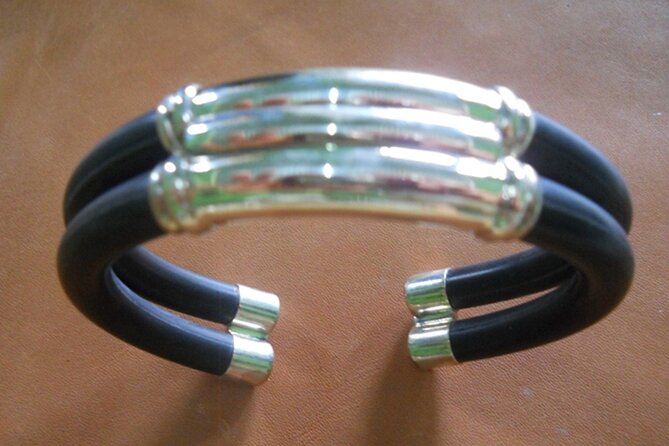
The exact pace depends on your design and how quickly you become comfortable with the tools, but the class follows a clear progression:
- You arrive at the Celuk workshop and receive a drink or water, with snacks included.
- You discuss your design or browse sample ideas.
- Your tutor explains the tools, their use, and basic safety.
- You work through sawing, stamping, and hammering.
- You learn about soldering and join the parts of your design.
- You sand and polish the piece.
- You leave with jewelry made during the class.
That sequence gives the activity a satisfying shape. You begin with an idea, make several decisions along the way, and end with a physical object.
Do not expect three hours of uninterrupted solo work. A good tutor will demonstrate, correct, and sometimes handle a delicate finishing task. That is not a flaw. It keeps the piece wearable and lets you learn techniques without wasting the limited silver.
Who will enjoy this class most
This is a strong choice for couples, families, and small groups who want an activity they can share without being part of a large organized crowd. A parent and child, or two friends, can make separate pieces while helping each other choose patterns and designs.
It also suits anyone who values a personal souvenir. If you like buying objects with a story, this is more rewarding than ordinary shopping. You can mark the piece with initials or follow a design that connects to your trip.
The class may also appeal to people who already watch jewelry-making videos or have tried basic craft work. One participant arrived with some knowledge from online videos but found that working with a professional made the techniques easier to understand. Just remember that prior knowledge does not remove the need for safety instruction.
You may want to skip it if you dislike fine handwork, have no interest in making a design, or want a quick sightseeing stop. The class is practical and tactile. You will spend much of the time concentrating on a small piece of metal.
Practical details that affect your choice
The activity is private, and most people can take part. It requires good weather, so poor conditions can lead to a different date or a full refund.
Free cancellation is available up to 24 hours before the start time. Canceling within 24 hours or making changes during that period does not qualify for a refund. The cut-off follows Bali local time.
The tour provider is Online Bali Driver. Since the meeting point is outside central Ubud, think about transport before booking. You can arrange the chargeable return hotel transfer, use your own driver, or make your way to Rajata Silver Class independently.
The class is confirmed at the time of booking, which makes it easy to fit into a Bali itinerary. It is booked about 24 days ahead on average, so reserving early is sensible if you have fixed dates, especially during busy travel periods.
Small tips for getting a better finished piece
Start with a modest design. A clean ring or small pendant will usually give you more time to focus on technique than an elaborate multi-part shape.
Ask about the silver allowance before choosing a wide or heavy piece. The supplied terms say 5 grams, and every additional gram costs IDR 50,000.
Bring reference images on your phone, but keep an open mind. Your tutor may suggest changing a curve, reducing the size, or using a simpler construction so the piece can be completed during the lesson.
Do not judge your work halfway through. Silver often looks rough after sawing and soldering. Sanding and polishing make a major difference near the end.
If you are making jewelry with another person, agree on separate designs rather than trying to combine two complicated ideas into one piece. The private format gives you room to ask questions, but the time and material limits still matter.
Should you book this Celuk silver class?
Book it if you want a hands-on Bali memory, value personal instruction, and like the idea of wearing something you helped make. The private setting, local family connection, and full process from sawing to polishing give it more substance than a short souvenir stop.
I would be especially happy to recommend it to couples, families, and small groups staying in or near Ubud. Before paying, confirm that your booking includes 5 grams of silver, ask about the design you have in mind, and add the hotel transfer cost if needed.
Skip it if you want a passive activity or if transport costs make the day poor value for your budget. For everyone else, this is a thoughtful way to spend three hours in Celuk and leave Bali with a personal piece rather than a mass-made keepsake.
FAQ
Where does the silver jewelry class take place?
The class takes place at Rajata Silver Class in Celuk, Sukawati, Gianyar Regency, Bali. The activity starts and ends at the workshop.
How long does the class last?
The silver class lasts approximately three hours.
How much silver is included?
The included section specifies 5 grams of silver. The overview also mentions 10 grams, so confirm the current allowance with the provider before starting your design.
Can I use more than the included silver?
Yes. Additional silver is charged at IDR 50,000 per gram.
Is hotel pickup included?
No. Return hotel transfer is available for an additional charge. Listed round-trip car prices range from 450,000 rupiah to 600,000 rupiah, depending on your location.
Is this a private activity?
Yes. Only your group participates in the class.
What happens if I need to cancel?
You can cancel up to 24 hours before the start time for a full refund. Cancellations or changes made within 24 hours are not refunded. If poor weather causes the activity to be canceled, you can receive a different date or a full refund.
Just added around Ubud
- Overnight Mount Ijen Blue Fire Trekking Tour From Bali★ 4.0 · 14 reviews
- Keliki Village Tour And Rice Field Walk Including Lunch Or Dinner★ 5.0 · 3 reviews
- Ubud Tour with all includes★ 5.0 · 3 reviews
- Jungle Buggy Adventure and Ubud Tour★ 5.0 · 6 reviews
- Exclusive Ubud Jewelry Making: Craft with a Pro Silversmith!★ 5.0 · 37 reviews
- Mount Batur Jeep Tour★ 5.0 · 30 reviews
- Jungle Swing – Volcano – Water Temple – Monkey Forest and Waterfall Tour★ 5.0 · 11 reviews
- Jatiluwih in detail (1 h. e-bike tour in the rice terraces)★ 4.0 · 5 reviews
Ubud Tours, compared.



Monkey Forest, Jungle Swing, Rice Terrace, and Water Temple
Read our review →


Uluwatu Sunset, Kecak Dance, and Dinner Jimbaran Beach
Read our review →
Tanah Lot and North Bali Tour: Scenic Journey
Read our review →
Body Massage Experience in Ubud Traditional Spa
Read our review →Browse the lists this tour appears in