
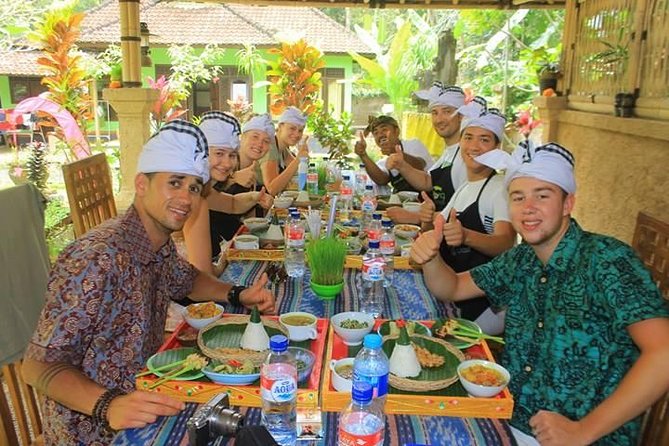
Reviewed · UBUD TOURS
Exclusive Authentic Balinese Cooking Class at Family home
The best part of this Ubud cooking class happens before you touch a knife: a visit to Payangan Traditional Market, where your local chef explains the vegetables, spices, snacks, and meats that shape Balinese home cooking. Then you head to a family compound and prepare a full meal in an open kitchen, using a wooden chopping block and stone mortar.
I like two things here. First, the class is truly hands-on, with your own cooking station and plenty of work for you to do. Second, the family setting gives the food a human context, from the compound tour to stories about Balinese life, rescued animals, and even honey from native bees. The main consideration is the long six-hour format and the extra transfer charge if you stay outside Ubud or Payangan.
Key points to know before you book
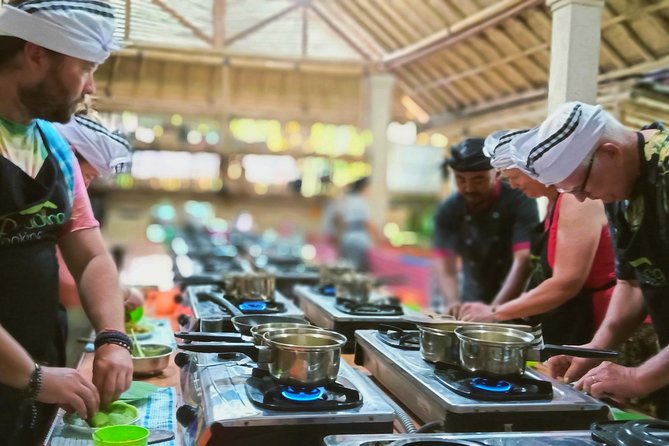
- Payangan Market comes first: Morning sessions visit the traditional morning market, while afternoon sessions visit the night market.
- You cook five Balinese dishes: The menu can include jukut urab, sate lilit, chayote soup, tahu mesanten, and dadar gulung.
- Every major step is yours: You chop, pound, grind, mix, grill, and plate the food rather than simply watching a chef.
- The class takes place at a family home: You see a Balinese compound and cook in its open-air kitchen.
- Vegetarian menus are available: Tell the provider about dietary needs when booking so the ingredients can be prepared correctly.
- Pickup is included in the local area: Ubud and Payangan transfers are free, but longer rides from Sanur, Kuta, Seminyak, Legian, Nusa Dua, or Jimbaran cost extra.
A market visit that gives the cooking real context
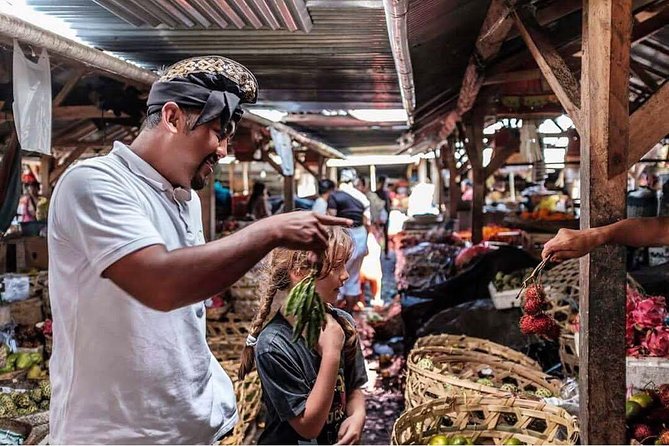
The class begins at Payangan Market, away from Ubud’s main tourist streets. That matters because the market is not just a scenic stop before the lesson. It helps you recognize the raw ingredients that later appear on your chopping board.
Your guide takes you through the stalls and explains local produce, spices, and prepared foods. You might see vegetables and herbs that are unfamiliar at first, along with snacks and market dishes sold to local families. One account of the experience recalls seeing suckling pig freshly portioned at a local food stall, a useful reminder that Balinese cooking includes far more than the restaurant versions of nasi goreng and satay.
The timing changes the feel of the visit. A morning class includes a traditional morning market, while an afternoon class visits the night market. If the market is a major reason for booking, check the available start time before you reserve. The morning option may suit you if you want to see daily shopping at the beginning of the day. The afternoon option combines the market with a dinner you prepare later.
This stop also helps you understand why spice pastes matter so much. Balinese food depends on fresh ingredients prepared in the right way, not just on adding a bottled sauce at the end. Your chef can point out ingredients before you use them, which makes the later cooking lesson easier to follow.
More Cooking Classes in Ubud
- PRIVATE Authentic Balinese Cooking Class in Ubud at Putu’s Home
★ 5.0 · 644 reviews - PRIVATE Balinese Cooking Class in Ubud with Dewa with Transfers
★ 5.0 · 213 reviews - Balinese Cooking class with traditional morning market visit
★ 5.0 · 161 reviews
Inside the family compound near Ubud
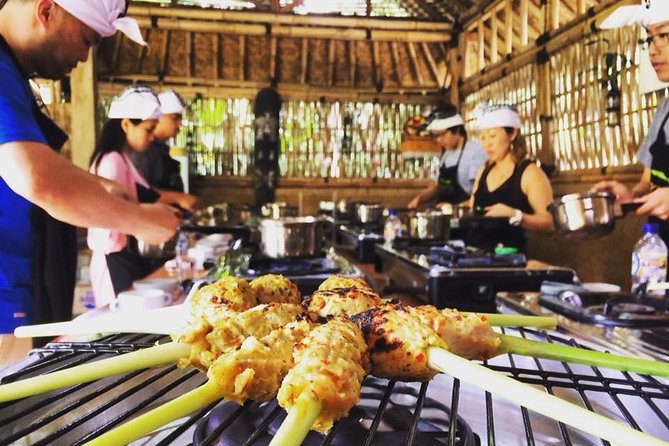
After the market, you travel to the family compound. The class takes place in a traditional Balinese home, with a tour of the grounds before you begin cooking. The setting is a major part of the experience, especially if you want to see how food connects with family life.
The kitchen is open-air and set in a garden area. It is equipped with about 12 cooking stations, although the maximum group size is also 12 people. The activity is private, so only your own booking takes part. A solo booking can therefore feel especially personal, while a larger family or friend group can work together without sharing the class with strangers.
The open kitchen is practical rather than polished in a hotel-school way. That is a positive if you want a home-style lesson, but you should not expect a formal restaurant kitchen or a demonstration where you sit back and take notes. You will be involved almost constantly.
Before cooking, you receive Bali coffee or tea and a Balinese cake. Seasonal snacks are also included. You can refill your own water bottle at the class, and the provider asks you to bring a reusable bottle rather than rely on single-use plastic.
The family connection adds small details that a standard cooking studio cannot easily provide. The class has included an introduction to family members, a rescued pet monkey, and honey produced from native bees kept by the family. These touches are not the central product, and they may vary, but they help explain why this feels like a home visit linked to food rather than only a technical lesson.
The important work happens in the spice paste
The cooking lesson focuses on the part many visitors find most useful: preparing Balinese spice pastes and sauces. You learn two basic methods. Some ingredients are chopped on a wooden chopping block, while others are ground in a traditional stone mortar before cooking.
This is physical work. You will chop, pound, pestle, mix, and cook the ingredients yourself. The chef guides you through each step, but the idea is not to watch a professional do everything. You make the paste, handle the ingredients, and see how the texture changes as the mixture comes together.
That approach gives you a better chance of repeating the food at home. A recipe can tell you what goes into a sauce, but it cannot always show you how finely to chop something or how a properly ground paste should look. The traditional tools also explain the texture and flavor of the finished dishes.
The class is suitable even if you have no cooking experience. You do not need to arrive with knife skills or knowledge of Balinese ingredients. Still, expect to participate. If you prefer a relaxed demonstration with minimal work, this is not the right format.
The instructors are described as professional local chefs, with Nyoman Mahendra and Wayan named in accounts of the class. Their role is part teacher and part cultural guide. You can ask about ingredients, the origin of dishes, and how food fits into Balinese life while you work.
Five dishes, from savory vegetables to sweet pancakes
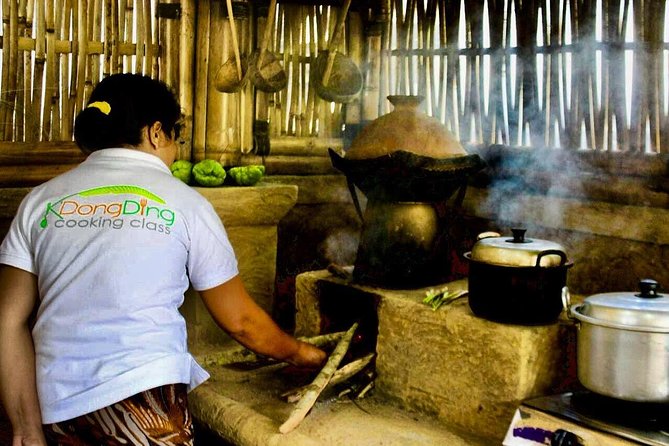
The exact menu should be confirmed when you book, but the stated selection includes five Balinese dishes. The recipes cover several kinds of preparation, so you are not repeating the same technique five times.
Jukut urab is a vegetable dish with coconut and seasoning. It gives you a useful introduction to balancing fresh vegetables with a strongly flavored spice mixture.
Sate lilit ayam is a Balinese-style minced chicken satay. A tofu version is available for a vegetarian menu. This is one of the hands-on dishes where shaping and seasoning matter as much as the cooking itself.
Calon be siap with chayote soup combines chicken and chayote, with a tofu alternative listed for vegetarians. Chayote is mild and fibrous, so it works well with a seasoned broth and gives the meal a lighter counterpoint to the satay and spice paste.
Tahu mesanten adds another tofu-based dish to the menu. If you choose the vegetarian option, the chef adapts the meal in advance rather than simply removing meat at the last minute.
Dadar gulung finishes the meal on a sweet note. This traditional rolled pancake is a fitting final lesson because it shows that Balinese home cooking includes careful dessert preparation as well as savory food.
The meal is designed to be eaten after you prepare it. Morning participants eat lunch, while afternoon participants eat dinner. That arrangement is simple but valuable: you can taste the result while the techniques are still fresh in your mind.
More Balinese cooking classes in Ubud:
- PRIVATE Ubud Market Tour & Balinese Cooking Class with Putu
★ 5.0 · 125 reviews - Balinese Cooking Class with Traditional Market Tour
★ 5.0 · 66 reviews - Balinese Cooking Class at Organic Farm
★ 5.0 · 51 reviews - Authentic Balinese Cooking Class in Ubud
★ 5.0 · 46 reviews
Vegetarian cooking and dietary requests
Vegetarian food is available, but you need to say so in advance. The provider specifically asks for dietary requirements and allergies at the time of booking because the ingredients must be prepared ahead of the class.
The listed vegetarian alternatives include tofu versions of sate lilit and the chicken component of the chayote soup. Ask about any other restrictions before paying, especially if you need to avoid particular ingredients. The available information confirms vegetarian preparation, but it does not promise every possible allergy-free menu.
This is a good class for someone who wants to understand how Balinese food can be adapted without losing its character. You still work with spice pastes, vegetables, coconut, traditional tools, and the same basic cooking methods.
How much value you get for $75
At $75, the price is not just paying for a meal. It covers about six hours of instruction, the market visit, transport within the Ubud and Payangan area, ingredients, kitchen equipment, coffee or tea, snacks, a recipe book, and a culinary workshop certificate.
That makes the price reasonable if you value time and personal instruction. You receive a market tour, a family-compound visit, a full cooking lesson, and lunch or dinner. A shorter restaurant-based cooking demonstration might cost less, but it would not give you the same amount of practical work.
The private format adds value for couples, families, and small groups. A booking can include from one to 12 people, and only your group participates. The kitchen has individual stations, so you are not waiting for a turn with the mortar or chopping board.
There are a few extra costs to watch. Pickup and drop-off are free from hotels in Ubud and Payangan. Transfers from Sanur cost IDR 350,000 per booking according to the additional information, while rides from Kuta, Seminyak, Legian, Nusa Dua, and Jimbaran are listed at about IDR 500,000 per booking. The details also note an extra charge of $15 per person for passengers seven through 12 because the vehicle holds up to six people.
Bring your own reusable water bottle. Bottled water is not included, and the class encourages you to refill your bottle instead.
Timing, transport, and group size
The experience lasts roughly six hours, so keep the rest of your day light. A market visit, transport, a compound tour, a cooking lesson, and a full meal take time. You will get more from the class if you are not rushing to a temple visit or airport transfer afterward.
Hotel pickup and drop-off are offered within Ubud and Payangan. The meeting point is listed at Payangan Market, on the road in Melinggih, Payangan, Gianyar. Confirm the pickup details after booking, since the activity ends back at the meeting point.
The vehicle is air-conditioned, which helps with the road journey. If your group has more than six people, clarify the vehicle plan and additional cost before booking. The maximum is 12 people per booking, and larger groups need to contact the provider for a separate arrangement.
Children must be accompanied by an adult, and the minimum age is 12. The class suits older children who enjoy active cooking, but it is not designed as a small-child activity.
What the class does especially well
The strongest feature is the combination of local market, family home, and hands-on cooking. Each part supports the next. You see ingredients at the market, learn how they are prepared in the compound kitchen, then eat the finished dishes.
The family setting also makes the class feel personal. You are not simply shown a Balinese house from the outside. You are welcomed into the compound, meet members of the family, and receive an explanation of traditional home life.
The instruction is another strong point. The chef guides you without taking over. You can ask detailed questions about ingredients, food traditions, and the place of each dish in Balinese culture. The recipe book gives you something practical to take home, while the certificate is a pleasant extra.
The class has a perfect five rating from 57 reviews and a 100 percent recommendation figure in the supplied booking information. More important than the numbers is the consistent pattern: the market visit, friendly family welcome, careful instruction, and delicious meal receive the most attention.
A few things to consider before booking
This is not a quick activity. Six hours can feel long if cooking is not a major interest, or if you want to pack several Ubud sights into one day.
The market is a working local market, not a staged food show. You may encounter unfamiliar ingredients, strong smells, raw food, and ordinary daily commerce. That is part of its value, but it may not suit someone seeking a carefully polished tourist setting.
The class is held in an open kitchen. That means a more authentic home atmosphere, but conditions can vary with the weather. The activity requires good weather, and a cancellation caused by poor conditions results in a different date or a full refund.
Finally, this is a non-refundable experience if you cancel or request an amendment for personal reasons. Check your plans, dietary needs, pickup location, and group size before booking.
Who should book this Ubud cooking class?
I would choose this experience if you want more than a restaurant meal and enjoy learning by doing. It suits food-focused visitors, couples, families with children aged 12 or older, solo cooks, and small private groups.
It is especially useful for people who want to take Balinese food skills home. You leave with recipes and a better feel for chopping, grinding, mixing, and balancing spice pastes.
I would look elsewhere if you dislike open-air kitchens, have very limited time, or want a formal demonstration without physical preparation. For everyone else, the market and family compound make this a strong value at $75, particularly when free local transport is included.
FAQ
Where does the cooking class take place?
The class takes place near Ubud at a traditional Balinese family compound and open kitchen. The listed meeting point is Payangan Market in Melinggih, Payangan, Gianyar.
How long does the experience last?
The experience lasts approximately six hours, including the market visit, transport, compound tour, cooking lesson, and meal.
Is hotel pickup included?
Free pickup and drop-off are provided for hotels in the Ubud and Payangan areas. Extra charges apply for some hotels outside those areas.
Is the class private?
Yes. This is a private activity, so only your group participates. Bookings can include from one to 12 people.
What happens at Payangan Market?
You tour a traditional market and learn about local produce, spices, snacks, and other foods used in Balinese cooking. Morning sessions visit the morning market, while afternoon sessions visit the night market.
What dishes will I prepare?
The listed dishes include jukut urab, sate lilit ayam or tofu, calon be siap with chayote soup or tofu, tahu mesanten, and dadar gulung. The menu may depend on the class arrangement.
Can I request a vegetarian meal?
Yes. Vegetarian options are available, including tofu alternatives. You must advise the provider in advance so the ingredients can be prepared correctly.
Do I need previous cooking experience?
No previous cooking experience is required. The lesson is guided, and you prepare the food yourself using traditional utensils and techniques.
What is included besides the cooking lesson?
The experience includes ingredients, cooking tools, an individual cooking station, coffee or tea, seasonal snacks, a recipe book, a culinary workshop certificate, and lunch for morning classes or dinner for afternoon classes.
What should I bring?
Bring your own reusable water bottle because bottled water is not included. You should also advise the provider about allergies or other dietary requirements when booking.
More Workshops in Ubud
- Ubud Cooking Class Bali with Balinese Chef
★ 5.0 · 1,609 reviews - Ubud Silver Class Jewelry making in bali
★ 5.0 · 978 reviews - Balinese Farm Cooking Class by Pemulan Bali
★ 5.0 · 410 reviews - Balinese Authentic Cooking Class in Ubud
★ 5.0 · 239 reviews
Just added around Ubud
- Overnight Mount Ijen Blue Fire Trekking Tour From Bali★ 4.0 · 14 reviews
- Keliki Village Tour And Rice Field Walk Including Lunch Or Dinner★ 5.0 · 3 reviews
- Ubud Tour with all includes★ 5.0 · 3 reviews
- Jungle Buggy Adventure and Ubud Tour★ 5.0 · 6 reviews
- Exclusive Ubud Jewelry Making: Craft with a Pro Silversmith!★ 5.0 · 37 reviews
- Mount Batur Jeep Tour★ 5.0 · 30 reviews
- Jungle Swing – Volcano – Water Temple – Monkey Forest and Waterfall Tour★ 5.0 · 11 reviews
- Jatiluwih in detail (1 h. e-bike tour in the rice terraces)★ 4.0 · 5 reviews
Ubud Tours, compared.



Monkey Forest, Jungle Swing, Rice Terrace, and Water Temple
Read our review →


Uluwatu Sunset, Kecak Dance, and Dinner Jimbaran Beach
Read our review →
Tanah Lot and North Bali Tour: Scenic Journey
Read our review →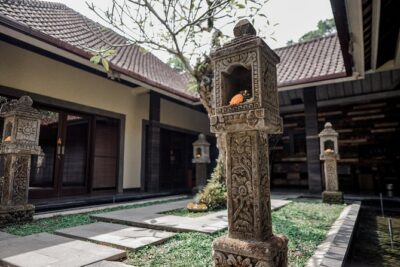
Body Massage Experience in Ubud Traditional Spa
Read our review →Browse the lists this tour appears in