
Reviewed · UBUD TOURS
Balinese Cooking Class at Organic Farm
At Mai Organic Farm, the cooking begins before you reach the kitchen. You start with a drink, walk through the community farm, pick herbs and vegetables, and then turn those ingredients into six Balinese dishes over a traditional wood-fired stove. It is a farm visit, food lesson, and shared lunch in one outing.
I like the direct link between the garden and the plate. I also like the small-group format, with hands-on cooking rather than a demonstration from across the room. The main consideration is the outdoor setting: this activity requires good weather, and five hours around a farm and open cooking area may feel long if you want a quick kitchen lesson.
Key points to know before booking
- You harvest the ingredients first: Pick produce from Mai Organic Farm before preparing the meal.
- Six dishes are prepared: The menu includes examples such as tuna sate, sate lilit kebab, and corn fritters.
- The cooking uses a wood-fired stove: Expect a traditional method rather than a modern cooking school setup.
- The farm supports Pejeng residents: Your booking helps a local farming community and its organic produce work.
- Drinks are part of the day: You may be served juice, infused water, herbal drinks, Balinese coffee, and lemongrass tea.
- Pickup is available from central Ubud: The activity begins and ends at the farm, with round-trip transfers offered from central Ubud hotels and rentals.
A five-hour food day outside Ubud
This is not just a lesson in how to make a Balinese sauce. The class uses food to explain daily life in Bali, from farming methods to shared cooking and local water management.
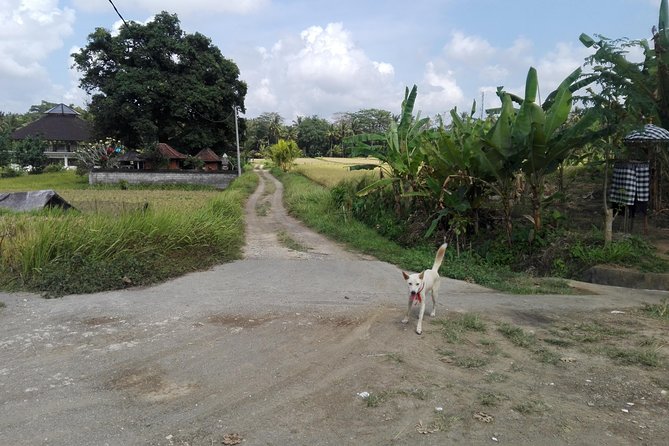
Mai Organic Farm is in Pejeng, in the Gianyar area east of Ubud. You meet at the farm itself, though pickup is offered from central Ubud hotels and rental properties. The activity lasts about five hours, so plan it as a half-day outing rather than a short morning stop.
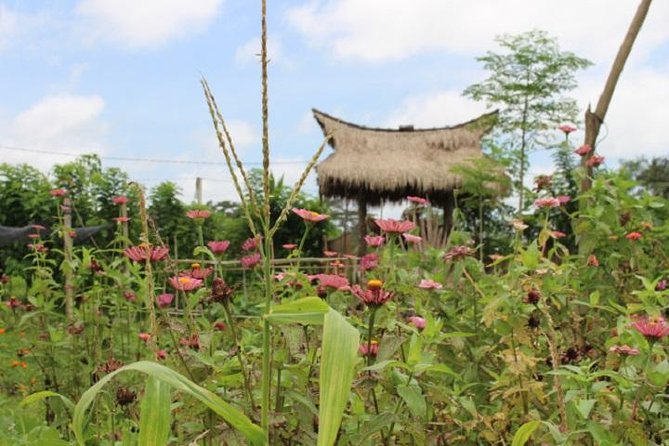
The setting matters. You are not shopping for ingredients at a market and then cooking in a classroom. You see produce growing, collect some of what you need, and eat the finished meal in a quiet gubuk, or hut. That simple sequence gives the day a clear rhythm: farm, kitchen, table.
More Cooking Classes in Ubud
- PRIVATE Authentic Balinese Cooking Class in Ubud at Putu’s Home
★ 5.0 · 644 reviews - PRIVATE Balinese Cooking Class in Ubud with Dewa with Transfers
★ 5.0 · 213 reviews - Balinese Cooking class with traditional morning market visit
★ 5.0 · 161 reviews
Arriving with a welcome drink
The day begins at the farm with a welcome drink in a shaded area. Depending on the day, this may include fresh coconut or another farm-based drink. The shade is welcome in Bali, especially before the walking and cooking begin.
The opening talk introduces Mai Organic Farm’s community movement and its work with local growers. This gives useful context to the meal ahead. You are not only learning what goes into a dish. You are also seeing how an organic farm can support farmers and villagers in Pejeng.
The hosts place real attention on hospitality. The teaching team includes friendly local cooks and guides, with names such as Korong and Kadek associated with the class. The exact instructor may vary, but the tone is informal and social rather than formal or lecture-heavy.
Walking through the farm and learning about subak
After the welcome, you walk through the community farm. This is one of the strongest parts of the experience because it makes the ingredients familiar before you use them.
You may see and pick herbs, fruit, and vegetables for the cooking session. The farm walk also offers chances to smell spices and taste produce directly from the garden. Children can take part in this section, and the activity has worked well for families with children as young as six.
The guide also explains Bali’s subak irrigation system, which is recognized by UNESCO. Subak is more than a way to move water through fields. It reflects cooperation among farmers and communities, and it helps explain why farming in Bali is tied to shared responsibilities.
That lesson adds substance to the outing. You are not simply walking past plants while waiting for lunch. You get a short introduction to the system that helps shape agricultural life in Bali. The information is likely to be most useful for visitors who want a little cultural context with their cooking.
The farm walk can be warm and uneven in places, though the supplied details do not specify the walking surface or accessibility arrangements. Wear practical clothing and shoes you do not mind using around soil and outdoor cooking areas.
From fresh-picked produce to the cooking centre
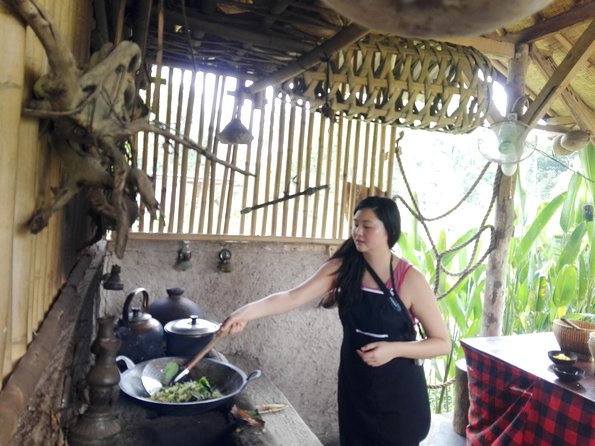
The next stop is the Mai Organic Farm cooking centre. Here, the produce you picked becomes part of a group meal.
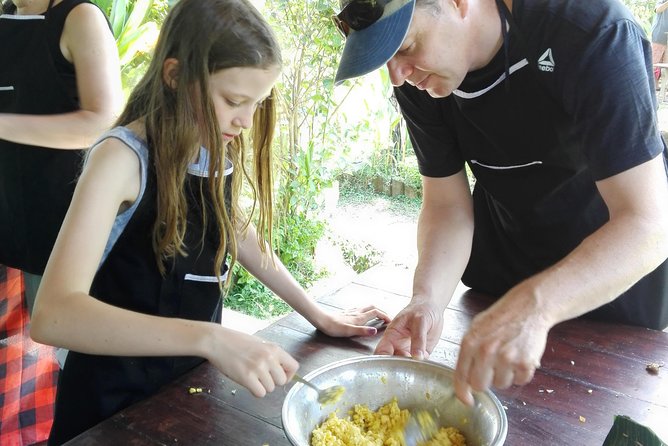
The class prepares six Balinese dishes. Examples include tuna sate, sate lilit, and corn fritters. Sate lilit is a Balinese kebab made by wrapping seasoned mixture around a skewer, traditionally using minced meat or fish. The class gives you the chance to work with local flavors in a form that is approachable even if you are new to Balinese cooking.
You may also prepare sauces, herb mixtures, and other base components for the meal. The exact menu can depend on available farm produce, so do not treat the examples as a guaranteed printed menu for every date.
The class is designed for participation, but you are not forced to handle every task. You can take part as much or as little as you like. That is useful for mixed groups, since one person may want to chop and shape the sate while another prefers to watch, ask questions, and take notes.
The cooking takes place over an outdoor or traditional wood-fired stove. This is a meaningful feature, not just a rustic decoration. Heat control differs from cooking on an electric or gas hob, and the setup connects the food to older household methods.
It also means the class may be less polished than a purpose-built cooking school. You should expect an active, communal kitchen rather than individual workstations and a tightly scripted demonstration. For many people, that is the point. If you prefer a very precise, quiet lesson with every step measured, this may not be your ideal format.
More Balinese cooking classes in Ubud:
- PRIVATE Ubud Market Tour & Balinese Cooking Class with Putu
★ 5.0 · 125 reviews - Balinese Cooking Class with Traditional Market Tour
★ 5.0 · 66 reviews - Exclusive Authentic Balinese Cooking Class at Family home
★ 5.0 · 57 reviews - Authentic Balinese Cooking Class in Ubud
★ 5.0 · 46 reviews
Drinks that stretch through the morning
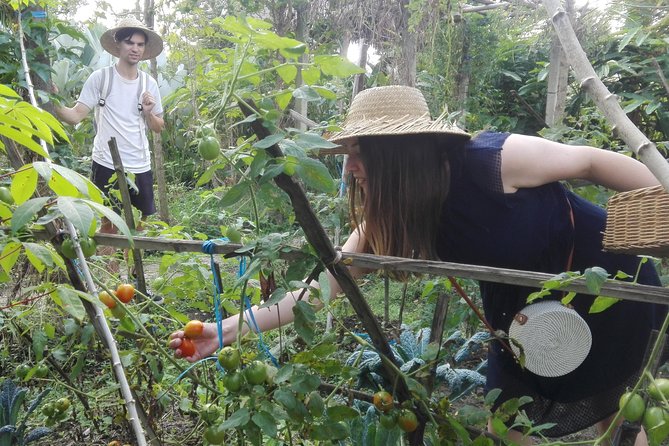
The class includes more than the meal. After the farm walk, you are served a fresh juice made with fruit and vegetables from local farms.
Other listed drinks include infused water, herbal drinks, Balinese coffee, and lemongrass tea. These small touches help pace the day, especially in Bali’s heat, and give you a wider taste of local ingredients.
The drink service is also part of the farm-to-table idea. Instead of treating beverages as an afterthought, the class uses them to show how produce can be combined in simple, refreshing ways.
One French-language account specifically praised the activity for using no plastic from beginning to end. The available information does not spell out every serving material or guarantee that practice for every session, but the farm’s low-waste approach is clearly part of its appeal.
Eating together in the gubuk
Once the food is ready, you sit down in a tranquil gubuk with the rest of the group. The meal is the payoff, but it also completes the social side of the class.
Balinese food often makes more sense when shared. Several dishes arrive together, and you can compare the flavors you helped prepare. The group setting also makes this a good choice for couples, friends, and families who want an activity with conversation built in.
The lunch is not a separate restaurant stop. You eat what the group has prepared, using the produce collected earlier in the morning. That creates a stronger sense of connection between the farm and the plate than you would get from a standard cooking lesson.
You may receive a recipe book or recipe information to take home. One family described being given a recipe book at the end, though the exact materials can vary. It is worth asking your instructor how to recreate the dishes if you want to continue cooking them after Bali.
Why the community mission adds value
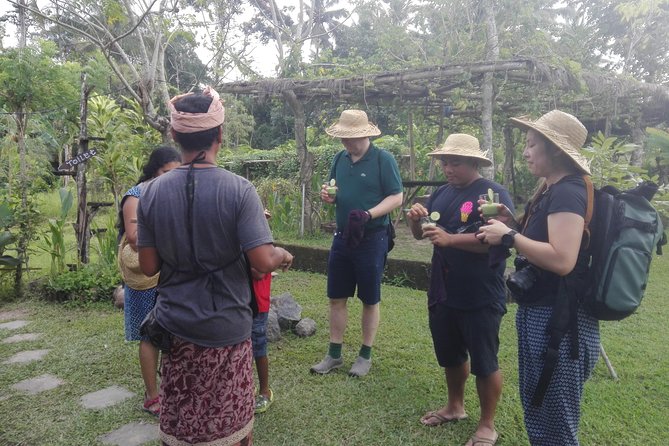
The class supports local farmers and villagers in Pejeng. Mai Organic Farm aims to help increase local income while giving farmers resources that can improve their quality of life and support organic growing.
That mission affects how I would judge the $40 price. You are paying for roughly five hours of instruction, drinks, a farm visit, a meal, and the convenience of pickup if you stay in central Ubud. More important, your money is tied to a community farm rather than only to a commercial kitchen.
At $40 per person, it is not the cheapest possible meal in Bali. You could eat very well for far less at a local warung. But this price covers an organized half-day activity, guides, ingredients, cooking, and transport support. If you value direct contact with farming and local food traditions, the cost is reasonable.
The value is weaker if your only goal is to learn a few recipes quickly. In that case, a shorter class may suit you better. This outing earns its price through the farm visit and community setting as much as through the cooking itself.
Group size, pickup, and timing
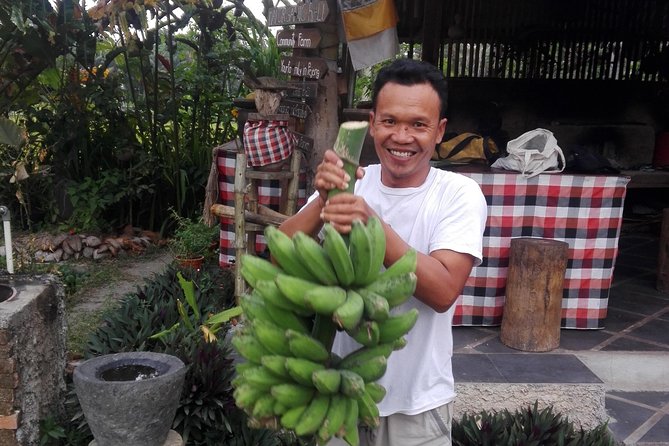
The experience is promoted as a small-group class. The highlights describe a cap of eight people, while the additional booking information gives a maximum of ten. Because those figures differ, confirm the expected group size when you book.
Even at ten people, the class should feel more personal than a large demonstration. A smaller group gives you more chances to handle ingredients, ask questions, and work near the stove. It also makes the communal meal more comfortable.
Pickup is offered from central Ubud hotels and rentals. The official meeting point is Mai Organic Farm Bali at Subak Kana, Banjar Panglan, Pejeng, Tampaksiring, Gianyar, Bali 80552. The activity ends back at that same meeting point.
If you arrange pickup, confirm the exact collection details after booking. The farm is outside central Ubud, and a smooth transfer saves you from arranging your own ride to a rural address. Confirmation is sent within 48 hours, subject to availability.
The class is often reserved around 17 days ahead. That does not mean you must book exactly that early, but it is a sensible clue for busy holiday periods. The small capacity can fill faster than a large group tour.
Who will enjoy this class most
I would recommend this class to people who want food and culture in the same half-day. It suits first-time visitors to Bali, repeat visitors looking for a quieter local activity, and anyone who prefers making lunch to simply ordering it.
Families are a strong match. Children have the chance to see food growing, pick ingredients, stir mixtures, and eat what they helped make. The activity is not described as a dedicated children’s program, so parents should judge their children’s comfort with heat, farm paths, and a five-hour schedule.
Couples and friends will also find plenty to do together. The cooking is shared, the meal is communal, and the outdoor setting gives the day a relaxed pace.
This is less suitable if you need a tightly timed activity or have limited tolerance for heat and outdoor conditions. It also may not fit a schedule packed with other Ubud sights, since the class takes about five hours and includes transport time if pickup is used.
The activity requires good weather. If rain or other poor conditions cause cancellation, you are offered another date or a full refund. For your own comfort, bring sun protection and clothing suitable for outdoor cooking, although specific packing requirements are not provided.
My verdict on the Mai Organic Farm experience
I like this class because it gives you a reason to pay attention to the ingredients before they reach the cooking board. The farm walk, subak explanation, wood-fired stove, and shared meal all fit together.
The most valuable part is the sense of participation. You are not just shown a recipe. You help gather the food, prepare it with the group, and sit down to eat the result. The friendly instruction, fresh drinks, and relaxed setting make the class approachable for beginners.
Book it if you want a farm-to-table Balinese experience with a community focus and enough time to enjoy the setting. Think twice if you want a short, highly polished cooking lesson or if wet weather would disrupt your plans. For most visitors who have half a day to spare near Ubud, the mix of farming, cooking, and conversation makes the $40 price a fair deal.
FAQ
Where does the Balinese cooking class take place?
The class takes place at Mai Organic Farm Bali in Subak Kana, Banjar Panglan, Pejeng, Tampaksiring, Gianyar, Bali.
How long does the experience last?
The activity lasts about five hours.
Is pickup available?
Yes. Round-trip pickup is offered from central Ubud hotels and rental properties.
Where does the activity end?
The activity ends back at Mai Organic Farm, the meeting point.
How many dishes will I cook?
You will prepare six different Balinese dishes. Examples include tuna sate, sate lilit kebab, and corn fritters.
Will I pick the ingredients?
Yes. The farm walk includes picking ingredients that will be used during the cooking class.
What drinks are included?
The experience includes a welcome drink and may include juice, infused water, herbal drinks, Balinese coffee, and lemongrass tea.
Is the cooking done on a traditional stove?
Yes. The class uses a traditional wood-fired stove.
Can children join the activity?
The experience has been suitable for families with children aged six and nine, and children aged 12 and 13 have also taken part. The supplied details do not state a formal minimum age.
What happens if the weather is poor?
The experience requires good weather. If it is canceled because of poor conditions, you are offered a different date or a full refund.
More Workshops in Ubud
- Ubud Cooking Class Bali with Balinese Chef
★ 5.0 · 1,609 reviews - Ubud Silver Class Jewelry making in bali
★ 5.0 · 978 reviews - Balinese Authentic Cooking Class in Ubud
★ 5.0 · 239 reviews - Canggu Scooter Lessons
★ 5.0 · 195 reviews
More Farm Visits in Ubud
- Balinese Farm Cooking Class by Pemulan Bali
★ 5.0 · 410 reviews - From Ubud: Authentic Bali Farm Cooking School & Organic Farm
★ 5.0 · 122 reviews - Seaweed Farming Activity and Sightseeing at Diamond Beach
★ 4.5 · 3 reviews
Just added around Ubud
- Overnight Mount Ijen Blue Fire Trekking Tour From Bali★ 4.0 · 14 reviews
- Keliki Village Tour And Rice Field Walk Including Lunch Or Dinner★ 5.0 · 3 reviews
- Ubud Tour with all includes★ 5.0 · 3 reviews
- Jungle Buggy Adventure and Ubud Tour★ 5.0 · 6 reviews
- Exclusive Ubud Jewelry Making: Craft with a Pro Silversmith!★ 5.0 · 37 reviews
- Mount Batur Jeep Tour★ 5.0 · 30 reviews
- Jungle Swing – Volcano – Water Temple – Monkey Forest and Waterfall Tour★ 5.0 · 11 reviews
- Jatiluwih in detail (1 h. e-bike tour in the rice terraces)★ 4.0 · 5 reviews
Ubud Tours, compared.

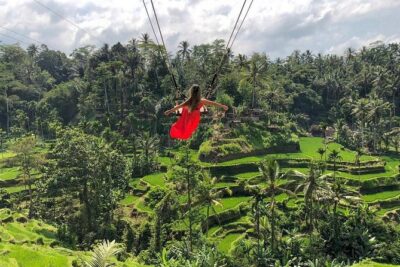
Monkey Forest, Jungle Swing, Rice Terrace, and Water Temple
Read our review →


Uluwatu Sunset, Kecak Dance, and Dinner Jimbaran Beach
Read our review →
Tanah Lot and North Bali Tour: Scenic Journey
Read our review →
Body Massage Experience in Ubud Traditional Spa
Read our review →Browse the lists this tour appears in