
Reviewed · UBUD TOURS
PRIVATE Balinese Cooking Class in Ubud with Dewa with Transfers
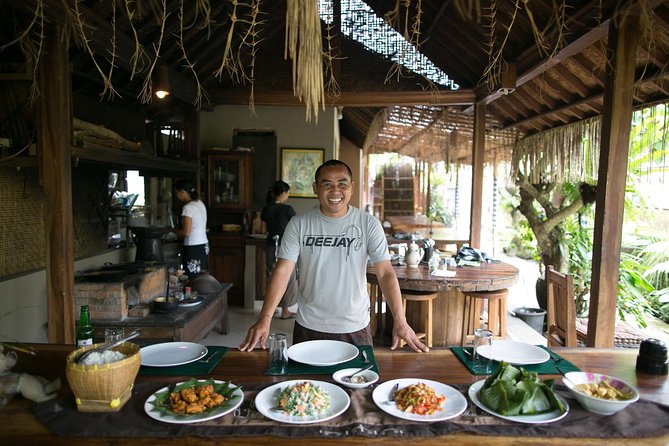
The heart of this experience is not the kitchen lesson. It is the invitation into Dewa’s family compound, where you walk through village lanes and gardens before cooking beside his wife, Jero. You learn how food, farming, medicine, and Balinese beliefs fit together in daily life.
I like the private format, which lets Dewa adjust the pace and answer your questions, and I like that ingredients come from local gardens rather than a staged classroom. The main consideration is that this is a home visit with cooking, not a polished professional cooking school. Expect a relaxed, personal experience rather than restaurant-style instruction.
Key points at a glance
- Village setting near Keliki: Leave central Ubud and reach a quieter community in the terraced foothills north of town.
- Dewa and Jero as hosts: Dewa leads the cultural walk and food introduction, while his wife helps teach the cooking in their open kitchen.
- Garden-to-table cooking: Learn about galangal, cacao, nutmeg, herbs, fruits, and other ingredients before using them.
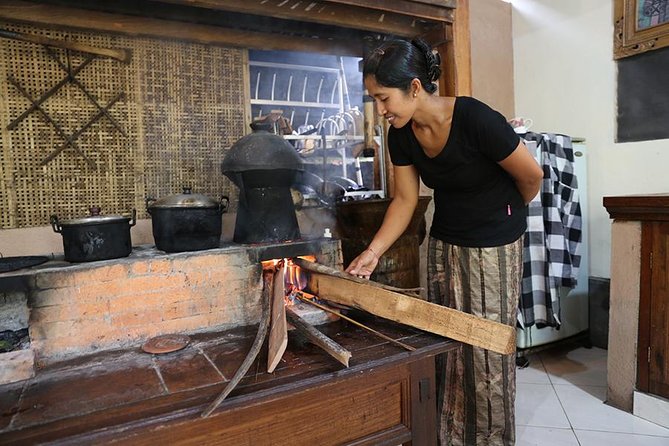
- Traditional kitchen tools: Work with a pestle and mortar and cook over a wood-fired stove.
- Several Balinese dishes: Recipes may include pepes ikan, bumbu kuning, and bregedel, with the exact menu varying.
- A private four-hour visit: Round-trip transport from Ubud, the cooking session, meal, beer, and water are included.
From Ubud to Dewa’s village near Keliki
The experience begins with private transport from a hotel or vacation rental in the Ubud area. The drive takes you toward Keliki, a village in the terraced foothills north of Ubud. Some descriptions place the trip at roughly 15 to 30 minutes, though traffic and your exact pickup point can affect the timing.
That short ride matters. Ubud has plenty of cooking schools built for visitors, but this outing takes you away from the central restaurant scene and into a family home. You meet at Rumah Makan Jero Nini in Keliki if you arrange your own transport, or Dewa collects you from Ubud when transport is included.
Pickup is limited to Ubud hotels and rentals. If you stay outside the Ubud area, you need to reach Dewa’s home in Keliki yourself. Confirm this point before booking, since the private transfer is a useful part of the price for anyone staying in Ubud.
The activity lasts about four hours. The schedule usually includes the village and garden walk, time in the family compound, hands-on preparation, and a shared meal. It is sold as a half-day experience, though the pace can feel full because the cultural portion is much more than a quick introduction.
More Cooking Classes in Ubud
- PRIVATE Authentic Balinese Cooking Class in Ubud at Putu’s Home
★ 5.0 · 644 reviews - Balinese Cooking class with traditional morning market visit
★ 5.0 · 161 reviews - PRIVATE Ubud Market Tour & Balinese Cooking Class with Putu
★ 5.0 · 125 reviews
A walk through gardens, rice fields, and village life
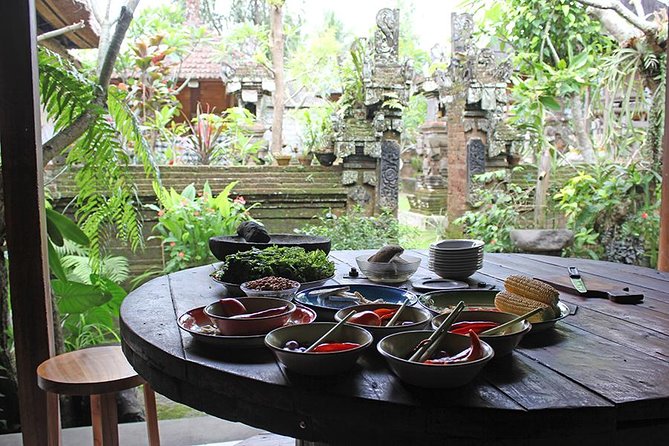
Dewa starts by showing you the local area and the plants that shape Balinese cooking. You might see galangal, cacao, nutmeg, lemongrass, bananas, herbs, and other fruits or vegetables grown around the village. The useful part is not just learning the names. Dewa explains how some plants are used for medicine, fragrance, ritual, and everyday meals.
This gives the food more meaning. A paste made with turmeric or galangal is no longer just a flavoring from a recipe sheet. You have seen where ingredients grow and heard how they fit into local ideas about health and balance.
The walk can include village lanes, forest paths, rice fields, and community gardens. Wear comfortable shoes, since this is not a paved stroll through a formal botanical garden. The route is part of the experience, but it may be less suitable for anyone who has trouble walking on uneven ground.
Dewa also uses the walk to explain Balinese religion, farming, family life, and local customs. His talks draw on Hindu, Buddhist, and animist influences, along with the values that guide daily life in his community. Several hours of this sort of conversation can be a lot if you only want to cook, but it is exactly what makes this outing different from a standard recipe class.
I would give Dewa room to tell these stories. Ask questions if you are curious about offerings, food traditions, farming, or family compounds. His calm, reflective style is a major part of the visit, and the cultural discussion is not an extra tacked onto the cooking.
Inside a traditional Balinese family compound
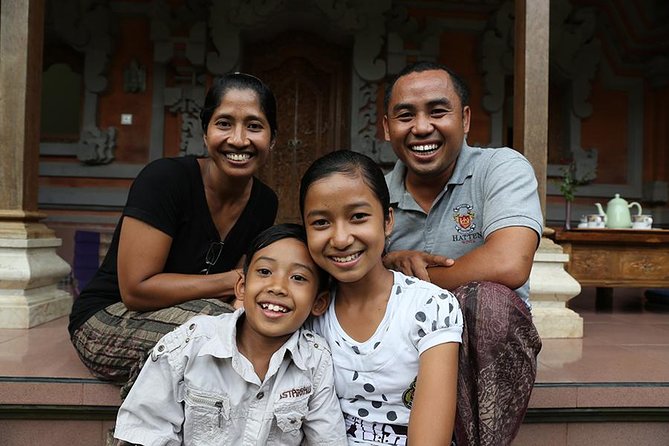
Dewa’s home is arranged as a traditional Balinese family compound, with several open pavilions around a central courtyard. You see a working household rather than a set built for a tour. Family members may be present, and the setting gives you a glimpse of how several generations can share one compound.
The open-air design also shapes the cooking. You are not standing in a modern demonstration kitchen with rows of identical workstations. Instead, you help prepare food in a home kitchen, using the tools and methods that make sense for the family.
That setting is a strength, but it calls for courtesy. You are entering a private home, so dress respectfully and follow Dewa’s lead around family spaces and religious items. The activity is cultural as much as culinary, and your attitude matters.
The hosts are Dewa or, if he is unavailable, a family member who works with Dewa’s wife, Jero. The family welcome is central to the experience. You are not simply watching a cook prepare lunch. You are helping in a home where the food is connected to the people who live there.
Grinding spices and cooking over wood fire
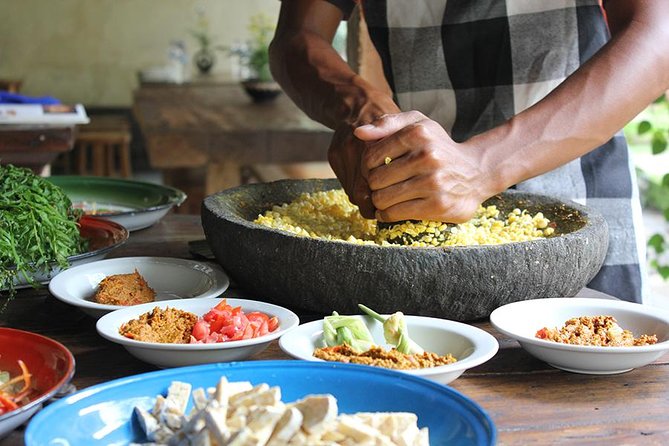
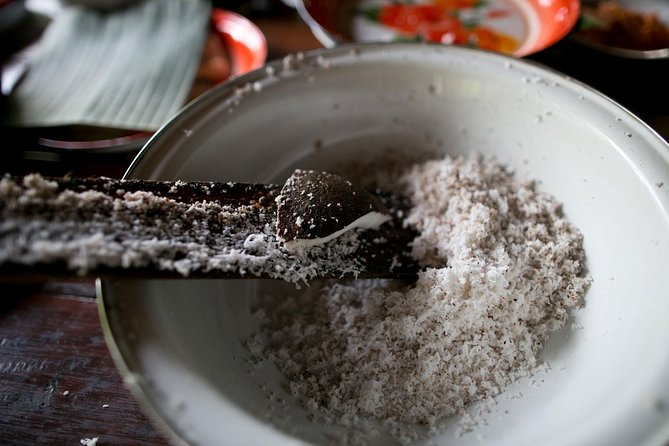
The cooking is hands-on. You may chop vegetables, grind spice pastes, and help prepare several dishes from start to finish. Traditional equipment includes a pestle and mortar, which takes more effort than an electric blender but gives you a better feel for the texture of Balinese spice pastes.
Cooking takes place over a traditional wood-fired stove. That is an authentic touch, but it also means the process is not as controlled as it would be in a modern training kitchen. Heat, timing, and preparation are part of the lesson. You learn by doing, with guidance from Dewa and Jero.
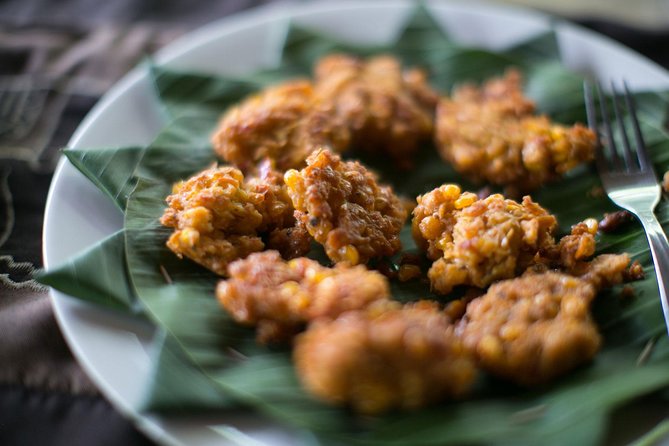
Possible dishes include pepes ikan, tuna grilled in banana leaves, bumbu kuning, chicken cooked with fresh turmeric and coconut milk, and bregedel, hand-ground corn fritters. The full meal can include five, six, or even seven preparations, depending on the session and the menu.
The recipes cover more than a single main course. You might prepare a combination of salad, spice paste, vegetable dish, meat or fish dish, fritters, and dessert. The exact selection is not fixed in the information provided, so do not book expecting one guaranteed menu beyond the named examples.
A notebook or handmade recipe book is provided for writing down the recipes. This is one of the most practical parts of the visit. You can return home with instructions for repeating the dishes, and the recipes are reported to be manageable for a home cook rather than restaurant formulas requiring specialist equipment.
More Balinese cooking classes in Ubud:
- Balinese Cooking Class with Traditional Market Tour
★ 5.0 · 66 reviews - Exclusive Authentic Balinese Cooking Class at Family home
★ 5.0 · 57 reviews - Balinese Cooking Class at Organic Farm
★ 5.0 · 51 reviews - Authentic Balinese Cooking Class in Ubud
★ 5.0 · 46 reviews
The meal you help create
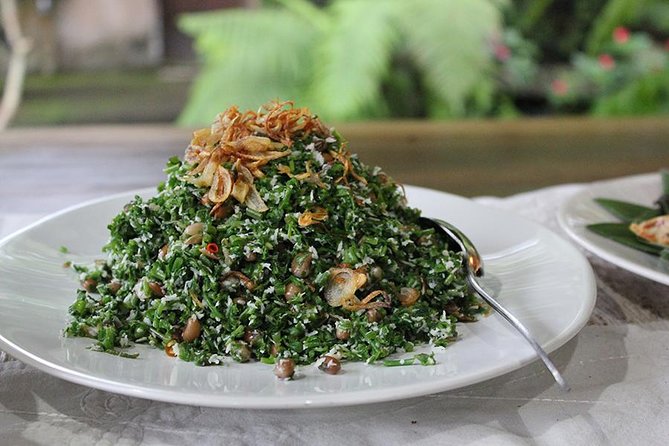
After the cooking, you sit down to eat what you prepared. Depending on the timing, the meal may be lunch or dinner. Local beer and water are included, with other drinks not specified.
The food is built around fresh herbs, spices, coconut, vegetables, and locally sourced ingredients. It may taste different from heavily seasoned restaurant food. Balinese home cooking often depends on fresh spice pastes and balanced flavors rather than simply adding a lot of salt, and Dewa explains the connection between cooking and health.
That does not mean the food is bland. Turmeric, galangal, chili, garlic, coconut, and other aromatics create plenty of flavor. The pleasure comes from tasting the ingredients in the setting where they are used, after you have helped prepare them.
Eating in the garden or courtyard gives the meal a peaceful finish. You are sharing food with the family in the same place where you cooked it, rather than being rushed out for the next class. If food is the main reason you are booking, this shared meal is the payoff.
Vegetarian food is available if you request it when booking. Do not wait until the cooking begins. The menu should be arranged in advance so the hosts can plan suitable ingredients.
Why the private format is worth $69
At $69 per person, this is more expensive than a large group cooking class in Ubud. The price makes more sense when you count what is included: private round-trip transport from Ubud, a village and garden tour, a personal cultural guide, hands-on cooking, the meal, beer, water, and recipes.
You are also paying for access to a family home, not just instruction. A large commercial class can offer more formal equipment and a clearer timetable, but it cannot provide the same contact with Dewa’s household and village.
The private setup works well for couples, families, and small groups with different interests. One person can ask about religion, another can focus on recipes, and nobody has to compete with a large class for the teacher’s attention. Group discounts are available, which may improve the value for a larger private booking.
The price is less compelling if your only goal is to learn standard Balinese recipes as quickly as possible. You could likely find a more efficient class. This one earns its cost through the setting, transport, cultural explanation, and time spent with the family.
The experience is commonly booked well in advance, with an average of about 36 days. That suggests you should reserve it early if your Ubud dates are fixed, especially if you want a particular day.
Who will enjoy this most
I would choose this outing if you want to understand Bali through food and family life. It suits people who enjoy asking questions, walking through local communities, and learning why ingredients matter instead of simply following a chef’s instructions.
It is also a strong choice for anyone who has already seen Ubud’s main sights and wants a quieter half-day outside the center. The village setting, garden walk, and family compound offer a different view of Bali than temples, markets, and restaurant streets.
Food lovers will appreciate the range of preparations and the chance to take recipes home. So will reluctant cooks, since the activity is social and practical rather than a technical exam. The private format makes it easier to join at your own pace.
You may want another option if you dislike walking, prefer a modern kitchen, or want a tightly timed professional lesson. The cultural conversation can take up a large share of the morning or afternoon. That is a benefit for some people and a drawback for others.
Practical details before you book
The activity is private, so only your group participates. Mobile tickets are accepted, and confirmation is sent within 48 hours of booking, subject to availability.
Round-trip transport is included only from Ubud hotels and vacation rentals. Outside the Ubud region, you meet directly at the family home in Keliki. The listed meeting point is Rumah Makan Jero Nini, on Jl. Arjuna in Keliki, Tegallalang, Gianyar.
Service animals are allowed, and the meeting area is near public transportation. The provided information does not describe the walking distance, terrain in detail, or kitchen accessibility, so contact the provider if you have mobility or dietary concerns.
Free cancellation is available up to 24 hours before the local start time. Cancellations or changes made inside that window are not accepted for a refund.
Should you book Dewa’s cooking experience?
Book it if you want a personal look at Balinese life, not just a list of dishes. The best parts are the garden walk, Dewa’s thoughtful explanations, the time with Jero and the family, and the chance to cook in a real home using traditional tools.
The main choice is simple. If you want polished instruction, a modern kitchen, and a fixed menu, choose a commercial cooking school. If you want to walk through a village, hear how food connects with medicine and belief, and share a home-cooked meal with the people who prepared it, this $69 experience is a strong value.
FAQ
Where does the cooking experience take place?
It takes place in Dewa’s traditional Balinese family compound in Keliki, a village north of Ubud in the terraced foothills of Bali.
Is transportation from Ubud included?
Yes. Private round-trip transfers are included from Ubud hotels and vacation rentals.
Can I book the experience if I stay outside Ubud?
Yes, but transportation is not included from outside the Ubud region. You meet Dewa directly at his home in Keliki.
How long does the activity last?
The experience lasts approximately four hours.
Is this a private activity?
Yes. Only your group participates.
Who leads the experience?
Dewa leads the village, garden, cultural, and cooking experience. If Dewa is unavailable, an equally welcoming family member hosts with Dewa’s wife, Jero.
Is a vegetarian meal available?
Yes. A vegetarian option is available, but you must request it at the time of booking.
What food might I learn to cook?
Possible dishes include pepes ikan, bumbu kuning, and bregedel. The menu may include several additional dishes, and the exact selection can vary.
Are drinks included?
Local beer and water are included with the experience.
More Workshops in Ubud
- Ubud Cooking Class Bali with Balinese Chef
★ 5.0 · 1,609 reviews - Ubud Silver Class Jewelry making in bali
★ 5.0 · 978 reviews - Balinese Farm Cooking Class by Pemulan Bali
★ 5.0 · 410 reviews - Balinese Authentic Cooking Class in Ubud
★ 5.0 · 239 reviews
Just added around Ubud
- Overnight Mount Ijen Blue Fire Trekking Tour From Bali★ 4.0 · 14 reviews
- Keliki Village Tour And Rice Field Walk Including Lunch Or Dinner★ 5.0 · 3 reviews
- Ubud Tour with all includes★ 5.0 · 3 reviews
- Jungle Buggy Adventure and Ubud Tour★ 5.0 · 6 reviews
- Exclusive Ubud Jewelry Making: Craft with a Pro Silversmith!★ 5.0 · 37 reviews
- Mount Batur Jeep Tour★ 5.0 · 30 reviews
- Jungle Swing – Volcano – Water Temple – Monkey Forest and Waterfall Tour★ 5.0 · 11 reviews
- Jatiluwih in detail (1 h. e-bike tour in the rice terraces)★ 4.0 · 5 reviews
Ubud Tours, compared.

Monkey Forest, Jungle Swing, Rice Terrace, and Water Temple
Read our review →


Uluwatu Sunset, Kecak Dance, and Dinner Jimbaran Beach
Read our review →
Tanah Lot and North Bali Tour: Scenic Journey
Read our review →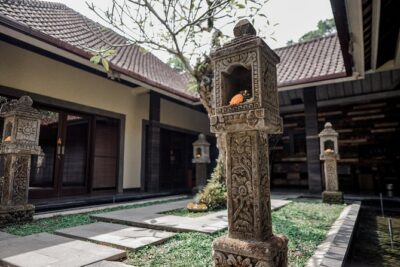
Body Massage Experience in Ubud Traditional Spa
Read our review →Browse the lists this tour appears in