
Reviewed · UBUD TOURS
Bali Cooking Class with Culture Experience
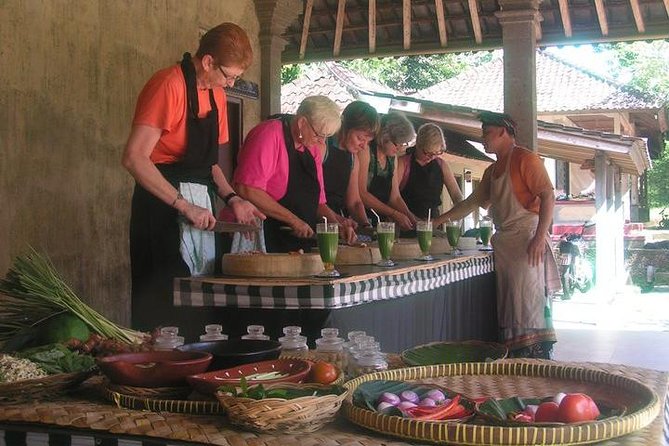
The best part of this Ubud cooking class happens before the first knife hits the cutting board. You begin at a local morning market, where your Family Host explains the herbs, spices, fruit, and vegetables that give Balinese food its character. Then you return to the Lobong family compound, meet Dewa, and cook a full meal in a home setting rather than a hotel kitchen.
I like the market stop, because it gives the food some context instead of treating ingredients as anonymous items. I also like the family setting, with coffee or tea, fresh banana fritters, and a chat about home shrines and Balinese life before cooking begins.
The main consideration is the early start. Pickup and meeting arrangements begin around 7:30 am, and the whole program lasts about six hours. That is a substantial block of your Ubud day, though the market, meal, cultural talk, and class make it feel like more than a standard recipe lesson.
Key Points
- Start at a real morning market: Learn about fresh herbs, spices, fruit, and vegetables while ingredients are being chosen for your meal.
- Cook in a Balinese family compound: The class takes place in a home cooking pavilion, adding a personal cultural setting.
- Meet Dewa over banana fritters: Begin with coffee, tea, mineral water, and freshly made Pisang Goreng.
- Prepare a complete meal: The menu covers an appetizer, several traditional main dishes, side dishes, and dessert.
- Keep the lessons at home: An illustrated recipe booklet includes photos, directions, tips, and room for notes.
- Small group, early start: The maximum group size is 12, with pickup offered from central Ubud hotels.
Why This Class Feels Different From a Restaurant Meal
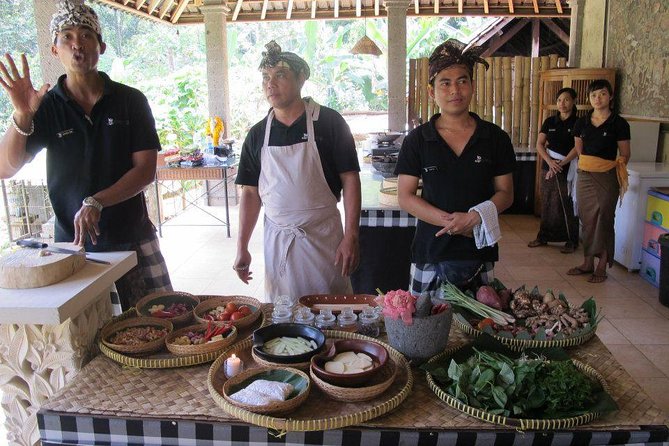
A restaurant can show you the finished plate. This class lets you follow the ingredients from market stall to lunch table. That change matters, especially in Bali, where herbs, spices, vegetables, and family cooking traditions are closely tied to daily life.
You are not simply handed a premeasured bowl of ingredients. At the market, your Family Host purchases and explains what will be used later. The precise market stalls and menu can vary, but the basic idea is clear: you see fresh produce in its everyday setting before learning how it becomes lunch.
I find that approach more useful than a class that begins with ingredients already arranged in neat rows. It gives you a better sense of what to look for if you later try to cook Balinese food at home. It also leaves room for questions about unfamiliar produce and seasonings.
The market visit is scheduled at the beginning, so plan to be ready early. The listed start time is 7:30 am. Pickup is offered, and the activity is near public transportation, but you should confirm the exact pickup details for your hotel when booking.
More cooking classes in Ubud:
- Ubud Cooking Class Bali with Balinese Chef
★ 5.0 · 1,609 reviews - PRIVATE Authentic Balinese Cooking Class in Ubud at Putu’s Home
★ 5.0 · 644 reviews - Balinese Ubud cooking school (9 Dish Cooking and Market Tour)
★ 5.0 · 540 reviews
The 7:30 am Market Visit
The first stop is a typical morning market. This is not described as a long sightseeing tour, so you should think of it as a focused shopping trip tied to the cooking lesson. Your host selects the ingredients and explains the role of fresh herbs, spices, fruit, and vegetables in Balinese meals.
This part is especially helpful if you have little experience with Indonesian cooking. You can smell and examine ingredients before they are chopped, mixed, or cooked. One unusual bonus is the chance to try fruit that may be difficult to find in the United States.
The market also gives you a look at ordinary food shopping in Ubud. That makes the stop more useful than a quick photo opportunity. You are seeing ingredients in the place where local cooks buy them, then carrying that lesson into a family kitchen.
Still, markets are active food-shopping places, not quiet classrooms. If you prefer a polished cooking demonstration with every step timed and explained indoors, the market may feel less structured. For most people, that slight unpredictability is part of the point.
Coffee, Pisang Goreng, and a Balinese Home
After the market, you arrive at the Lobong family home. Dewa welcomes you with a hot cup of coffee or tea, mineral water, and his freshly made Pisang Goreng, or crispy banana fritters.
This snack is a small detail, but it sets the tone well. You get time to settle in, taste something prepared by the family, and listen before the practical work begins. If you are not a coffee or tea drinker, mineral water is available.
The cultural introduction covers Balinese lifestyle, family life, and home shrines. Those topics help explain the setting around you. A family compound is not just a backdrop for the cooking class. It is part of the lesson, giving you a glimpse of how food, family, and household customs fit together.
The setting has received especially strong praise for its beauty and welcoming atmosphere. You should not expect a formal culinary school with stainless steel stations and a professional restaurant dining room. The home pavilion is the attraction. It makes the class feel personal, though people who want a strictly technical workshop may prefer a more conventional school.
Cooking a Full Balinese Menu
Once the pavilion is ready, you receive an illustrated instruction booklet. It contains the menu, recipes, directions, photos, tips, and space for personal notes. That is useful because a six-hour lesson can leave you with more information than you can remember by the end of the day.
The class covers a complete menu rather than a single signature dish. You prepare an appetizer, several traditional entrees, accompanying side dishes, and dessert. The supplied details do not list the exact dishes, so check the current menu if you have strong preferences or dietary concerns.
The broad menu is a good reason to choose this class over a short demonstration. You see how several parts of a Balinese meal work together. You also get practice across more than one type of preparation, rather than spending the whole session on one recipe.
A professional chef leads the cooking instruction, while the family setting keeps the session connected to local life. The focus is on helping you repeat the dishes at home, not on watching a chef perform difficult techniques while you stand back.
That makes the class a good fit for curious home cooks. You do not need to be an expert. The goal is to leave with clear instructions and the confidence to make the food for family and friends.
More hands-on workshops in Ubud:
- Ubud Silver Class Jewelry making in bali
★ 5.0 · 978 reviews - Balinese Farm Cooking Class by Pemulan Bali
★ 5.0 · 410 reviews - Balinese Authentic Cooking Class in Ubud
★ 5.0 · 239 reviews - PRIVATE Balinese Cooking Class in Ubud with Dewa with Transfers
★ 5.0 · 213 reviews
Lunch Is the Best Test of the Lesson
The reward arrives at the table: you eat the meal you have prepared. That sounds simple, but it gives the class a practical finish. You can taste the balance of the dishes, compare the different components, and remember the steps that produced them.
The meal includes the appetizer, entrees, side dishes, and dessert prepared during the session. A hot drink and banana fritter are served earlier, so the day has a gentle food rhythm rather than one large meal appearing at the end.
The strongest praise has focused on the lunch, the freshness of the ingredients, and the food’s healthy, satisfying character. Those points fit the structure of the class. The produce is introduced at the market, handled during preparation, and eaten soon after cooking.
There is also mention of a ritual of gratitude at the end of the meal. Since the details of that ritual are not specified, you should treat it as a possible cultural closing rather than a promised performance. It reflects the wider purpose of the visit: food is presented not only as something to consume, but as part of family and cultural practice.
What the $62 Price Really Buys
At $62, this is not the cheapest way to eat lunch in Ubud. It is also not just a restaurant meal. The price covers roughly six hours of activity, a market visit, cultural conversation, instruction from a professional chef, breakfast snacks, the cooking session, and the lunch you prepare.
Pickup is offered from central Ubud hotels, which adds practical value if your accommodation is in the covered area. The group maximum is 12 people. That is small enough for a more personal class than a large tour bus activity, though the exact feel will depend on how many people book that day.
The recipe booklet adds value after you leave. A cooking class is easy to enjoy and easy to forget. Written directions, photos, tips, and space for notes give you a better chance of repeating the dishes at home.
I would judge the price by asking what you want from the day. If you only want a cheap meal, $62 is high. If you want food instruction, a market visit, cultural background, transport help, and a meal in a Balinese family home, the price is reasonable.
Who Will Get the Most From This Visit
I would recommend this class to people who want food and culture together. It suits first-time visitors to Bali who want an introduction to local ingredients, as well as experienced cooks who enjoy learning how another household prepares its food.
It is also a good choice for couples, families, and small groups of friends. The maximum of 12 people keeps the activity from becoming a huge production, and the mix of cooking and conversation gives non-experts a way to participate.
You should choose another activity if you dislike early mornings, have only a few free hours in Ubud, or want an exact menu confirmed before booking. The class lasts about six hours, and the available information does not specify the dishes or provide a detailed accessibility description.
Food restrictions deserve a direct question before you book. The menu includes several traditional dishes, but no specific dietary adaptations are listed. Ask the provider what can be changed if you have allergies, religious restrictions, or a special diet.
Timing, Pickup, and Group Size
The day begins at 7:30 am. That early start is practical for the market, since morning is when you can expect the freshest shopping activity and a more typical food-buying routine.
Pickup is offered, with round-trip transfers noted for central Ubud hotels. Do not assume every hotel outside central Ubud is covered. Confirm the pickup point and time after booking.
The activity is offered with a mobile ticket, and confirmation is sent within 48 hours, subject to availability. The stated maximum is 12 people. Public transportation is nearby, but pickup will be simpler if your hotel falls within the service area.
Free cancellation is available if you cancel at least 24 hours before the start time. Cancellations made less than 24 hours ahead are not refunded, and changes inside that period are not accepted. The provider also requires a minimum number of participants, so if the class is canceled for that reason, you are offered another date or activity, or a full refund.
What to Bring and How to Prepare
Wear clothing that is comfortable for several hours of food preparation. The supplied information does not list a formal dress code, so practical clothes are the sensible choice.
Bring your phone if you want to take notes or photos, but the booklet already provides space for notes and includes photos and directions. A mobile ticket is available, so keep your booking accessible on your phone.
Arrive ready to eat a snack early and lunch later. The day is built around food, so it is not ideal if you prefer to skip breakfast or need a tightly controlled meal schedule.
Most important, arrive with questions. Ask about the herbs and spices at the market, the household customs discussed at the compound, and the steps you are least likely to remember. The class is designed to help you recreate the meal, so the more you ask, the more useful the booklet will be later.
Should You Book the Lobong Cooking Class?
Book it if you want a hands-on introduction to Balinese food that also gives you time in a family home. The market visit, Dewa’s banana fritters, the home shrine discussion, the full menu, and the recipe booklet make this much more than a cooking demonstration.
I would skip it only if your schedule cannot handle a 7:30 am start and six-hour program, or if you need a fixed menu and confirmed dietary options before paying. For most food-minded visitors staying in Ubud, the combination of market shopping, cooking, culture, and lunch gives the $62 price solid value.
FAQ
Where does the cooking class take place?
The activity takes place at Lobong Bali Cooking Class in Ubud, in a Balinese family home with a cooking pavilion.
What time does the activity start?
The listed start time is 7:30 am.
How long does the cooking class last?
The full activity lasts approximately six hours.
Is hotel pickup available?
Pickup is offered, with round-trip transfers noted for central Ubud hotels.
How many people can join the class?
The maximum group size is 12 participants.
Does the class include a market visit?
Yes. You begin at a local morning market, where fresh herbs, spices, fruits, and vegetables are selected and explained.
Who leads the welcome at the family home?
Dewa welcomes you with coffee, tea, mineral water, and freshly made Pisang Goreng banana fritters.
What food will I prepare?
The class includes an appetizer, several traditional entrees, accompanying side dishes, and dessert. The exact dishes are not specified in the available information.
Do I receive recipes after the class?
Yes. You receive an illustrated booklet with the menu, recipes, directions, photos, tips, and space for notes.
Can I cancel for a full refund?
You can cancel for a full refund up to 24 hours before the experience start time. Cancellations made less than 24 hours ahead are not refunded.
Just added around Ubud
- Overnight Mount Ijen Blue Fire Trekking Tour From Bali★ 4.0 · 14 reviews
- Keliki Village Tour And Rice Field Walk Including Lunch Or Dinner★ 5.0 · 3 reviews
- Ubud Tour with all includes★ 5.0 · 3 reviews
- Jungle Buggy Adventure and Ubud Tour★ 5.0 · 6 reviews
- Exclusive Ubud Jewelry Making: Craft with a Pro Silversmith!★ 5.0 · 37 reviews
- Mount Batur Jeep Tour★ 5.0 · 30 reviews
- Jungle Swing – Volcano – Water Temple – Monkey Forest and Waterfall Tour★ 5.0 · 11 reviews
- Jatiluwih in detail (1 h. e-bike tour in the rice terraces)★ 4.0 · 5 reviews
Ubud Tours, compared.



Monkey Forest, Jungle Swing, Rice Terrace, and Water Temple
Read our review →


Uluwatu Sunset, Kecak Dance, and Dinner Jimbaran Beach
Read our review →
Tanah Lot and North Bali Tour: Scenic Journey
Read our review →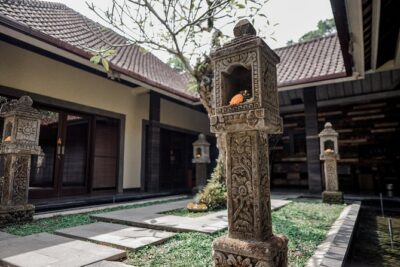
Body Massage Experience in Ubud Traditional Spa
Read our review →Browse the lists this tour appears in